Filter Categories
All A-Z
Ancient & Medieval Civilizations
Biological / Physical Anthropology
Europe
Geographic
Languages
Middle East
Prehistory
Religious
Vikings


This overview provides a brief introduction to anthropology, the study of humans and human societies. It highlights the field’s major areas of study, including archaeology, and biological, cultural, and linguistic anthropology, as well as related disciplines and resources for exploring the profession of anthropology in greater depth.
Anthropology is the study of humanity and how people live, communicate, organize societies, adapt to environments, and understand the world around them. It examines everyday life, including family, food, work, traditions, health, material remains, and artifacts from past cultures and societies.
For an in-depth description of anthropology, read the following:
Anthropologists study people, including their cultures, languages, biology, and history, to better understand what it means to be human. They study how humans live today, how they lived in the past, and how we’ve changed over time.
Anthropologists research everything from human evolution and ancient tools to modern social norms, beliefs, and institutions. If you’re curious about ancient civilizations or global cultures today, anthropology explores how humans have changed and stayed the same over time.
In most American colleges and universities, anthropology is typically divided into the four main subfields listed below, each focusing on a different aspect of human behavior.
Some programs also recognize a fifth field:
If you would like to read more about these subfields and their concepts, links to the free, peer-reviewed OpenStax textbook, Introduction to Anthropology, are provided. OpenStax provides free, high-quality textbooks written by subject experts, reviewed by faculty, and commonly used in introductory and core undergraduate courses.
Read more about the “four fields” in OpenStax’s Introduction to Anthropology: 1.2 The Four-Field Approach: Four Approaches within the Guiding Narrative.
Anthropology is a highly interdisciplinary field that draws on the humanities and other social sciences to gain a deeper understanding of humans and their societies. These include biology, economics, environmental science, geography, history, medicine and public health, religion, political science, psychology, and sociology.
If you’re thinking about majoring in anthropology, these resources can provide useful background information and help guide your next steps. They explain what to expect from the major and the wide variety of career paths available to you.
After selecting a topic, conducting a literature review is an essential step in the research and writing process. Writing a literature review helps you:

If you are unfamiliar with the best resources in a field, the following databases are great places to start to help you locate major publications and relevant scholarship on anthropology topics.
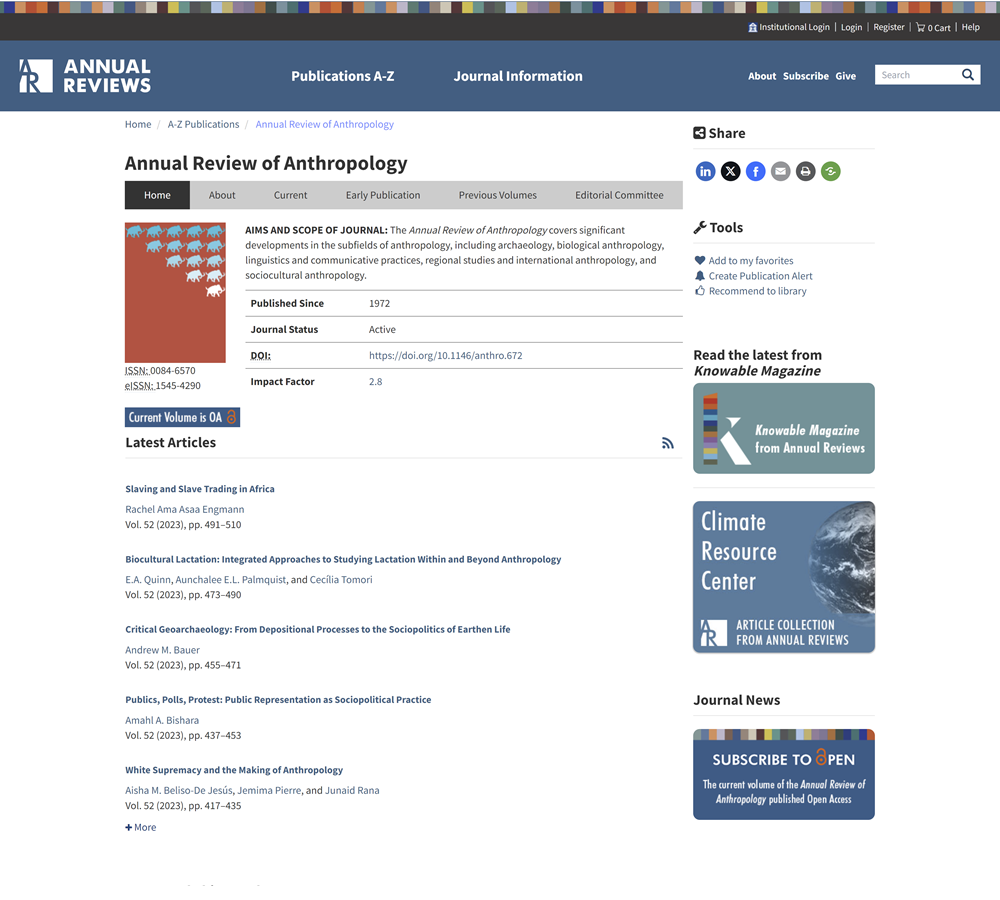
The Annual Review of Anthropology is a peer-reviewed academic journal that publishes comprehensive literature review articles in anthropology. Each year, a new volume is released consisting of articles written by leading academics in the field, providing overviews of the most important and influential research and scholarship in anthropology.
Annual Review of Anthropology covers significant developments in the subfields of anthropology, including archaeology, biological anthropology, linguistics and communicative practices, regional studies and international anthropology, and sociocultural anthropology.
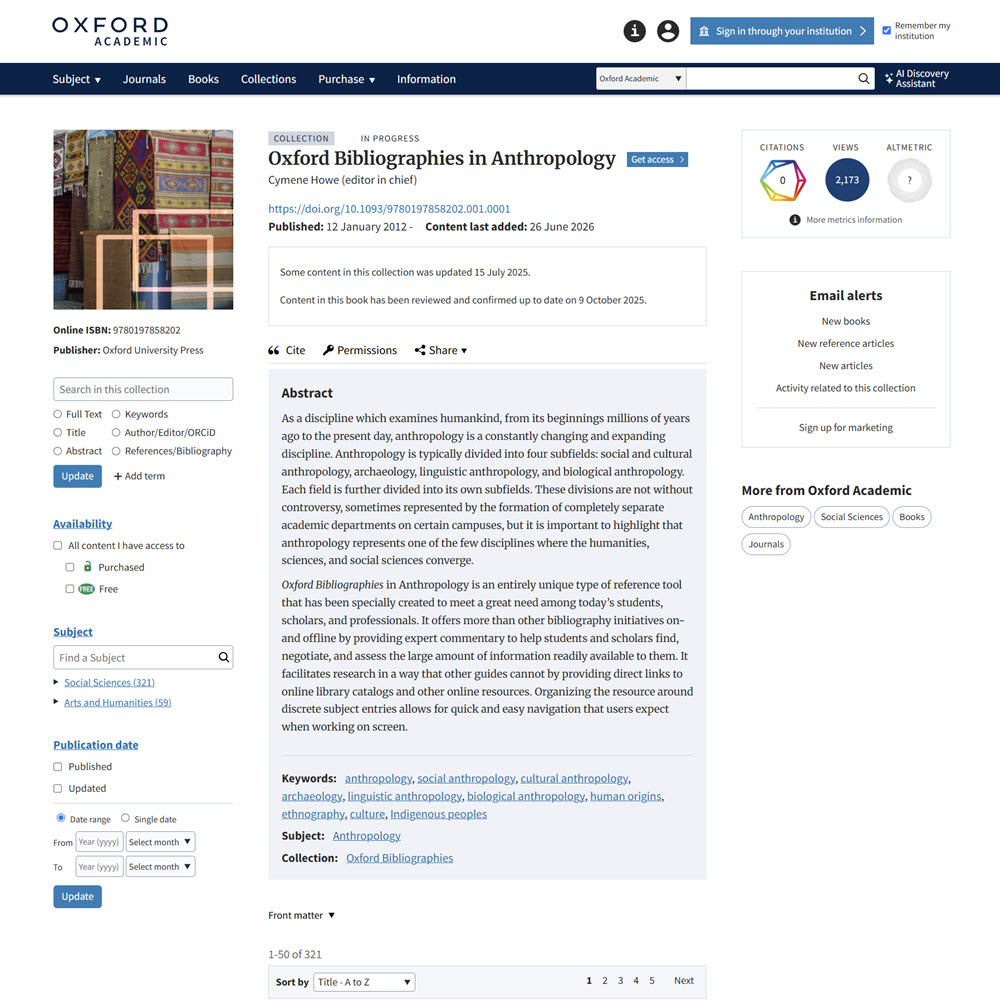
Oxford Bibliographies provides scholarly bibliographies in most social science disciplines, including anthropology. Each bibliography includes authoritative books, journal articles, websites, and other materials selected and organized by academic scholars. These bibliographies can also help researchers begin building literature reviews by identifying important authors, major debates, foundational studies, and key publications on different anthropology topics.
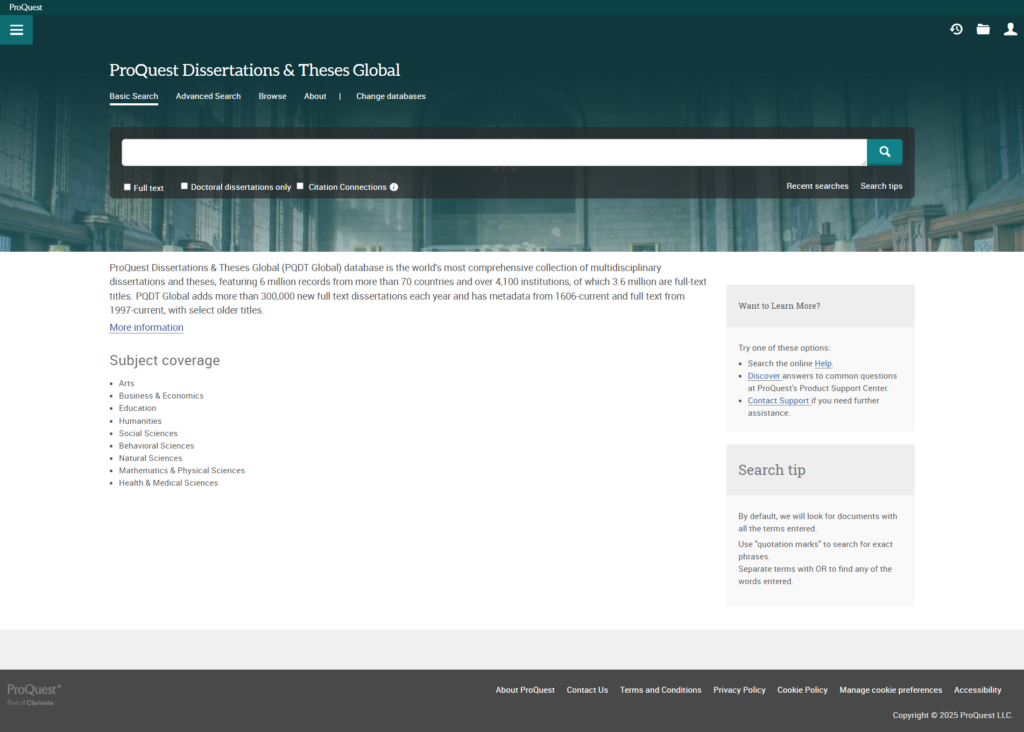
When searching for literature reviews, don’t overlook dissertations found in ProQuest Dissertations & Theses. Doctoral students are typically required to write extensive literature reviews. Each review will examine major debates, theories, methods, and key publications related to their research topic, which can help you identify important authors, major studies, useful keywords, and gaps in the existing research.
To learn more about finding resources for a literature review, see “How to Locate Resources for a Literature Review.”
Atlases play an unusually important role in anthropology. The discipline is primarily concerned with cultural variation across the globe in ways that other social sciences are not. Anthropological atlases also differ from traditional atlases in purpose and content. While traditional atlases depict physical geography (such as mountains, rivers, and political borders), anthropological atlases visually represent the historical, physical, cultural, and linguistic landscapes central to anthropological research.
ArcGIS Living Atlas of the World is a large, curated collection of authoritative geographic datasets, interactive maps, and analytical layers designed for use within the ArcGIS platform. Maintained by Esri, it provides global information on topics such as demographics, climate, infrastructure, land use, and environmental change, allowing users to incorporate reliable spatial data directly into maps, dashboards, and GIS analyses.
The ArcGIS Living Atlas of the World is mostly free to browse, view, and use in public maps. However, accessing certain advanced layers requires a paid ArcGIS subscription.
HistoAtlas is an open-access, collaborative digital atlas that uses historical Geographic Information System (GIS) technology to map how human societies and political landscapes have changed over time. Histo Atlas reconstructs world history through interactive maps, allowing users to explore how political borders, cultural regions, and major historical events evolved across time within a shared geographic framework.
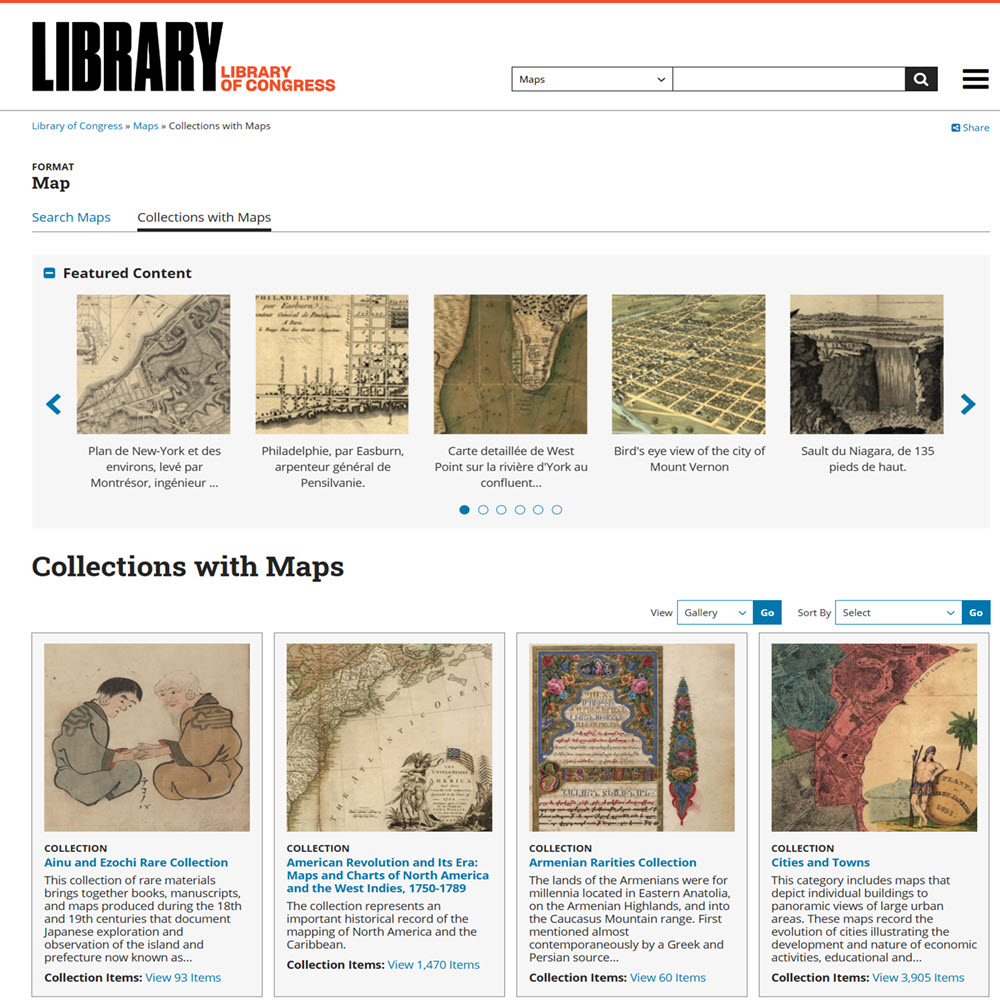
The Library of Congress Geography and Map Division holds one of the world’s largest and most comprehensive collections of maps and other cartographic materials. Dates for maps range from the fourteenth century to the present and cover nearly every country and subject. The collection includes more than 5 million map sheets, over 100,000 atlases, aerial photographs and remote-sensing images, globes, terrain models, rare and manuscript maps, and digital geospatial data.
The Perry-Castañeda Library Map Collection provides digitized historical and contemporary maps covering global regions, thematic maps, and country maps. Hosted by the University of Texas, this collection includes historical world maps organized by region and theme that are useful to political and international relations researchers.
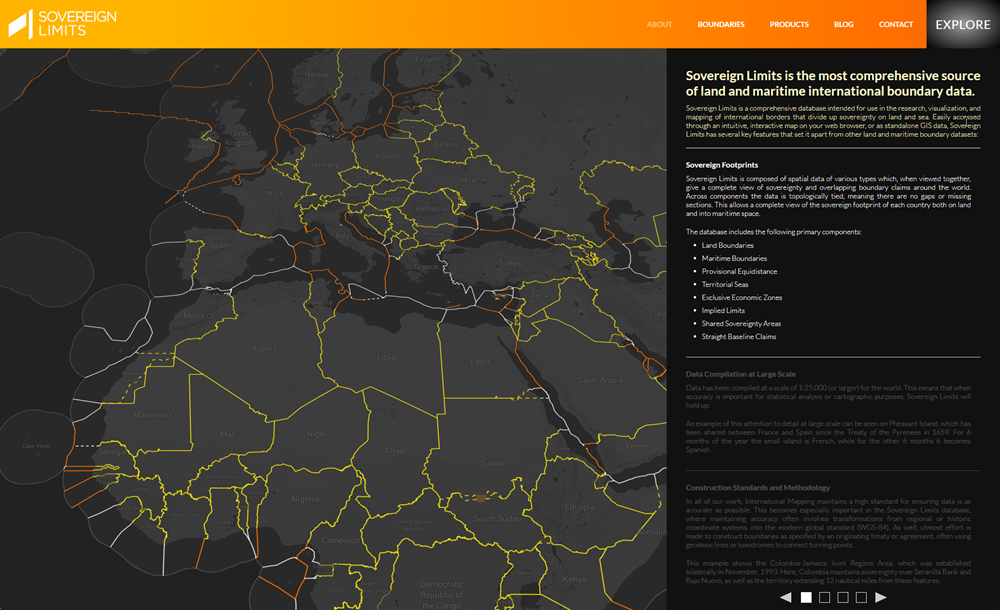
Sovereign Limits is a detailed digital repository mapping out every internationally recognized land and maritime border. It offers both an interactive web map and downloadable GIS data. Each border in the database is accompanied by a “Boundary Brief,” which outlines the boundary’s history, key legal/treaty documents, and annotated maps.
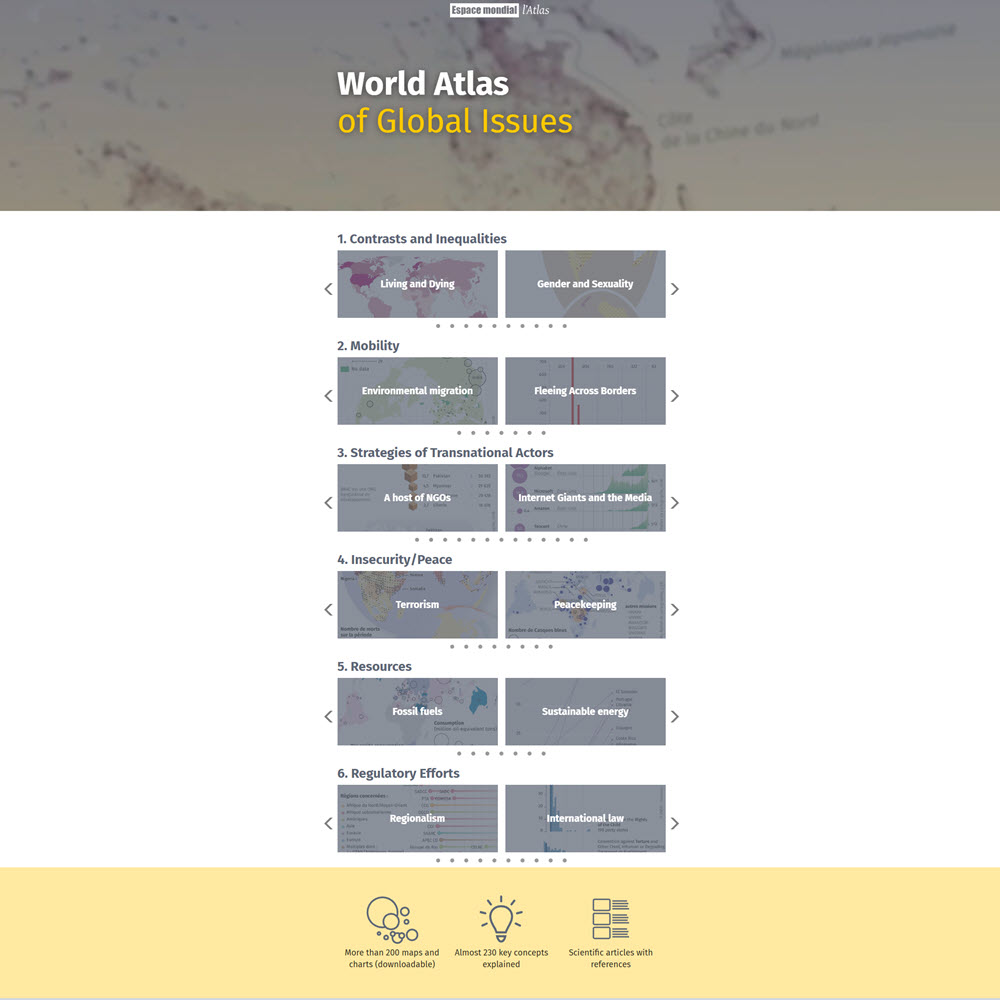
Developed by academics at SciencePo (the Institut d’Études Politiques de Paris), one of France’s most prestigious universities, located primarily in Paris, the World Atlas of Global Issues is an illustrated thematic atlas that uses maps and data visualizations to examine major global issues, including demographics, development, environmental change, health, conflict, and economic disparities, highlighting geographic patterns and regional differences.
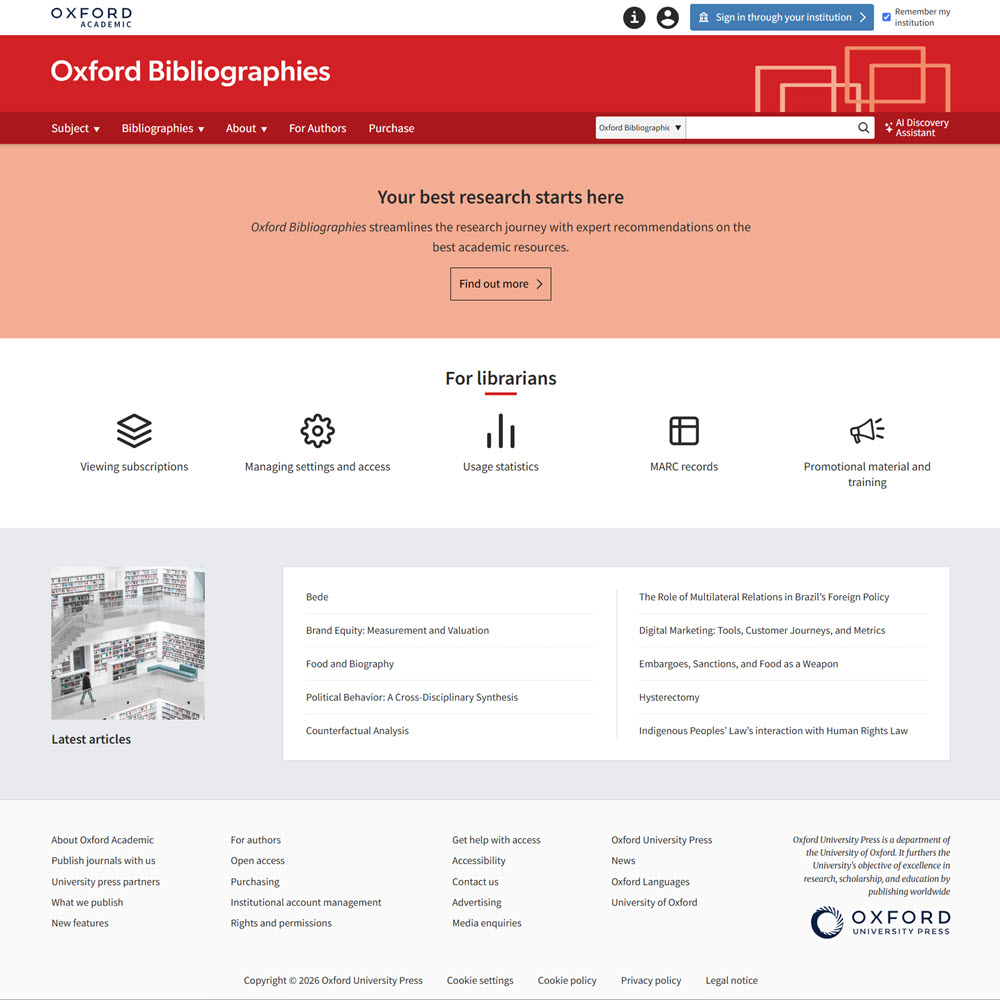
Oxford Bibliographies is a leading scholarly source for expert-curated bibliographies, providing scholarly bibliographies in most social science disciplines, including anthropology, communication, criminology, economics, international relations, political science, psychology, and sociology. Each bibliography provides a list of authoritative books, journal articles, websites, and other materials, all organized by academic scholars.
A biography provides a detailed account of a person’s life, covering key aspects such as their early years, education, career, achievements, challenges, and impact on the world. Biographies about well-known anthropologists are particularly valuable, helping researchers understand:
The following are comprehensive reference works that provide biographical information on influential figures in anthropology.
Companions provide scholarly essays that examine a topic, theory, region, or subfield in greater depth than introductory texts. Written by experts, they are especially helpful for students and researchers who already have a basic understanding of anthropology and want a more comprehensive overview of current scholarship in the field.
Dictionaries are important for understanding and contextualizing words, concepts, and terminology. Anthropology dictionaries help students understand the specialized language, concepts, and cultural terminology used throughout the discipline. They provide concise, authoritative definitions that make it easier to read textbooks, journal articles, and ethnographic studies
Subject encyclopedias are specialized reference works that provide in-depth information on specific discipline topics. Unlike general encyclopedias, which cover a wide range of topics, subject encyclopedias focus exclusively on one field, offering detailed and comprehensive entries written by experts. For a list of general and specialized encyclopedia databases, go to Getting Started—Reference Resources.
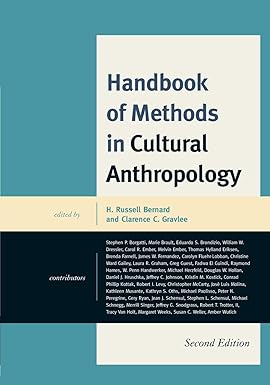
Anthropology handbooks provide comprehensive overviews of major anthropological topics, theories, methods, and current scholarship. Written by experts, they synthesize decades of research and can help researchers understand a subject before moving on to primary literature.
Introductions explain the fundamentals of anthropology and its subfields, including its concepts, methods, and major fields, in a clear, accessible way. They are especially helpful for students who are new to anthropology and need background knowledge.
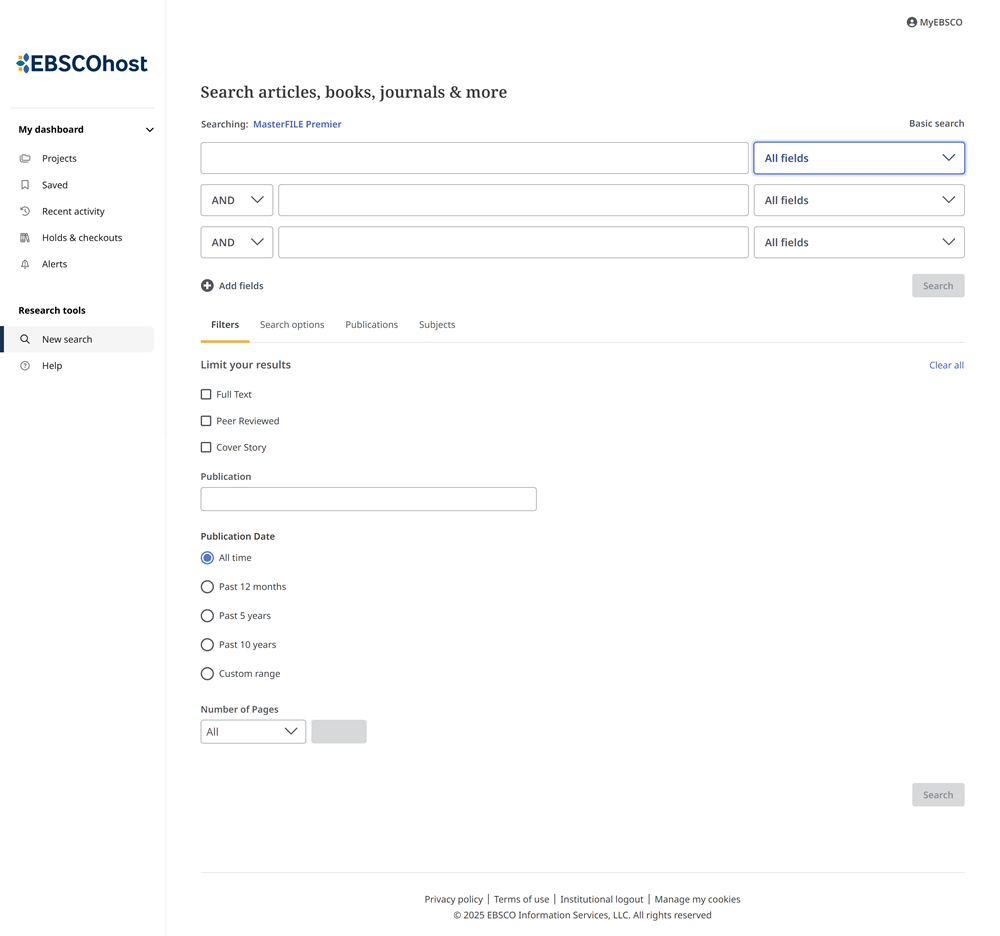
EBSCO is a major research database platform that allows users to search multiple EBSCO databases simultaneously. The difference between EBSCOhost and Academic Search is that Academic Search can be searched as part of the EBSCOhost platform or searched separately if your institution has a subscription. To check if your institution subscribes to EBSCOhost, use EBSCO’s Find your institution page.
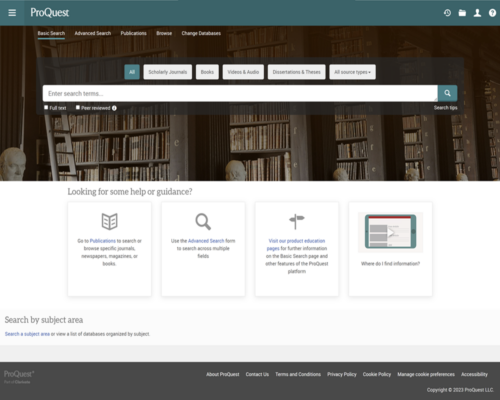
ProQuest is a major database vendor and platform that provides access to hundreds of database collections. The ProQuest platform provides a multidisciplinary search with access to scholarly ebooks, journals, video and audio, newspapers, and more, all searchable simultaneously. ProQuest is unique in providing dissertations and theses, historical newspapers, and other primary sources.
Scholarly research databases provide peer-reviewed academic journal articles, book reviews, and other scholarly resources authored by scholars, researchers, or academics who are experts in their fields.
Unlike magazines, which focus on current events and general-interest stories, articles in scholarly journals undergo rigorous peer review before publication. The following is a list of the most important multidisciplinary scholarly research databases.
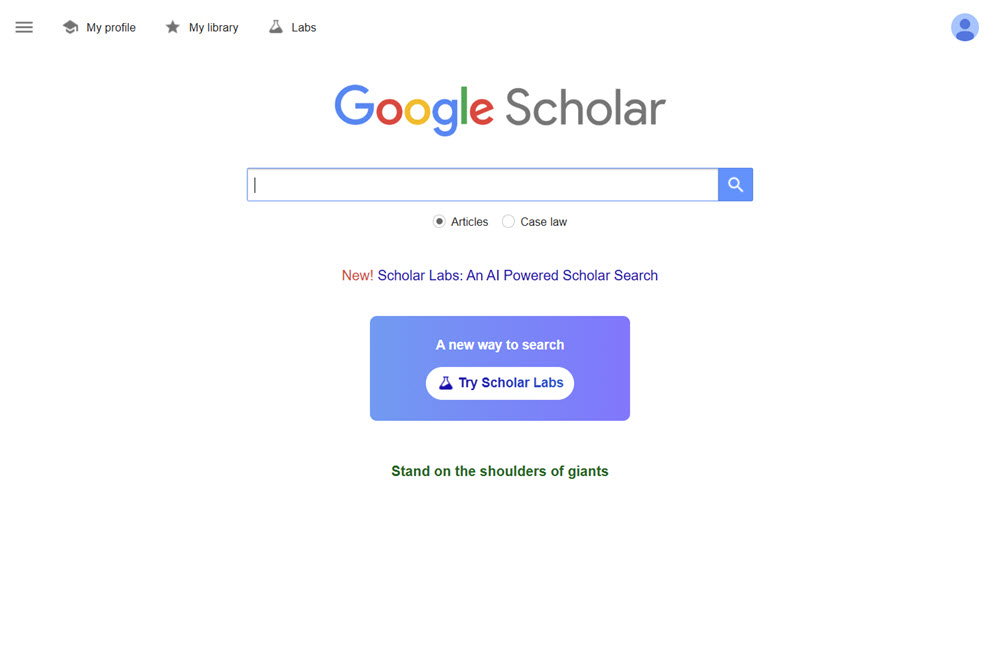
Google Scholar is a free academic search engine that helps researchers and students find scholarly literature across disciplines. It indexes journal articles, books, conference papers, theses, patents, and other resources from academic publishers, universities, and professional organizations.
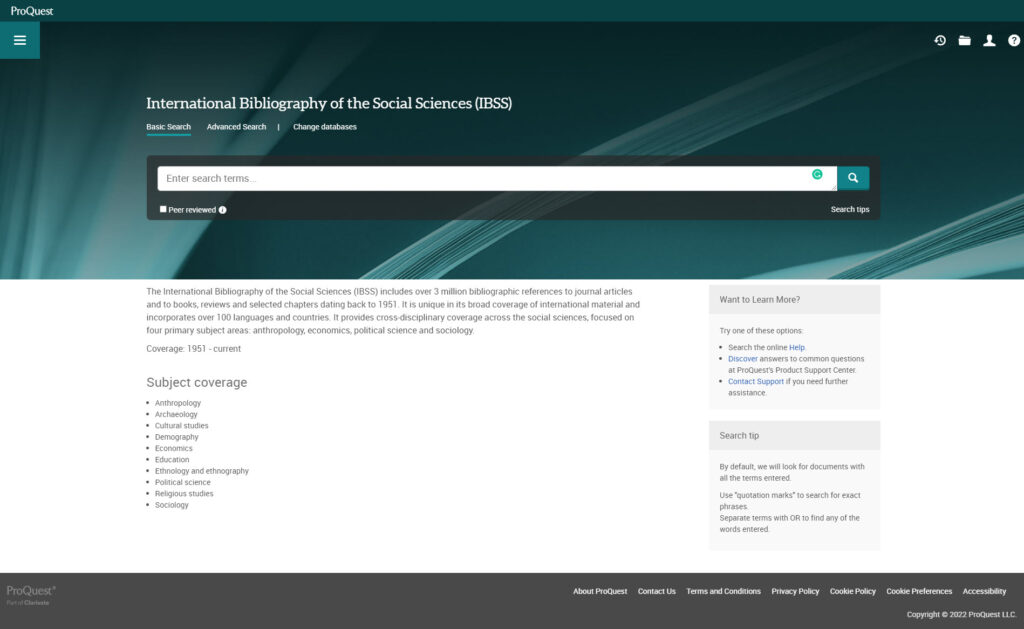
The International Bibliography of the Social Sciences (IBSS), compiled by the British Library of Political and Economic Science at the London School of Economics, provides access to a vast collection of scholarly literature in the social sciences. Covering multiple disciplines, IBSS includes references to journal articles, books, newspapers, and dissertations, with records dating back to 1951.
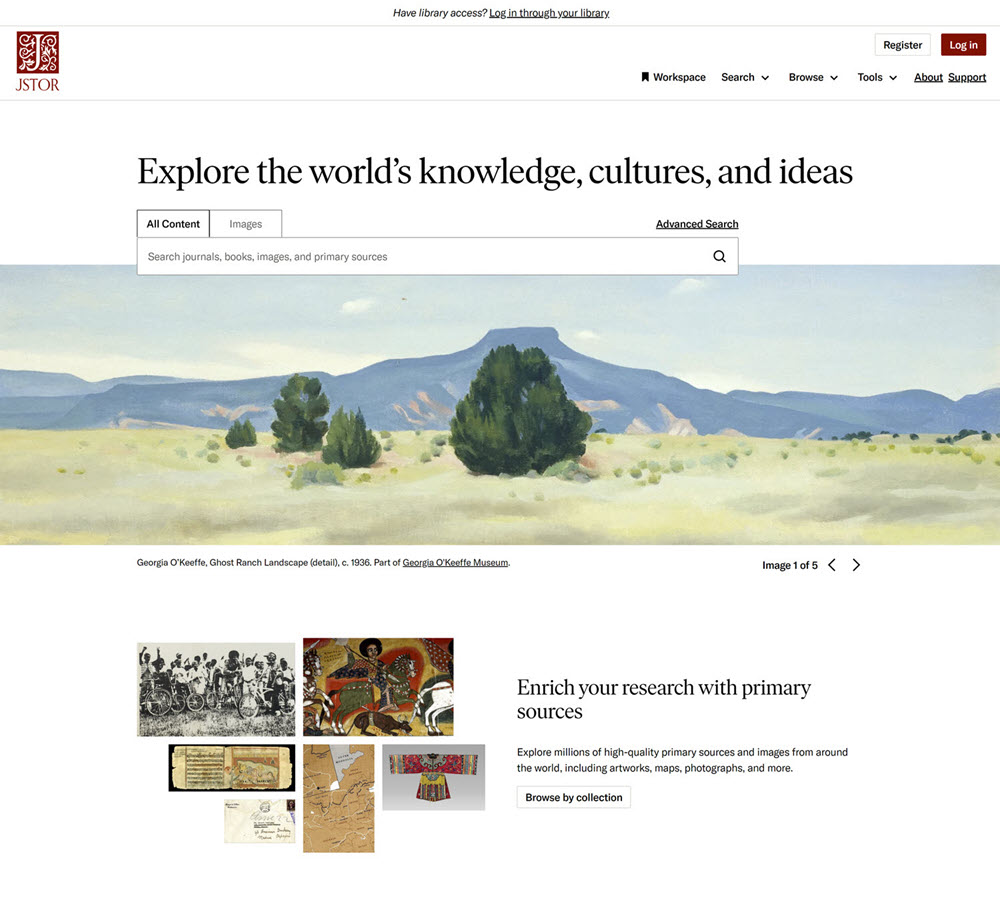
JSTOR is an important scholarly research database for the humanities, social sciences, and sciences. It provides the full text of articles from thousands of influential academic journals. In addition to journal articles, users can access eBooks, book chapters, images, and primary source documents. JSTOR also provides an AI research tool that provides key points and arguments of articles.
JSTOR contains the full text of more than 2,000 journals from 1,000 publishers, with publication dates ranging from 1665 to 2015 (for certain titles). JSTOR also provides:
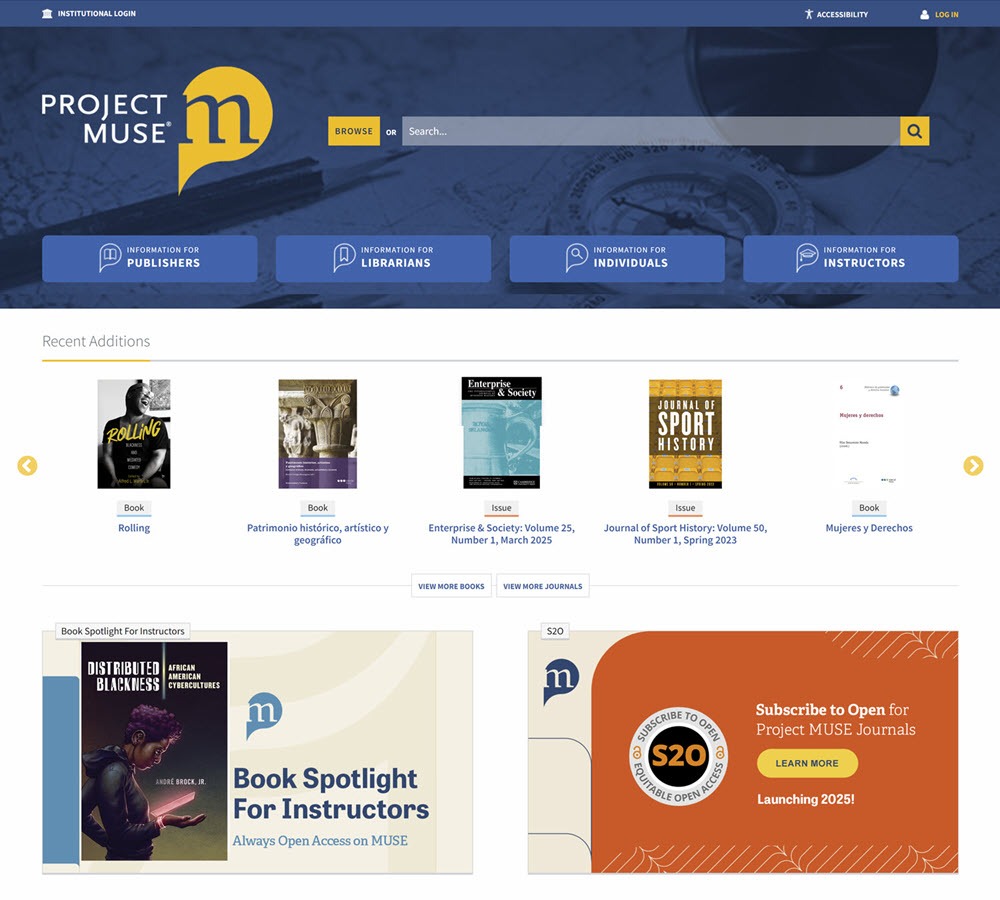
Project MUSE offers online access to a vast collection of scholarly journals, books, and academic resources in the humanities, social sciences, and arts. As a leading provider of digital humanities content, it features high-quality, peer-reviewed publications from prestigious university presses, scholarly societies, and academic publishers.
ProQuest Dissertations & Theses is a database of dissertations and theses from universities worldwide. It provides access to millions of full-text works across many disciplines, including the social sciences, humanities, sciences, and business. Each dissertation includes an abstract or summary that provides a concise overview of the research, its methodology, and key findings.
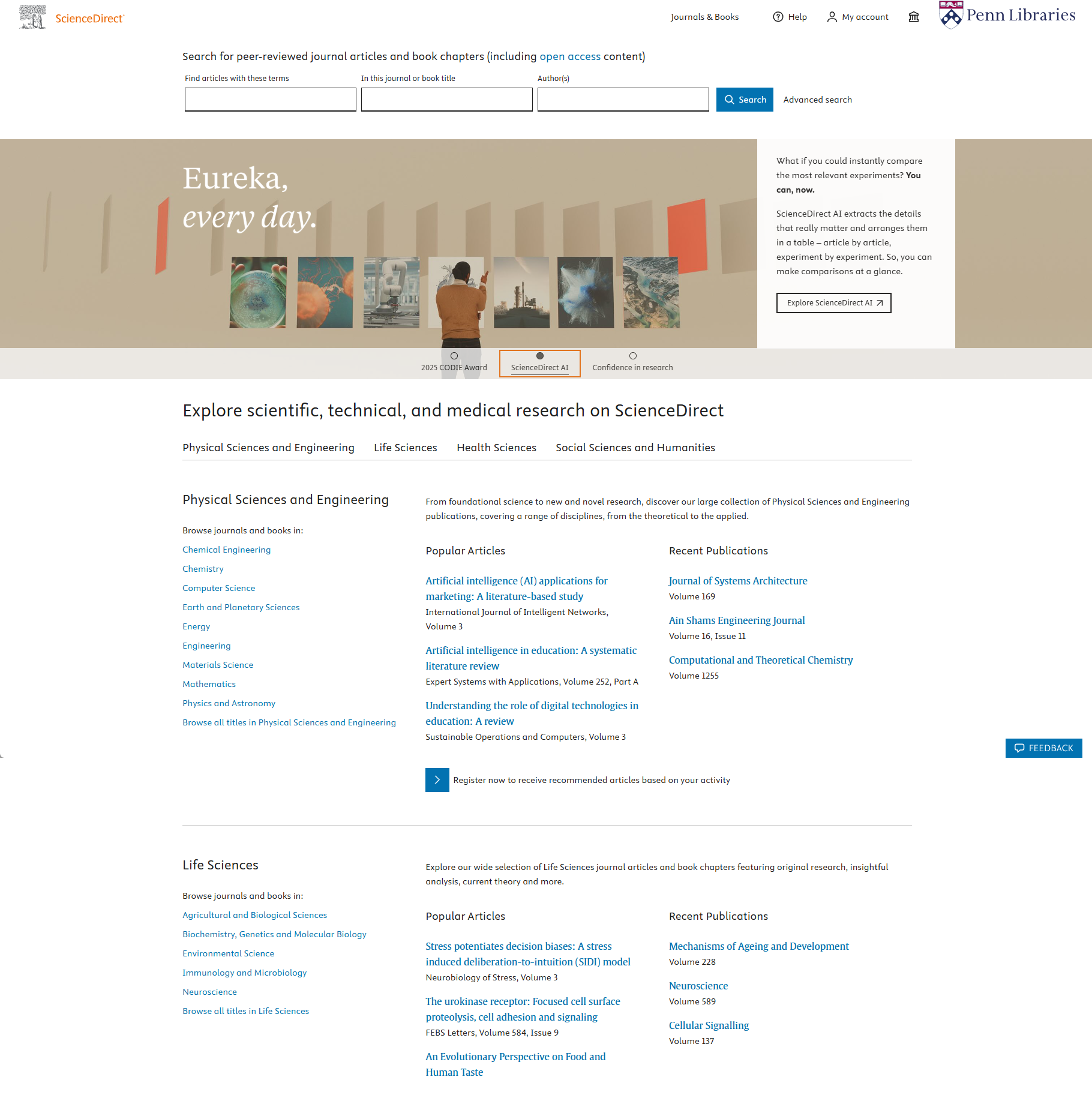
ScienceDirect is a leading full-text scholarly scientific database that provides journal articles and book chapters from more than 2,500 peer-reviewed journals and more than 11,000 books. It covers over 24 major subjects in the physical sciences and engineering, life sciences, health sciences, social sciences, and the humanities.
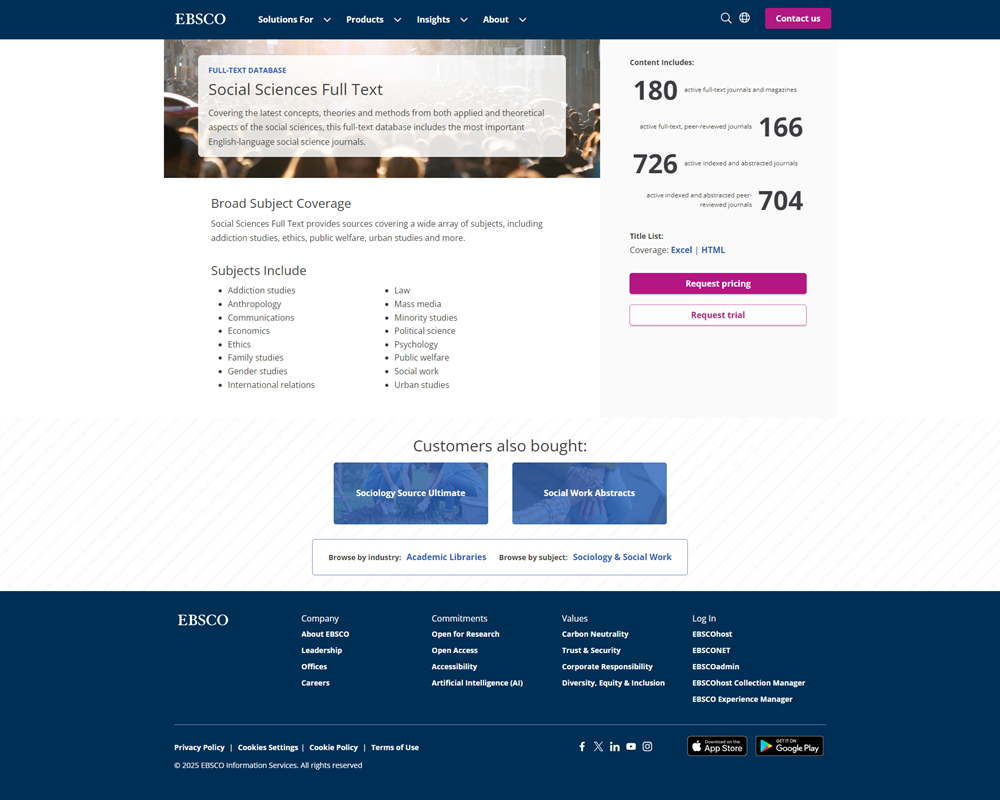
Social Sciences Full Text provides access to a wide range of scholarly literature in the social sciences. It covers many disciplines, including sociology, psychology, international relations, political science, anthropology, economics, and education.
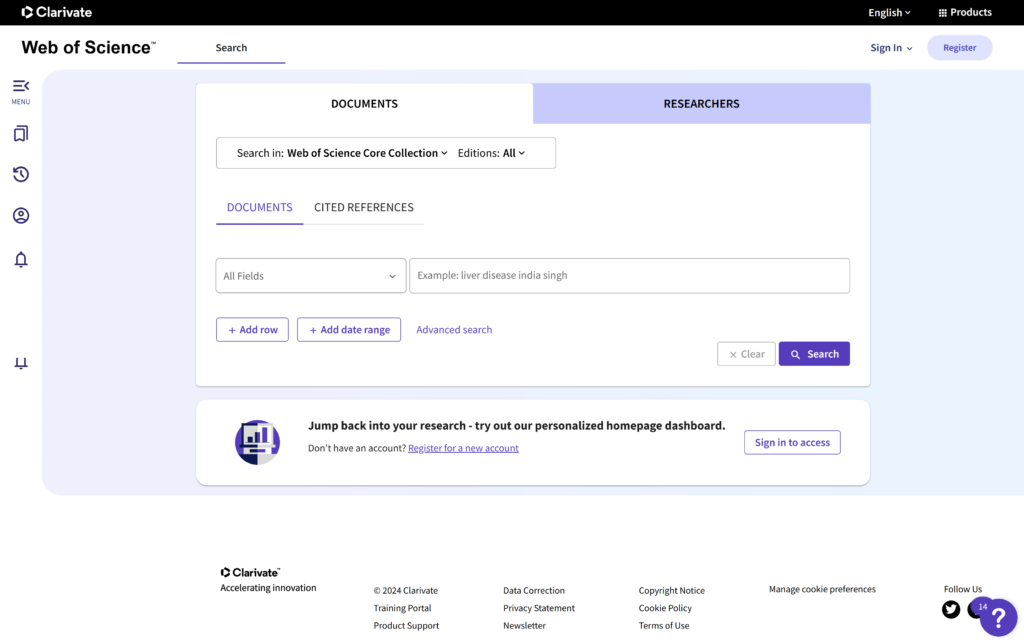
Web of Science is a comprehensive, multidisciplinary research and citation index that provides access to a wide range of scientific, technical, social science, and humanities research. It maintains rigorous criteria for the journals and publications it indexes, ensuring that only high-quality, peer-reviewed content is included. Web of Science includes 98 million papers dating back to 1900.
The Annual Review of Anthropology is a peer-reviewed academic journal that publishes comprehensive literature review articles in anthropology. Each year, a new volume is released consisting of articles written by leading academics in the field, providing overviews of the most important and influential research and scholarship in anthropology.
Annual Review of Anthropology covers significant developments in the subfields of anthropology, including archaeology, biological anthropology, linguistics and communicative practices, regional studies and international anthropology, and sociocultural anthropology.
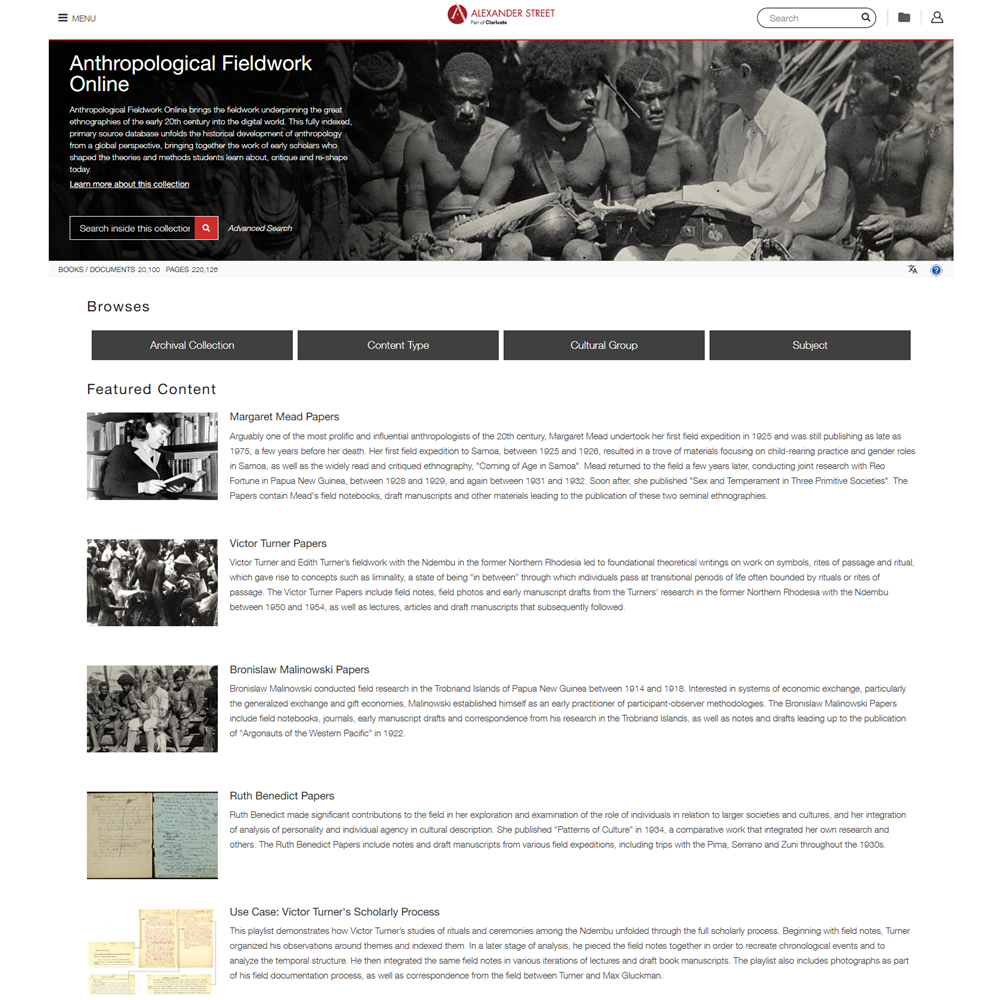
Anthropological Fieldwork Online is a primary-source database that provides access to original materials created by anthropologists during field research. It includes field notes, diaries, photographs, recordings, correspondence, and draft writings. The collection features important archival materials from well-known anthropologists such as Bronisław Malinowski, Victor Turner, Ruth Benedict, and Max Gluckman, drawn from major research archives.
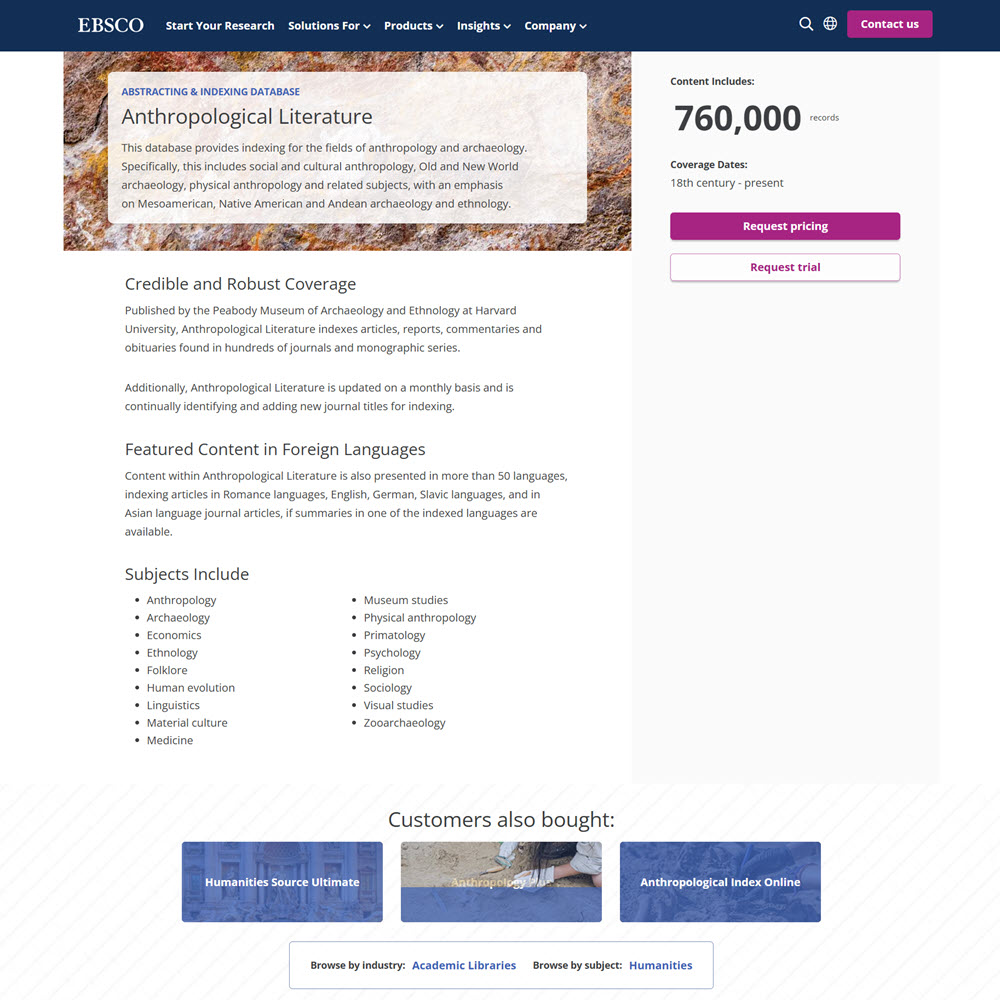
Anthropological Literature is a database created by Harvard University’s Tozzer Library of anthropology and archaeology scholarship. It indexes thousands of articles, essays, and reports from hundreds of journals worldwide — covering cultural, social, biological, linguistic, and physical anthropology as well as related areas like archaeology and ethnohistory. Available through EBSCO.
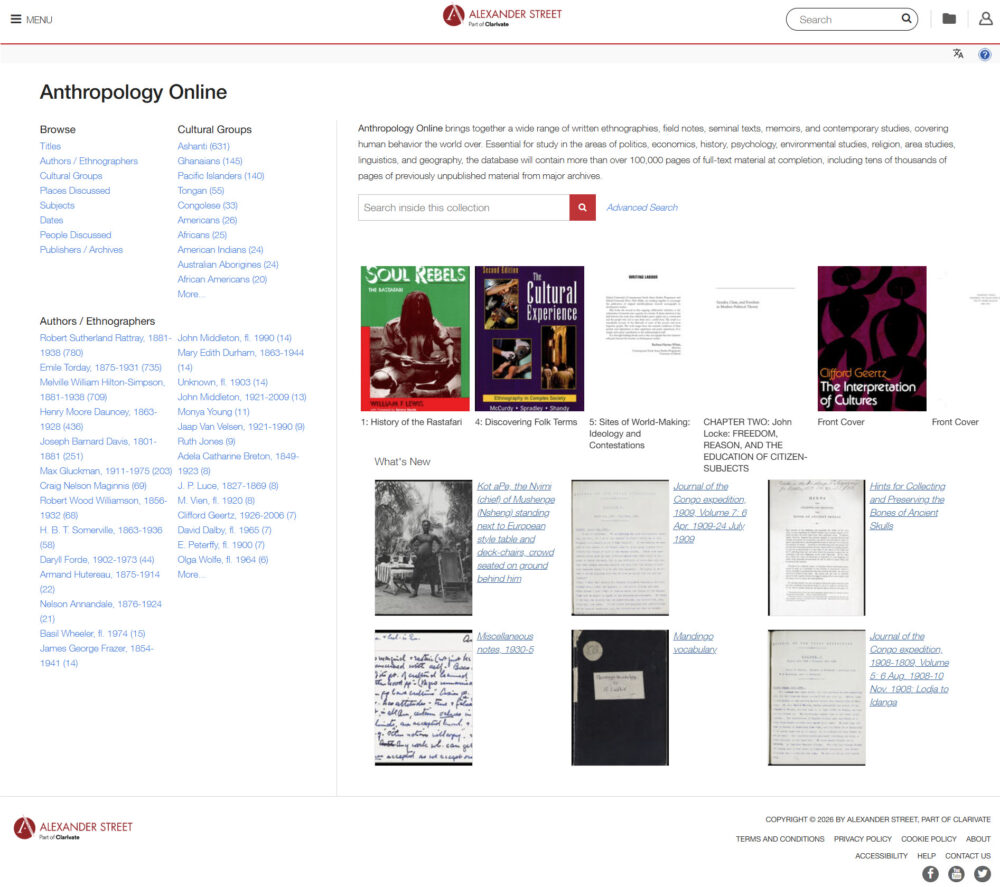
Anthropology Online is a full-text research collection of core written works in anthropology, including classic ethnographies, seminal texts, field reports, memoirs, and contemporary studies about human culture and behavior around the world.
Anthropology Plus combines the content of two prominent anthropology databases: Anthropological Index Online (AIO) and Anthropological Literature (AL). It provides access to a wide range of anthropology-related scholarly literature, including journal articles, books, book chapters, conference proceedings, and reports. Available exclusively on the EBSCOhost platform.
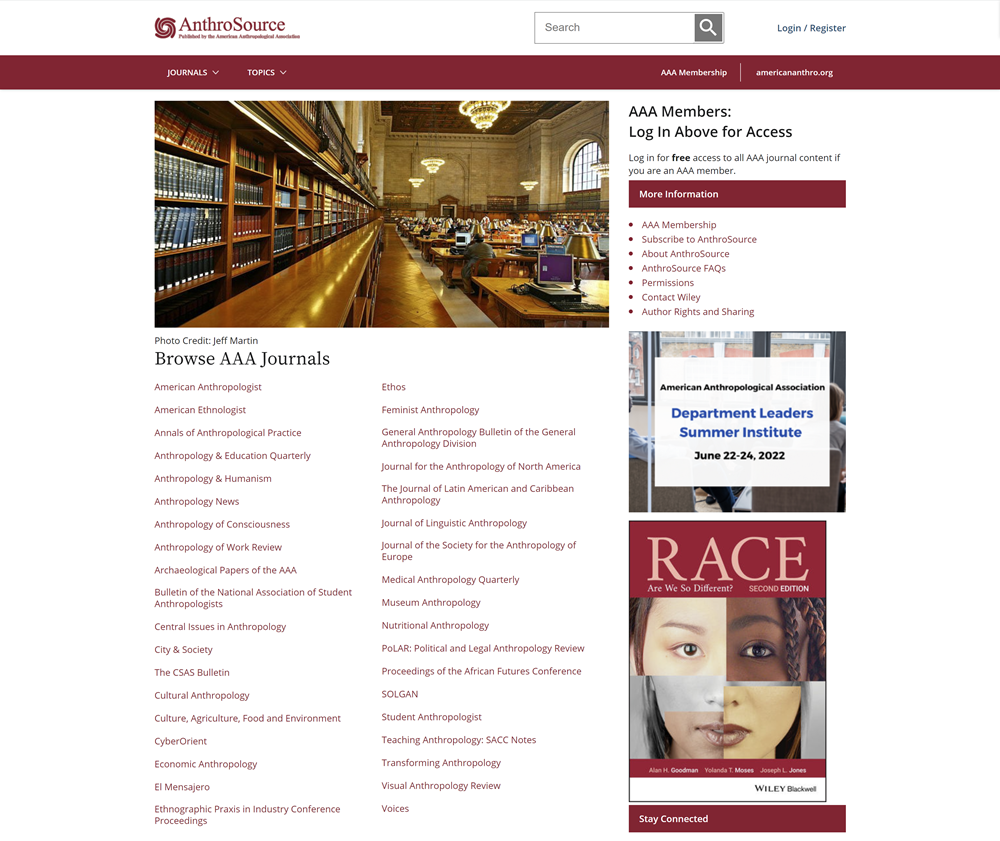
Anthrosource is an online platform for anthropological research. Produced by the American Anthropological Association (AAA) it provides access to scholarly journals, newsletters, and bulletins published by the AAA and other affiliated organizations.
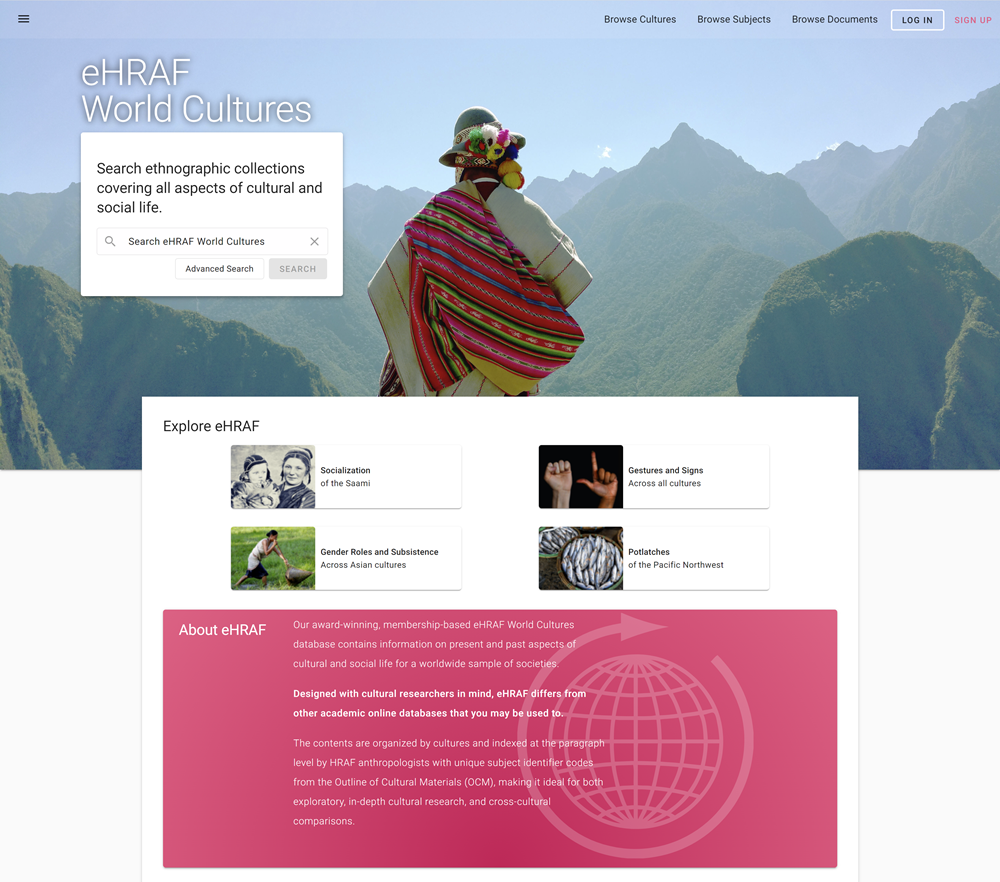
Electronic Human Relations Area Files (eHRAF) is an online anthropological database that provides access to a large collection of ethnographic information about cultures from around the world. It is a unique resource that allows researchers to explore and compare cultural information across different societies and time periods. eHRAF contains ethnographic data from various sources, including books, articles, dissertations, and field reports.
Journal Citation Reports (JCR) is widely regarded as the leading subscription-based resource for identifying high-quality, peer-reviewed journals and assessing the impact, influence, and quality of scholarly journals across all academic disciplines. To learn more about JCR and journal impact, go to Journal Databases.
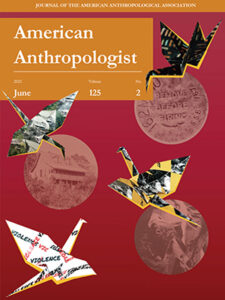
American Anthropologist, the main journal of the American Anthropological Association, publishes archaeological, biological, sociocultural, and linguistic research from both academic and practicing anthropologists, emphasizing the discipline’s relevance to global human issues.
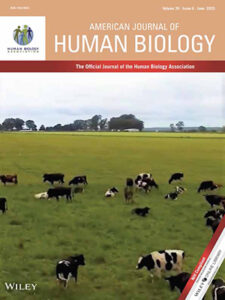
The American Journal of Human Biology publishes original research, reviews, and theoretical articles on all aspects of human biology, health, and disease, with an emphasis on comparative, developmental, ecological, and evolutionary perspectives.
The Annual Reviews are peer-reviewed journals that publish critical literature reviews annually across many disciplines. The Annual Review of Anthropology highlights developments in major areas of anthropology, including archaeology, biological anthropology, linguistics, regional studies, and sociocultural anthropology.
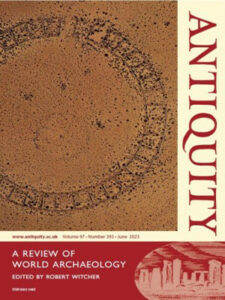
Antiquity is a leading peer-reviewed archaeology journal publishing global research across all time periods, from the earliest human origins to contemporary archaeological theory.
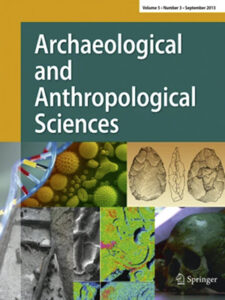
Archaeological and Anthropological Sciences publishes research that integrates natural scientific methods with archaeological inquiry, covering topics such as geoarchaeology, geophysical prospection, and other scientific approaches to the study of the past.
Current Anthropology is a leading journal that publishes research across all areas of anthropology. Its articles cover topics from human origins to the complexities of contemporary life, offering both theoretical and empirical insights across the discipline.
The Journal of Archaeological Science focuses on the development and application of scientific techniques and methodologies across all subfields of archaeology—from isotopic analysis and radiocarbon dating to GIS, remote sensing, archaeobotany, and more.
The Journal of Human Evolution publishes high-quality research on all aspects of human and primate evolution. It focuses on paleoanthropology, fossil discoveries, and comparative studies of living species using morphological and molecular evidence.
The Journal of Peasant Studies is a leading journal on rural politics and development, examining social structures, power relations, and processes of change in agrarian societies, with a focus on the agency of marginalized groups.
Social Networks is an international, interdisciplinary journal that publishes research on the structure of social relationships and networks. It is foundational to anthropological studies of kinship, small-scale societies, power, status, inequality, and cultural diffusion.
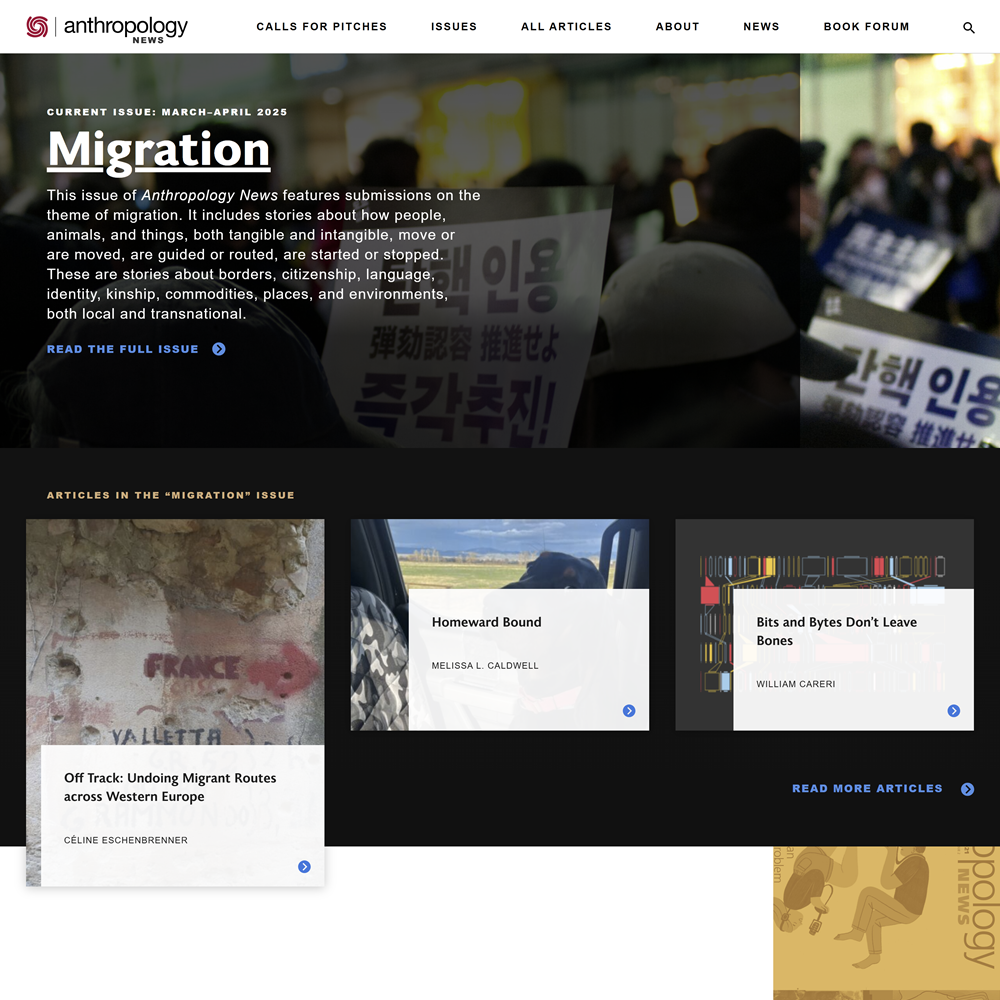
Anthropology News is an online magazine published by the American Anthropological Association (AAA). Each issue is developed around one specific theme featuring articles from anthropologists working in academia, business, government, and nonprofit organizations. The American Anthropological Association (AAA) is the largest professional organization of anthropologists in the United States.
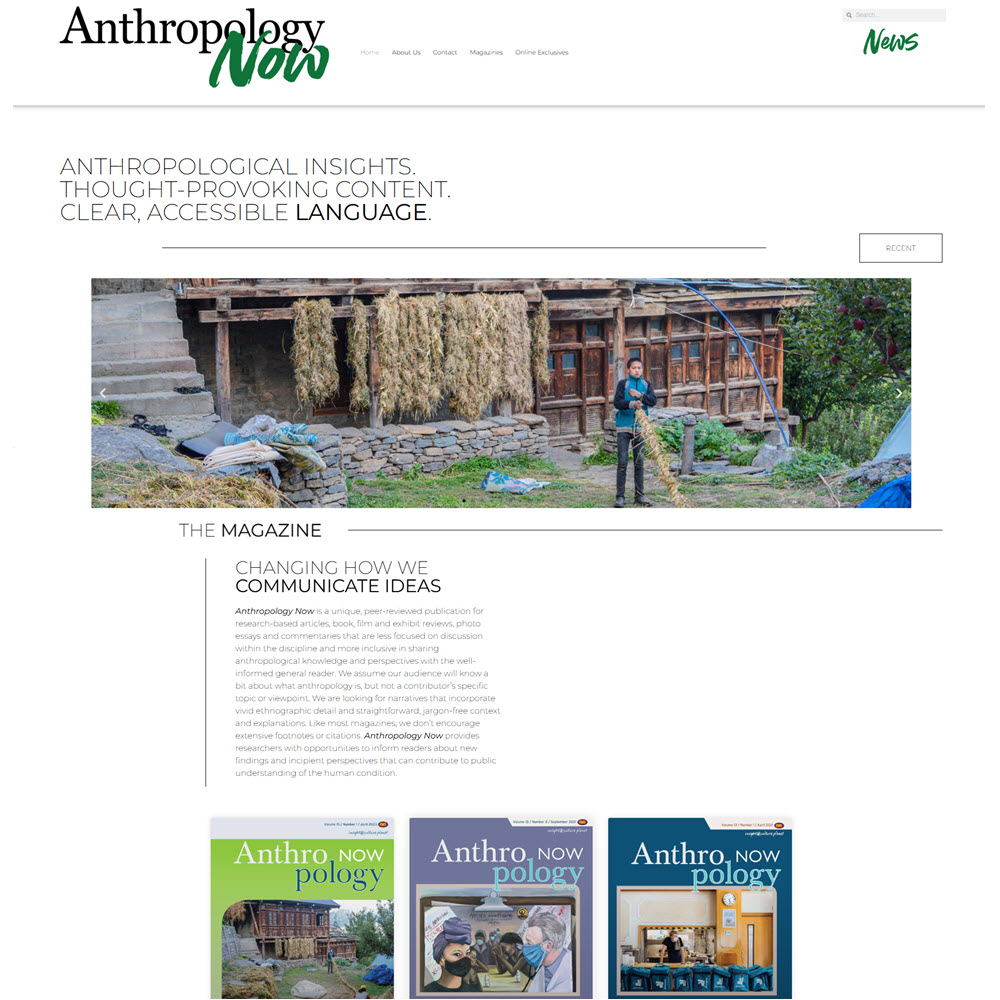
Anthropology Now is a peer-reviewed magazine intentionally written for general readers as well as academics. Unlike many journals that are dense and highly technical, Anthropology Now features clear, understandable writing with minimal jargon and short, essay-style articles on topics connected to current events.
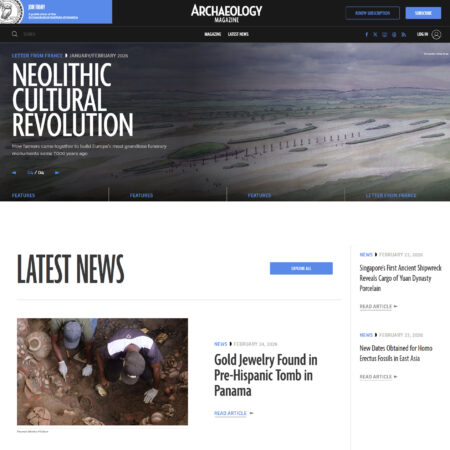
Archaeology Magazine is published by the Archaeological Institute of America. The magazine is written for a broad audience and presents current archaeological discoveries for general readers, with articles about artifacts and the scientific methods used to interpret the past.
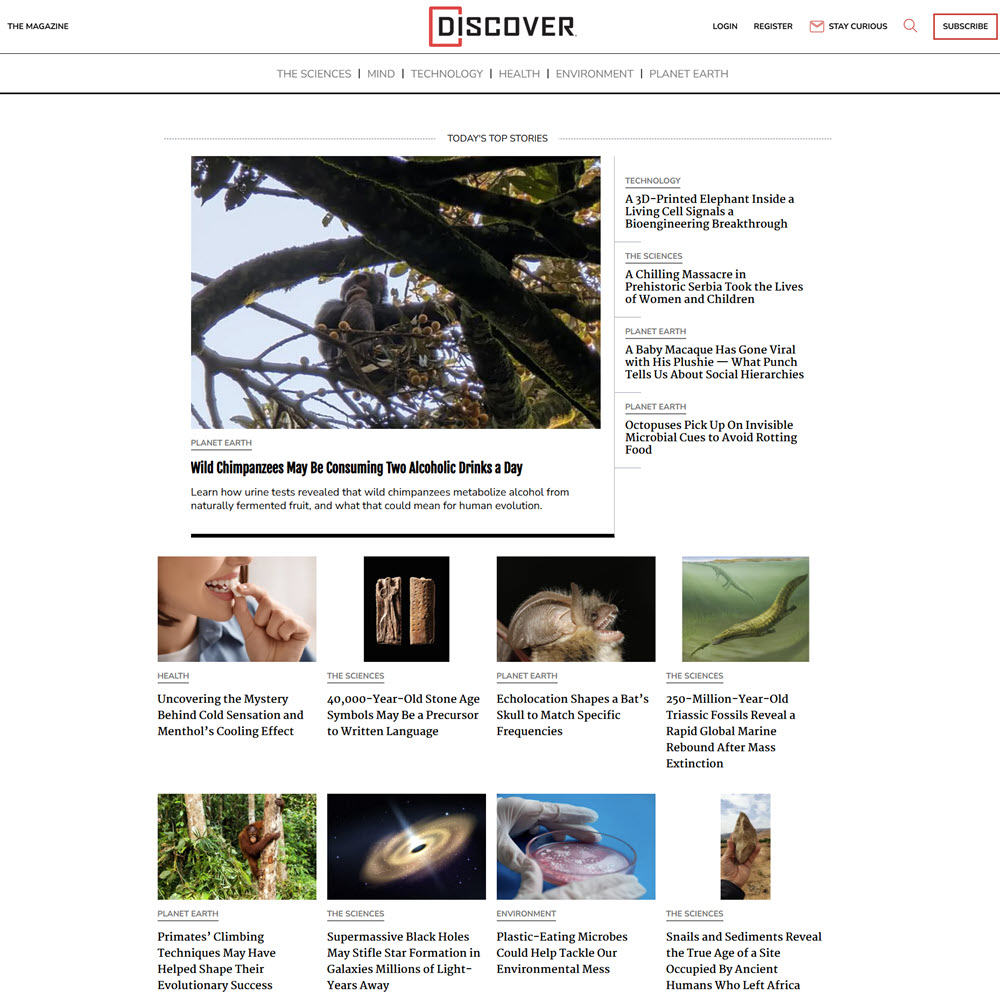
Discover magazine is a well-known general science magazine. It appears in both print and online formats. While Discover isn’t a dedicated anthropology magazine, it does publish anthropology-related content, particularly topics related to human evolution, archaeology, ancient civilizations, primatology, human behavior, and cultural anthropology.
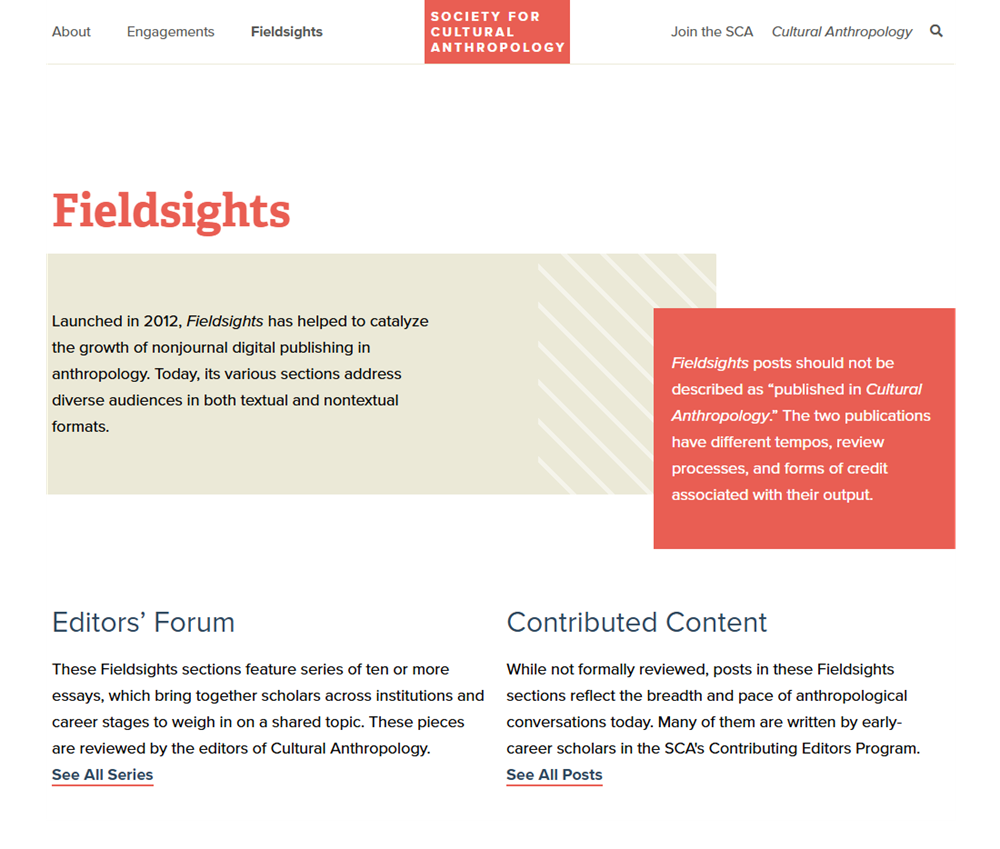
Fieldsights is an online magazine produced by the Society for Cultural Anthropology (SCA), a section of the American Anthropological Association. Started in 2012, Fieldsights is a platform to share ideas, stories, and conversations about culture, society, and current events—from an anthropological perspective.
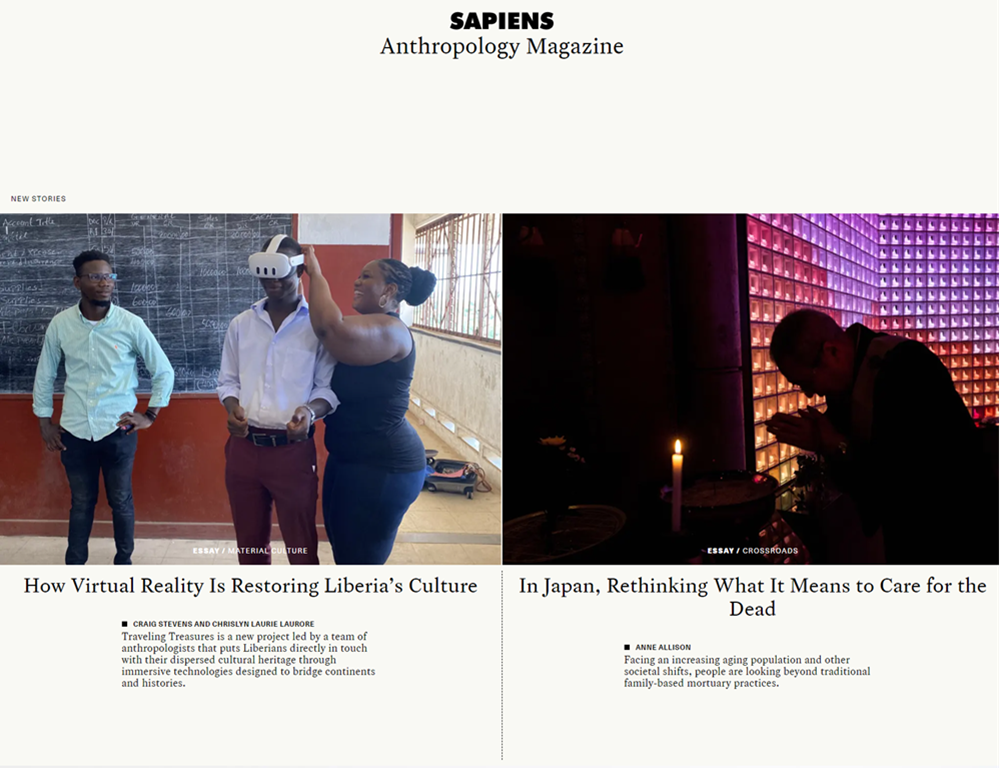
SAPIENS is a free, online anthropology magazine designed to make anthropological knowledge accessible to the public. Providing articles written by anthropologists, SAPIENS includes essays, interviews, personal narratives, podcasts, videos, and photo essays. Topics covered include identity, race, inequality, climate change, archaeology, and global pandemics.
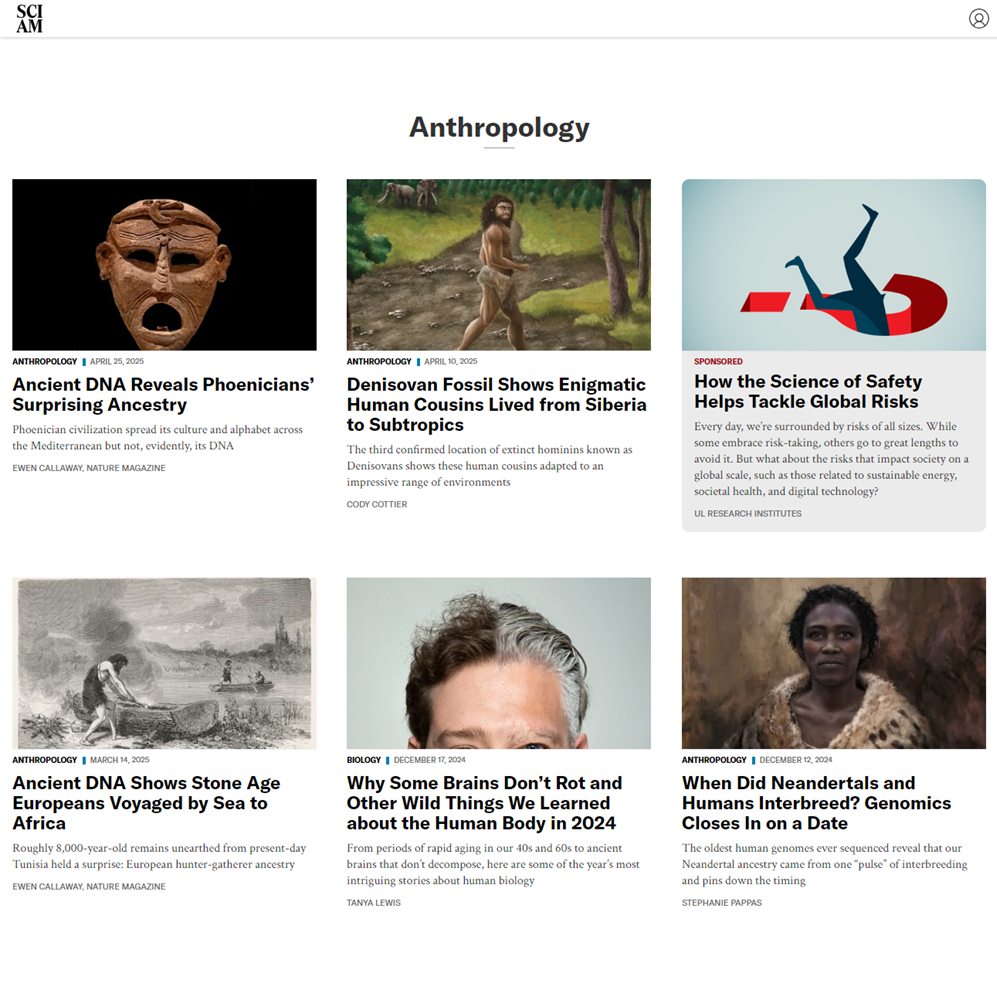
Scientific American – Anthropology is the anthropology-related content published by Scientific American, the popular science magazine that covers science for general readers. It’s not a separate magazine — instead, it’s a special topic area where Scientific American groups together articles focused on human evolution, cultures, societies, ancient history, archaeology, and ethics in anthropology.
Sage Research Methods is a major subscription database that guides users in understanding research methodologies across different academic disciplines. It provides electronic access to reference books, journal articles, instructional videos, and other research methods resources.
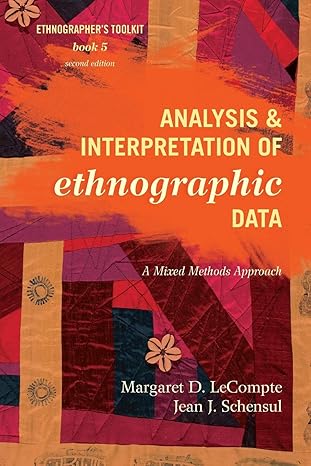
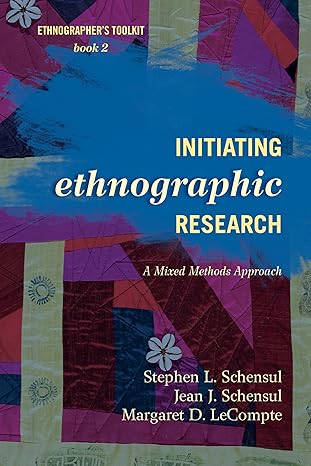
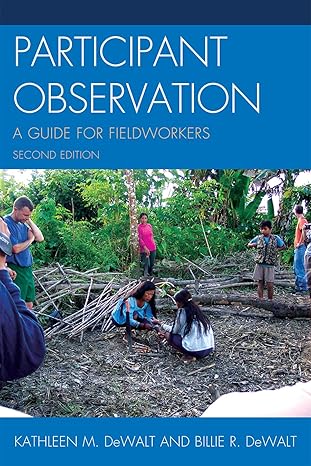
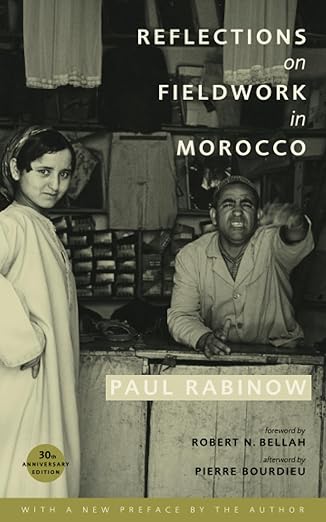
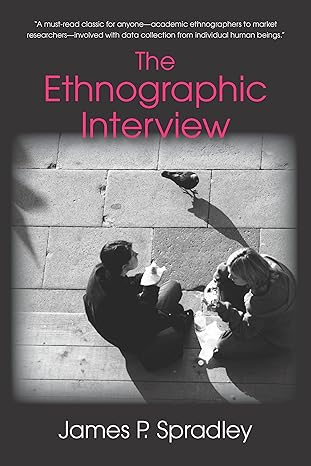
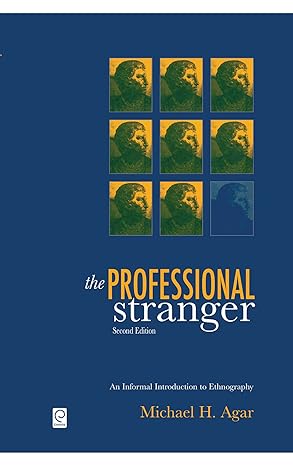
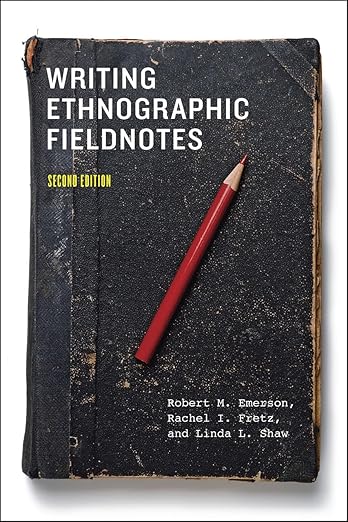
Most social science students are required to take at least one research methods course as part of a department’s core curriculum, which introduces the basics of how research is done in a specific discipline. The following books offer clear, in-depth explanations of research design concepts, methods, and techniques used in anthropology research.
Open source/ Free
Subscription required