
Reference Resources
Use reference sources for concise summaries, clear definitions, explanations of key concepts, and reliable background information.

Overview
Encyclopedias, dictionaries, handbooks, and bibliographies can help you understand the basics of your topic. They give you background information, explain key terms, and help you get a clearer picture of what your research is really about. Subject encyclopedias and handbooks are especially important to academic research. Handbooks provide summaries of what scholars broadly agree on about a topic, while subject encyclopedia entries are written by experts and reviewed by editors, making them more reliable than general web sources.
Bibliographies
Traditionally, a bibliography lists all the sources used when researching and writing a paper, report, or project. These might include books, journal articles, websites, videos, interviews, etc. The bibliography is usually found at the end of your work. However, a bibliography can be more than just a list of sources.
Bibliographies can also be a specialized list of sources for the most important and relevant research on a specific topic. Specialized bibliographies are written by subject experts (usually scholars or researchers) and are designed to help researchers quickly understand what has been published on a topic and which sources are most credible or influential.
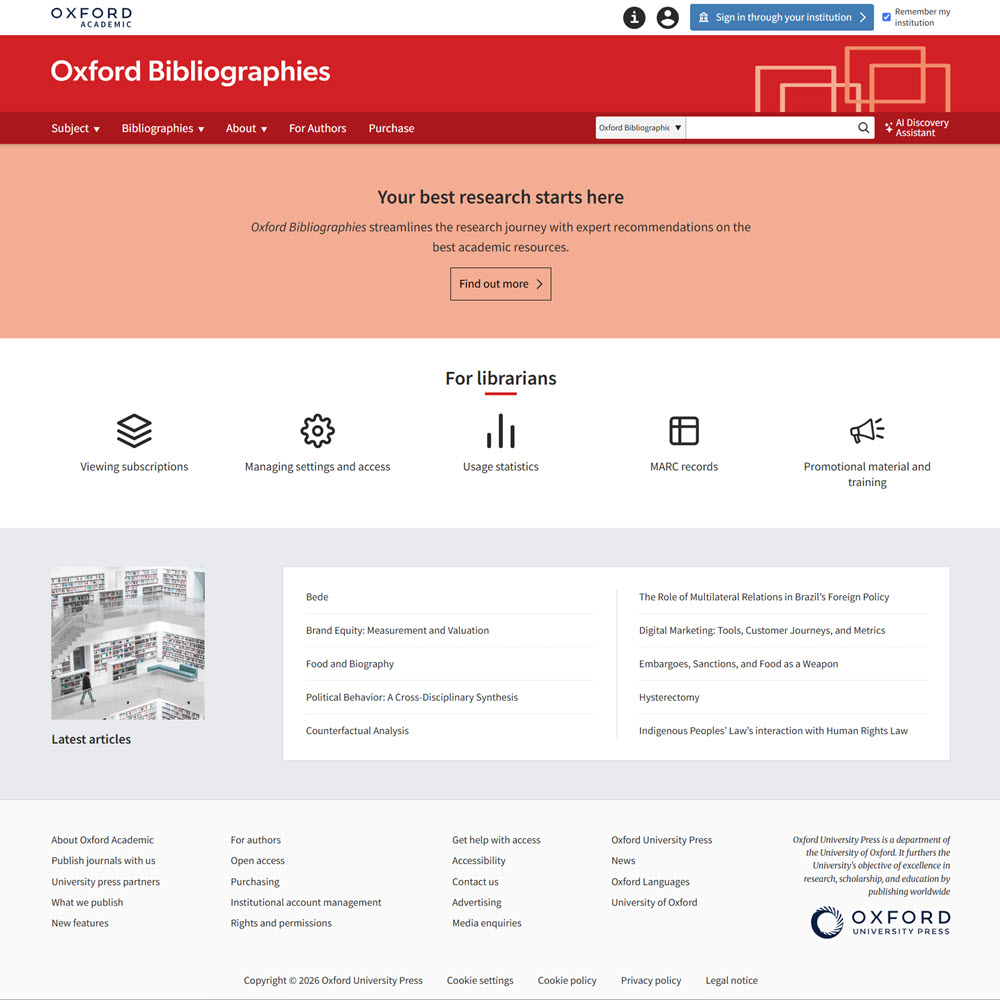
Oxford Bibliographies is a leading scholarly source for expert-curated bibliographies, providing scholarly bibliographies in most social science disciplines, including anthropology, communication, criminology, economics, international relations, political science, psychology, and sociology. Each bibliography provides a list of authoritative books, journal articles, websites, and other materials, all organized by academic scholars.
Companions and Handbooks
Companions are reference works designed to provide researchers with authoritative overviews of a subject, discipline, major concept, or area of research. They are usually collections of essays or book chapters edited by one or more scholars, often leading specialists in their fields, providing in-depth background information, critical analysis, and varied perspectives on a specific subject matter.
Handbooks provide specially commissioned, authoritative, peer-reviewed essays, articles, and chapters summarizing research in specific social science disciplines and sub-disciplines.
The following major academic publishers provide the most comprehensive companions and handbooks with articles from leading scholars and experts in various social science fields.
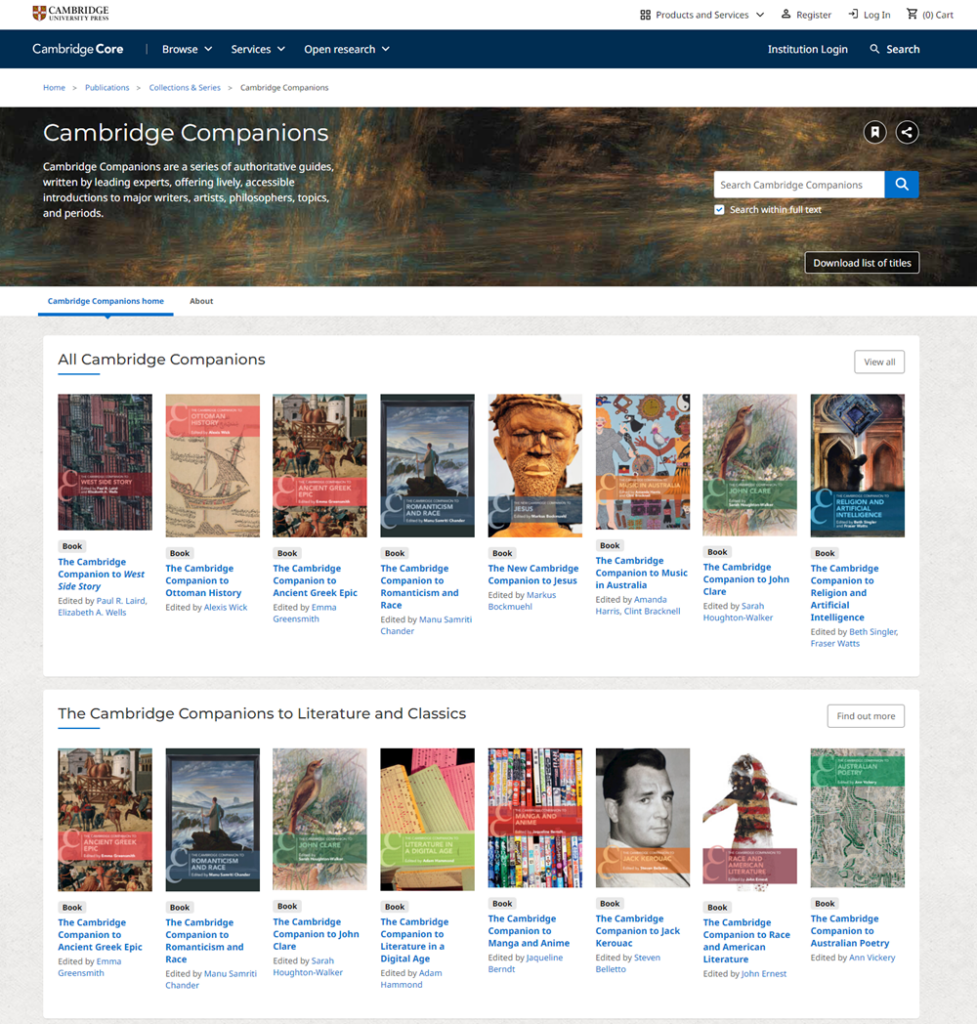
Cambridge Companions are written primarily for history and the humanities. However, they also provide select companions for various social science-related disciplines, including anthropology, economics, government, politics, international relations, policy, human rights, law and legal theory, political and social theory, psychology, and sociology.
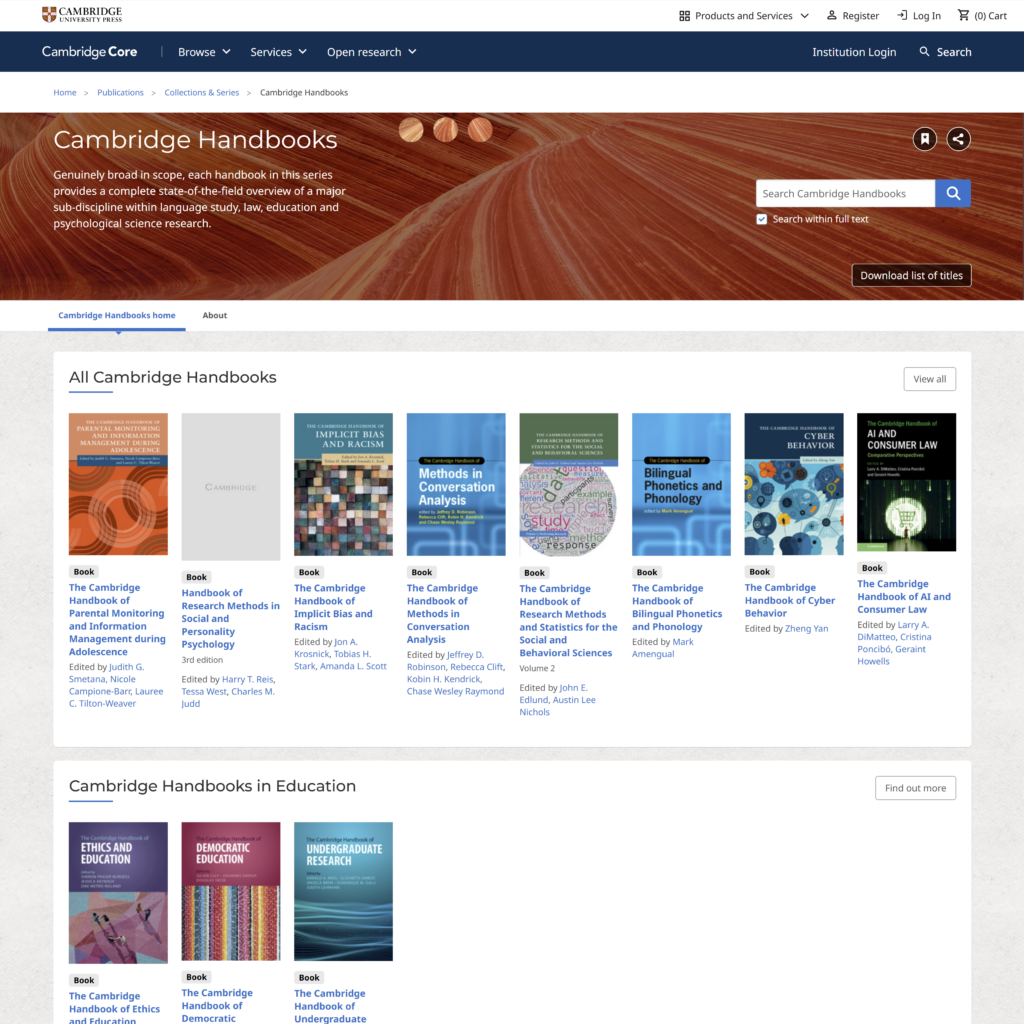
Cambridge Handbooks are a series of reference works published by Cambridge University Press. Each handbook offers an authoritative and comprehensive overview of a specific academic discipline or sub-discipline, providing in-depth analyses and insights into current research and developments.
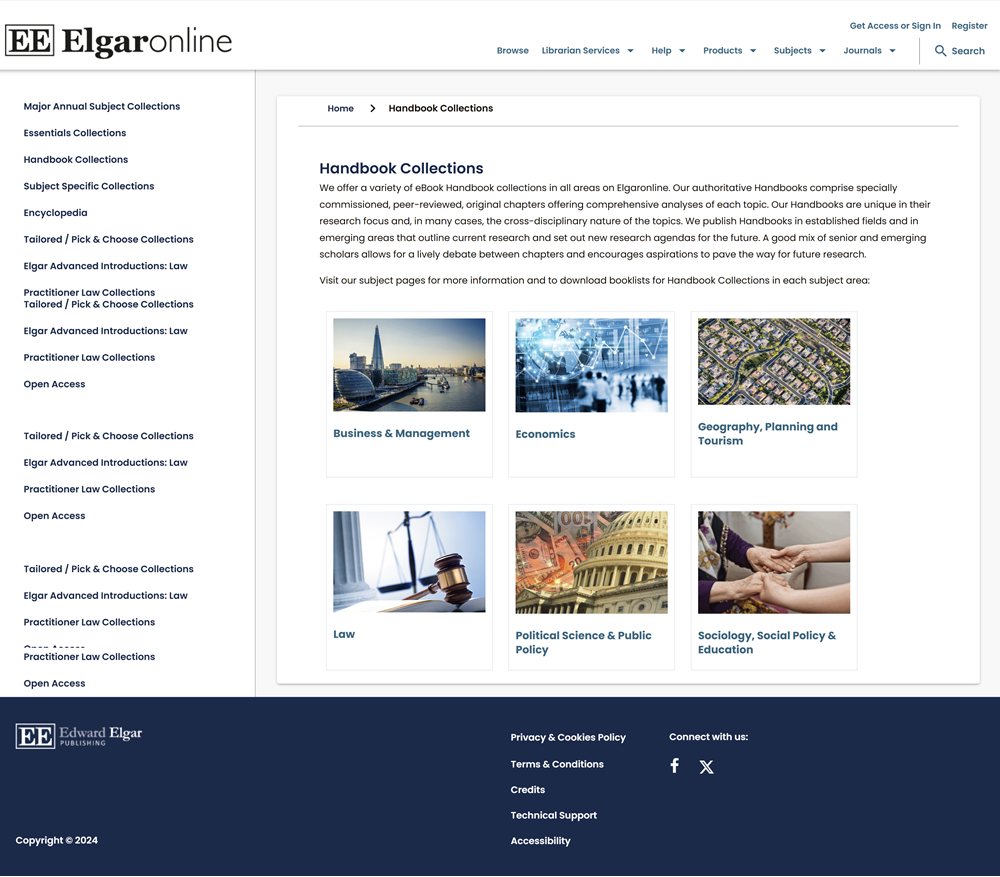
The Edward Elgar Handbooks are published by Edward Elgar Publishing, specializing in law, business, and the social sciences. These authoritative handbooks comprise specially commissioned, peer-reviewed chapters comprehensively analyzing specific topics. Each handbook article is peer-reviewed and written by experts, providing a broad overview of its subject matter and covering all the major aspects of the field.
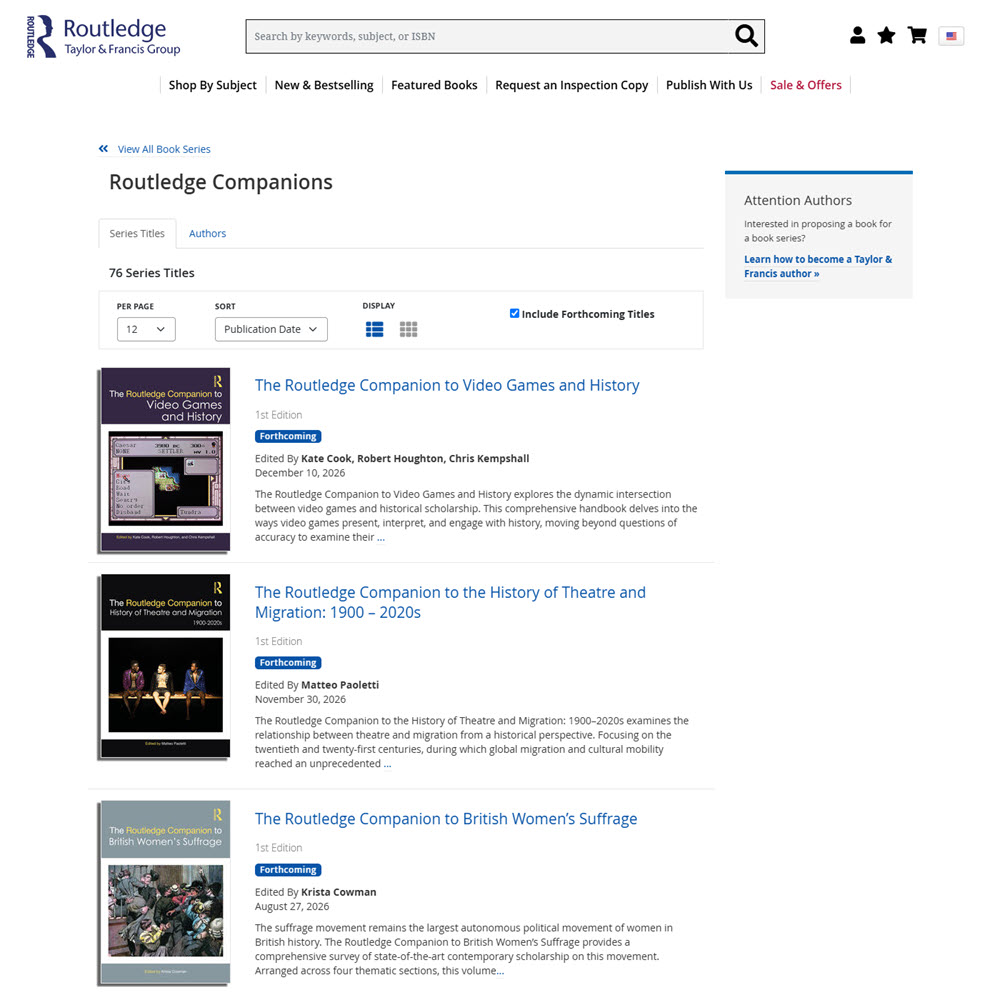
Routledge Companions series is particularly strong in the social sciences. It covers areas such as anthropology, politics, media and communication, sociology, geography, education, and related interdisciplinary fields. Its Companion Encyclopedias are specifically designed to provide comprehensive overviews of humanities and social-science subjects.
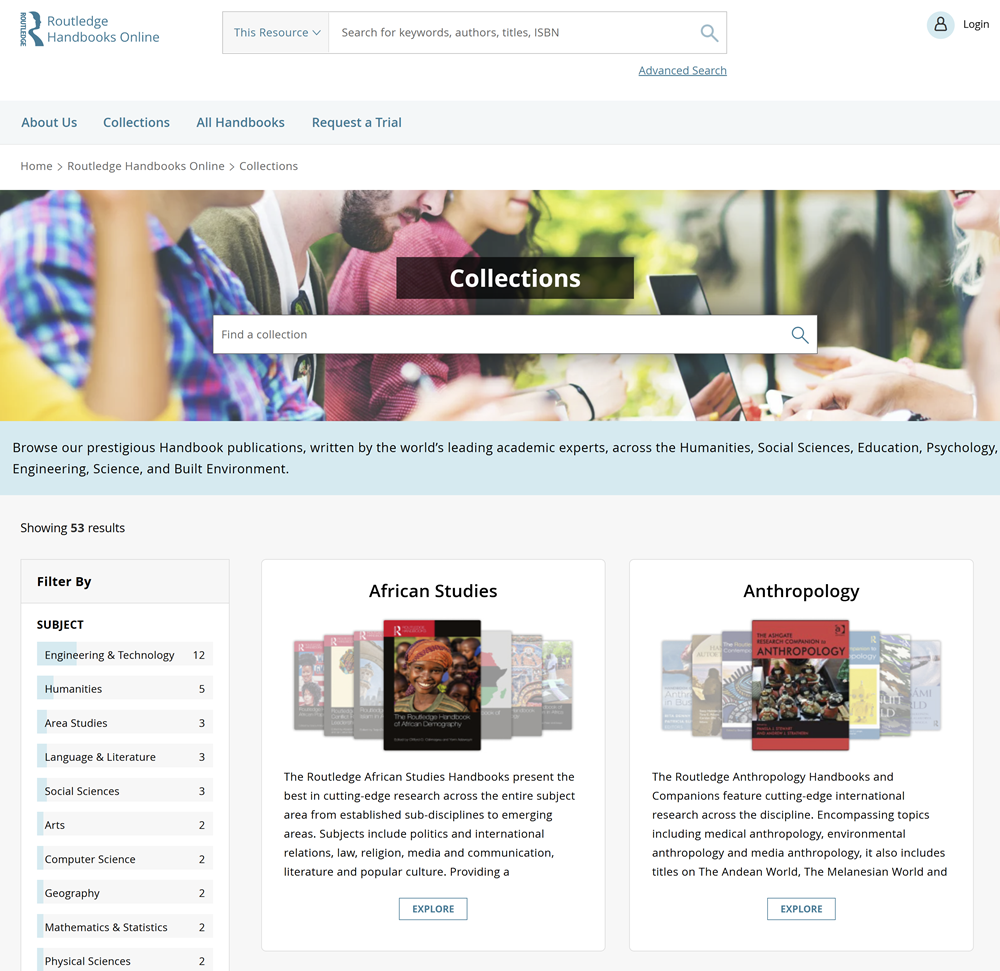
Routledge Handbooks are authoritative, comprehensive reference works published by Routledge, a leading academic publisher. These handbooks provide in-depth overviews of specific subjects or sub-disciplines across various fields, including the social sciences.
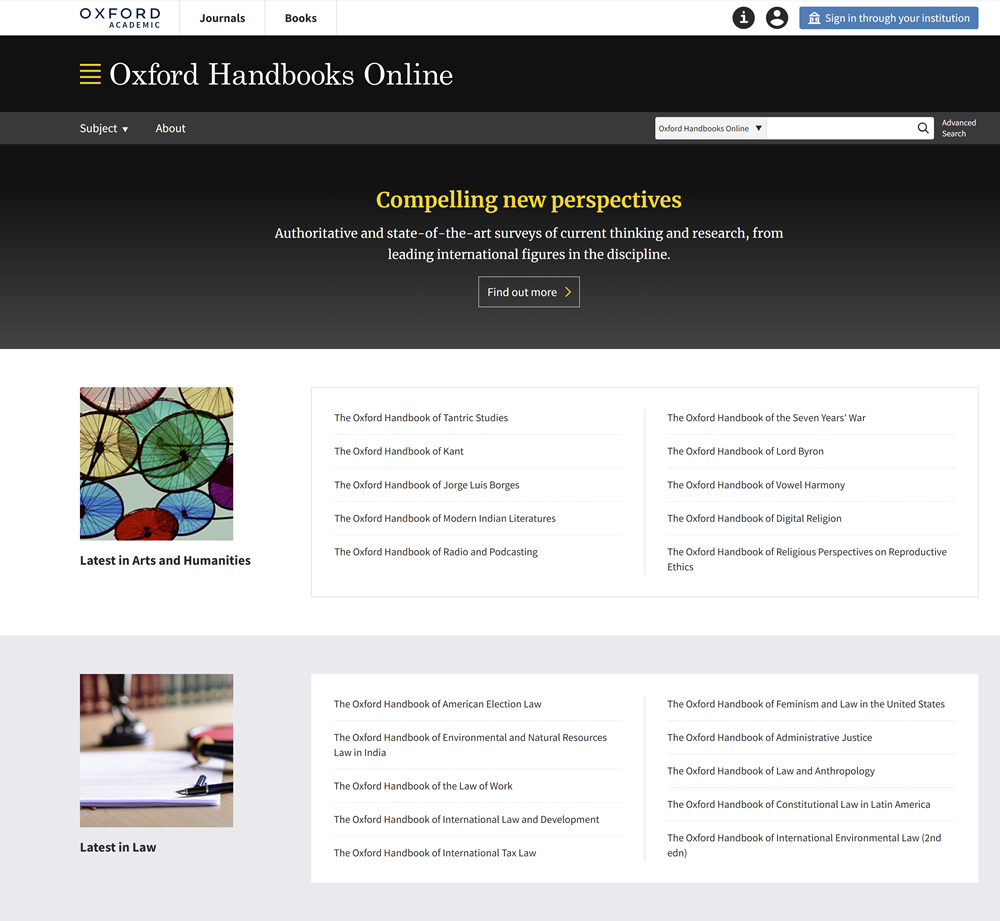
Oxford Handbooks are authoritative and comprehensive reference handbooks published by Oxford University Press. They survey current research across various academic disciplines and provide articles written by leading scholars and researchers. Oxford Handbooks cover various social science subjects, including psychology, sociology, economics, and political science.
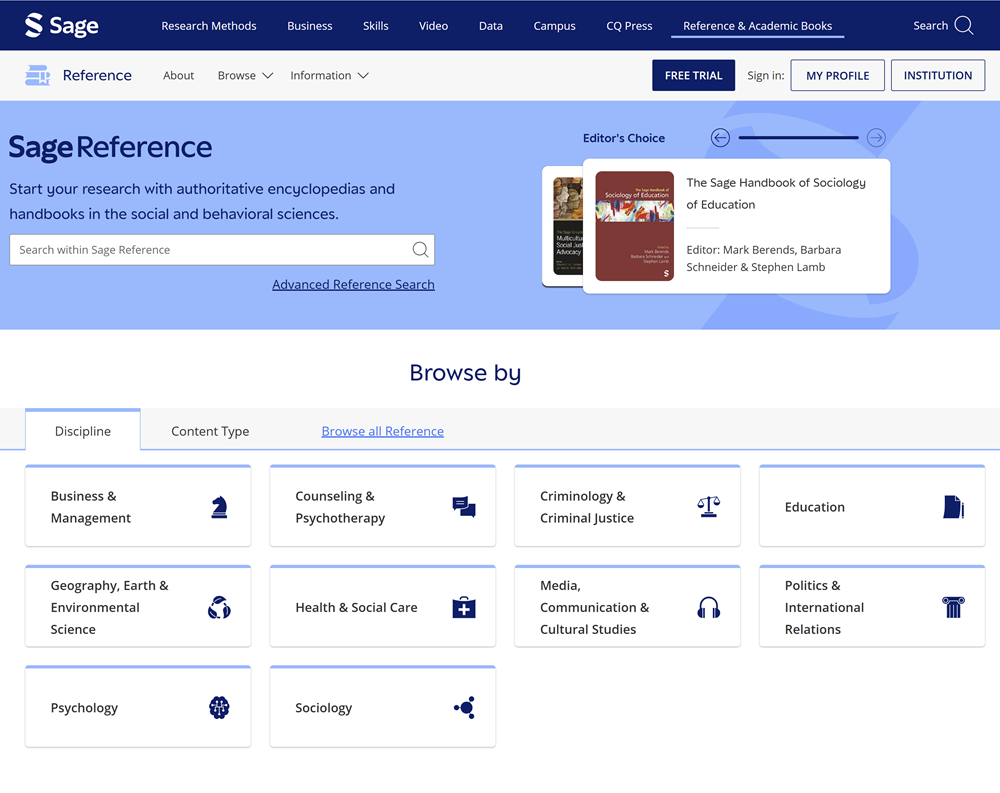
SageReference provides diverse academic and reference books, including encyclopedias, handbooks, and other social science materials. Sage also provides specialized subject-specific reference books for all the social sciences, including communications, sociology, history, psychology, political science, and more.
Introductions
Introductions provide an overview of a specific subject or topic, providing a starting point for further exploration. It is often written in an easily understandable style for scholars new to the topic. They typically summarize essential information about a topic, explain fundamental concepts, put issues in historical context, and highlight key themes or arguments.
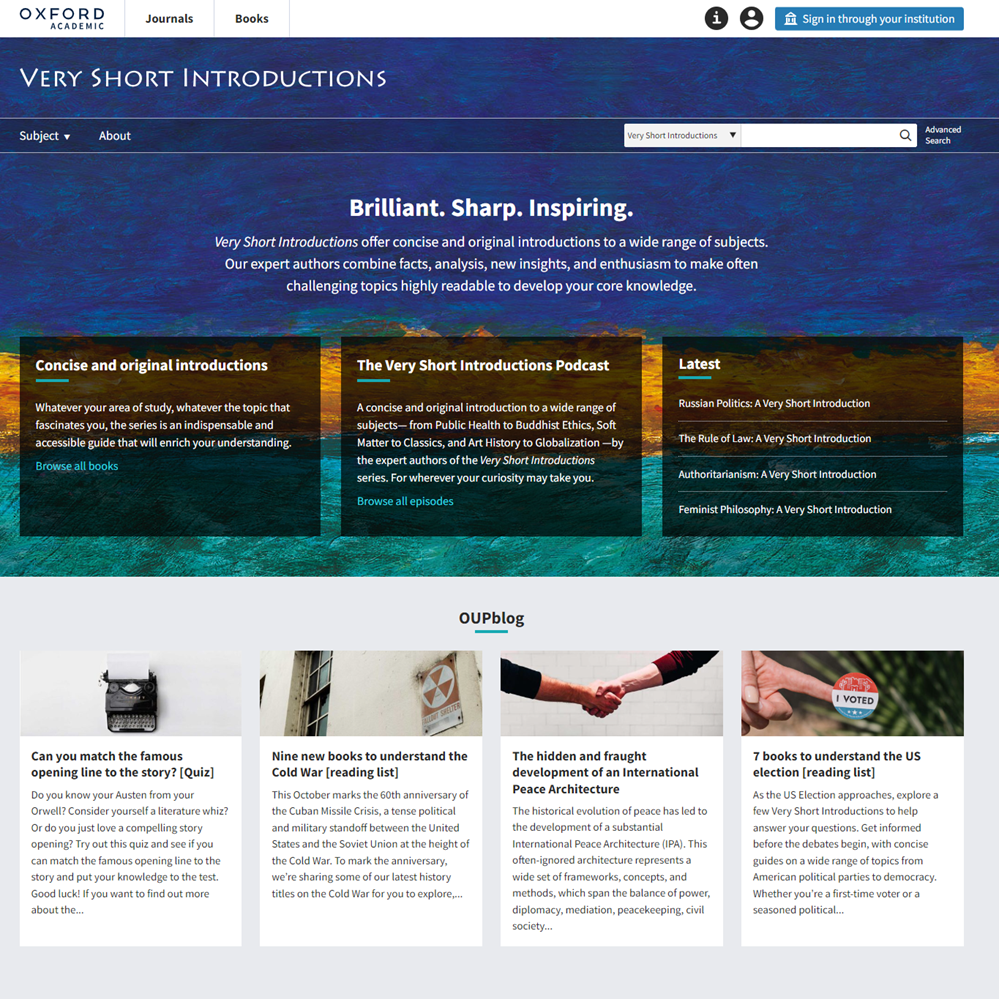
Oxford University Press publishes the Very Short Introductions series, which offers short, concise, authoritative overviews of individual topics. Social science areas covered include anthropology, business and management, criminology and criminal justice, development studies, economics, education, environment, human geography, politics, regional and area studies, sociology, and warfare and defense.
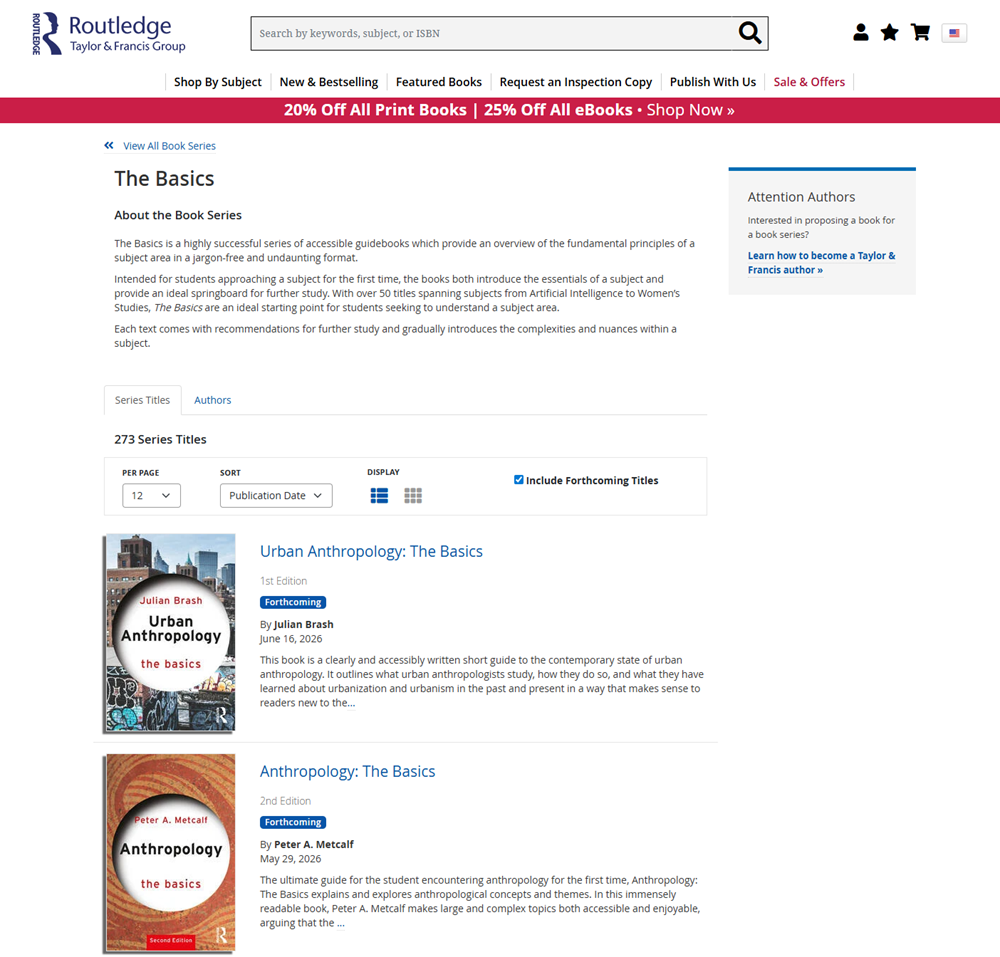
The Basics is a short, introductory book series from Routledge designed to help readers quickly understand the core ideas of an academic subject. Each title describes key concepts in clear, everyday language. The series is especially useful for undergraduates and general readers who want a solid foundation before moving on to more advanced study. Social sciences covered include anthropology, economics, education, psychology, and sociology.
Dictionaries and Thesauri
Dictionaries and thesauri are essential tools for academic research and writing.
- Dictionaries provide precise definitions and explanations of terms, which are crucial for understanding the specific vocabulary used in academic texts.
- Thesauri help you diversify your use of terms. Both resources enhance the quality of your writing with proper spelling and the avoidance of repetition, allowing you to be more sophisticated with your writing.
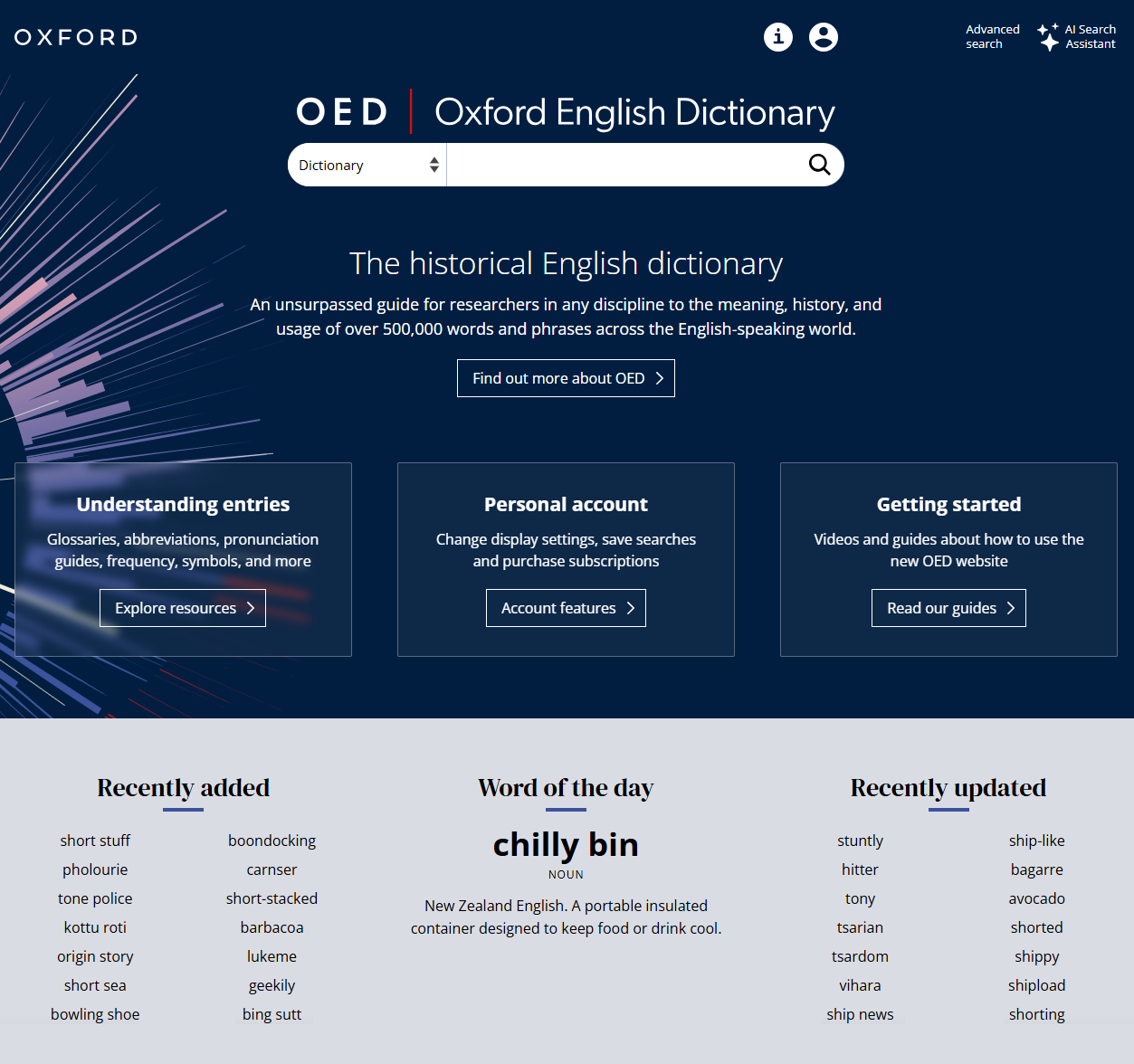
The Oxford English Dictionary (OED) is the definitive English language dictionary. Used by scholars and researchers around the world, it is the most comprehensive and authoritative dictionary available. Its most unique feature is its inclusion of the first known use of words, their etymologies, and changes in meaning throughout history. The OED is continually updated to include new words, updated definitions, and new research findings.
Although some definitions might be accessible for free, the full OED is not available without paid access.
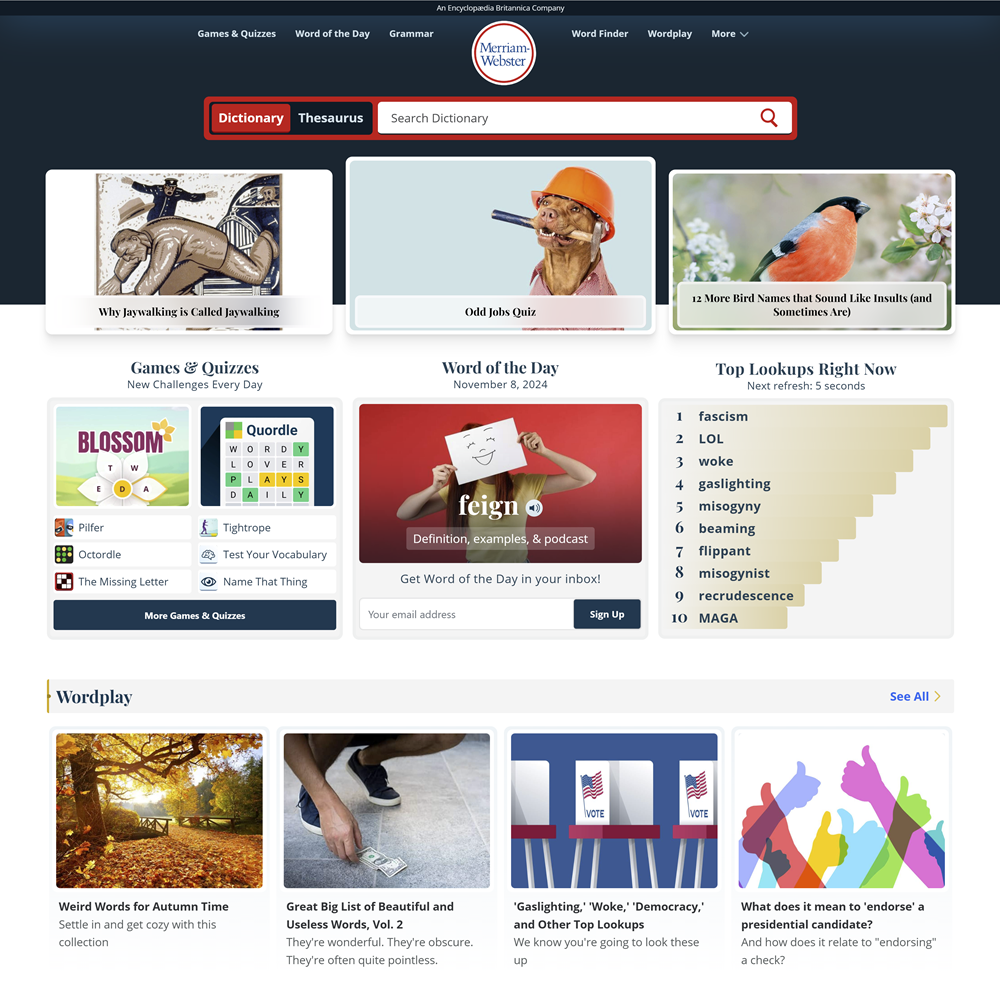
Like the Oxford English Dictionary, Merriam-Webster is a highly respected comprehensive English language dictionary. However, Merriam-Webster focuses on providing modern definitions that reflect contemporary usage. It is a practical, user-friendly dictionary, making it more suitable for everyday reference and general language needs, including spelling, pronunciation, and current meanings.
Various versions Merriam Websters are available in print; however, you can access the free digital version online, which includes a thesaurus.
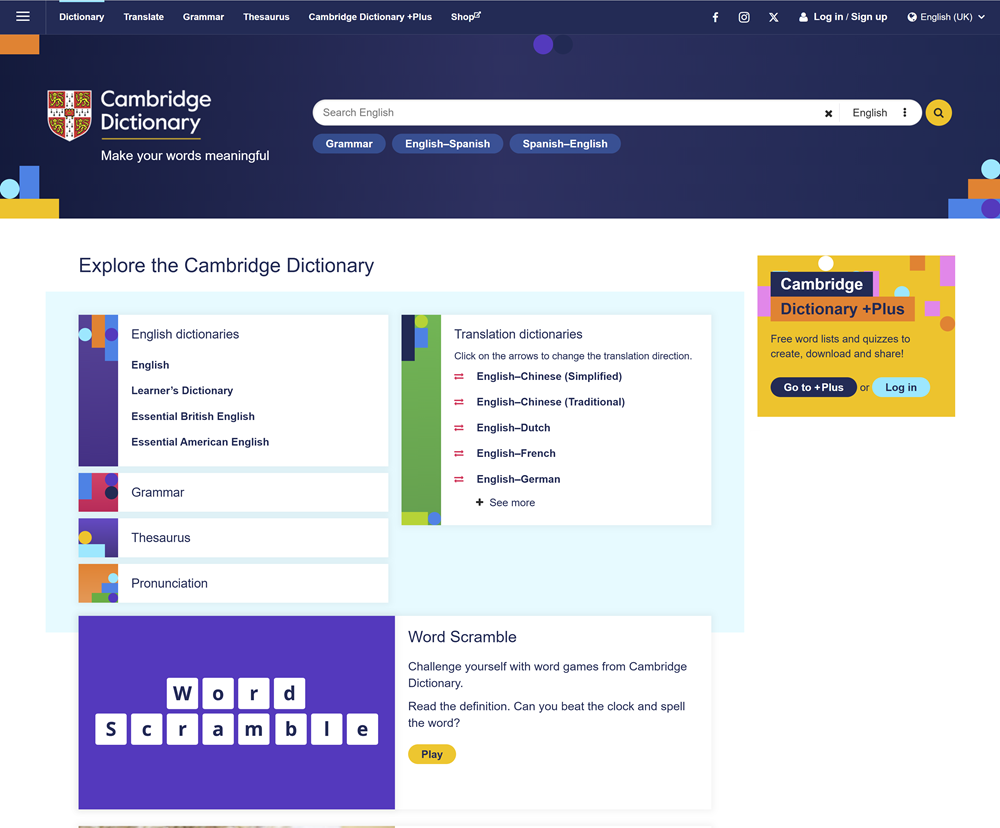
The Cambridge Dictionary is a comprehensive and respected dictionary published by Cambridge University Press. It is an authoritative dictionary for the English language and is designed to be user-friendly. It includes British and American English terms and provides modern definitions that reflect contemporary usage.
The Cambridge Dictionary is available in print in various versions; however, you can access a free digital version online, which includes a thesaurus.
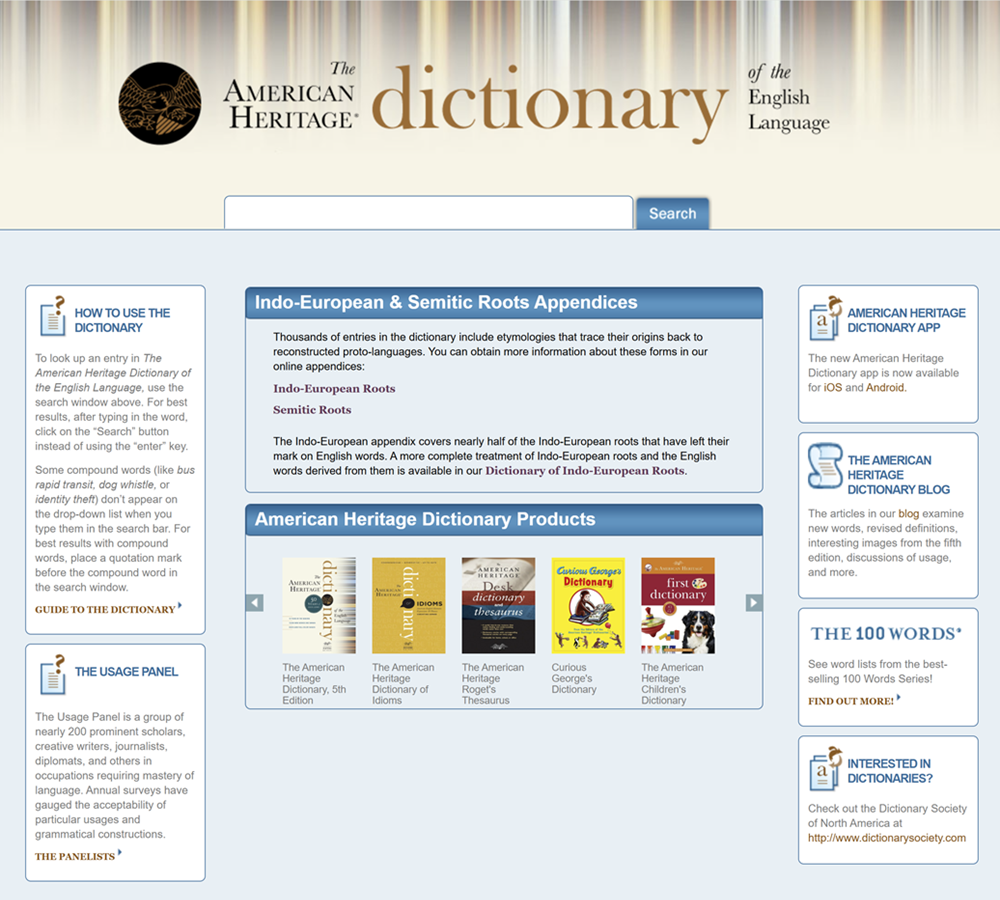
The American Heritage Dictionary is known for its comprehensive coverage of the English language. Like the OED, it provides detailed etymologies (word origins), synonyms, and regional notes. A free digital edition is available online.
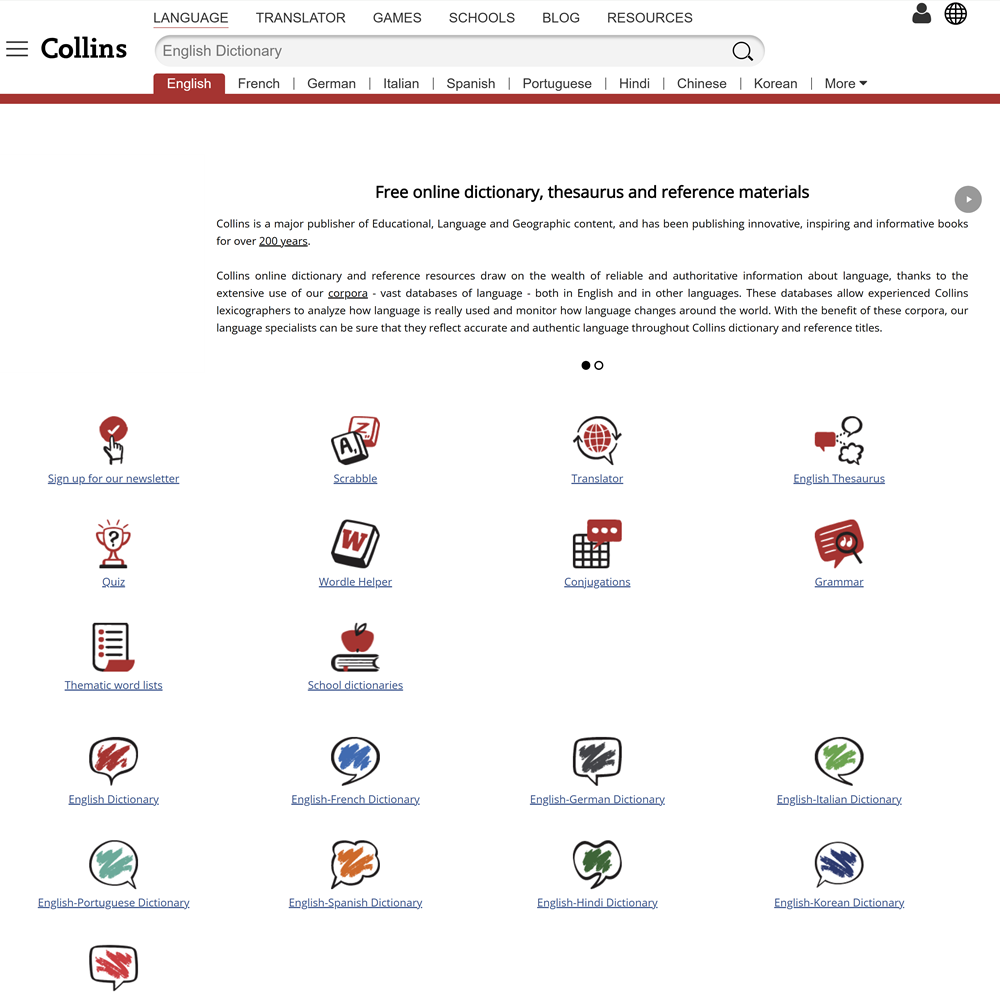
The Collins Dictionary includes definitions, pronunciations, and usage examples for words in English and other languages. It focuses on providing modern definitions. It is a practical, user-friendly dictionary, making it more suitable for everyday reference and general language needs, including spelling, pronunciation, and current meanings.
Various versions of the Collins Dictionary are available in print; however, you can access the free digital version online, which includes a thesaurus.
General Encyclopedias
General encyclopedias are reference works that provide broad, comprehensive information on a wide range of subjects. You should already be familiar with the most well-known encyclopedias, Britannica and World Book. Their entries cover diverse topics and provide basic overviews useful for beginning research and gaining general knowledge of a subject area.
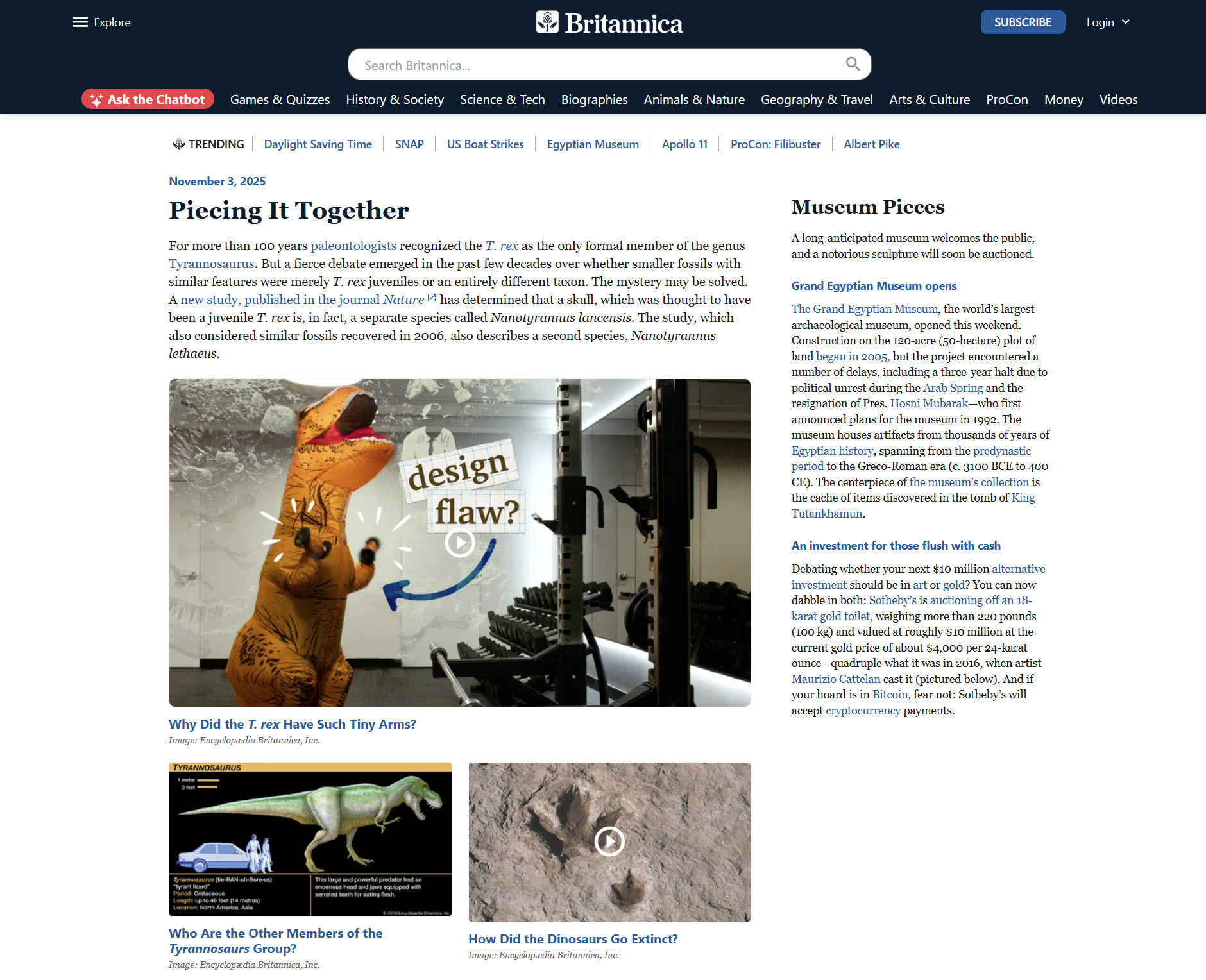
Encyclopedia Britannica has a long-standing reputation as the most well-known and well-respected English language reference encyclopedia. Its articles are written and reviewed by experts in their respective scholarly fields. Known for its accuracy and reliability, Britannica has been continuously published and updated since 1768, providing in-depth articles on nearly every academic subject and topic imaginable.
Many schools subscribe to academic versions of Encyclopedia Britannica, which provides unlimited, ad-free access to content. However, Encyclopedia Britannica online also offers a limited amount of free digital content on its website that is supported by advertisements.
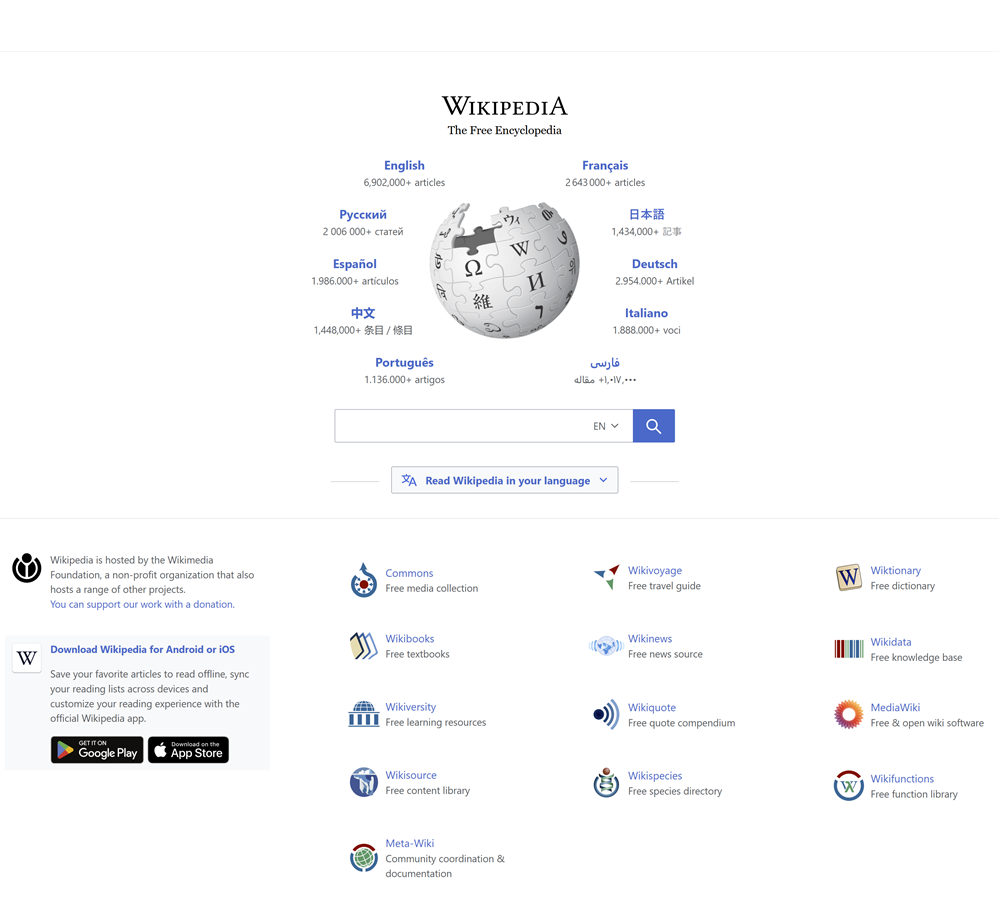
Wikipedia articles have improved in quality. However, Wikipedia authors are anonymous, and anyone can contribute to editing their articles. You can still use the information you find on Wikipedia to search for more credible resources. However, be careful not to cite Wikipedia as a university-level source of information. Encyclopedias should be used for factual background information.
The icons next to each resource indicate its access requirements.
Open source/ Free
Subscription required

Although some universities and colleges still keep print reference books in their collections, most reference materials, including atlases and maps, dictionaries, and encyclopedias, are primarily available online.

Credit: iStock