Getting Started

Learn the basics of how to locate sources, giving you a strong foundation to start your research.
Startup concept. laptop on wooden table and and icon network connection with rocket icon flying out of screen

Overview

Picking academic sources for a new assignment can be challenging when you’re just beginning college-level research. It requires critical-thinking skills, deeper analysis, and the ability to evaluate a source’s credibility, moving beyond the kinds of sources often used in high school.

Getting Started pages offer practical tips to consider before beginning a research paper or project, including how to:

  • Use library resources effectively
  • Start with reference sources
  • Explore and understand the different types of research databases
  • Choose and use citation management software
  • Access library resources from off campus
  • Obtain materials from other universities
Do You Know
Research on “library anxiety” found that between 75 % and 85 % of college students reported feelings of fear, anxiety, or apprehension about using the library and their research skills. Learn More
Asian girls are sitting bore online with a tutor on a laptop while sitting in the bedroom at home night. concept online learning at home

The Research Process

It’s important to consider different steps of the research process before selecting resources. Considering research steps ahead of time can help you produce higher-quality work. Each discipline has its own research steps. However, these overall core steps remain fairly consistent.

The following resources provide in-depth explanations about the various research steps mentioned above. These are a mix of open-access and subscription resources. Check your library for access.

Thinking About Your Research

Before starting a new research project, it’s important to ask yourself a few questions to guide your focus. Now that you know the basic steps in the research process, here are some important questions to consider—and why they matter.

You will be expected to follow a given timeline when assigned a research paper project. How much time you have to finish and submit your paper depends on the type of assignment and the length of the paper. A typical 10 to 20-page paper is usually due at the end of a one-semester course. If you are working on a 100+ page capstone or thesis, you may have two or more years before submission. Regardless of the timeline, here are a few things to remember:

  • Your instructor will usually provide dates by which certain aspects of your paper or project (literature review, annotated bibliography, outline, etc.) must be completed. Adhere to those dates to avoid falling behind.
  • Set aside enough regular time to write. This helps you avoid writing your paper at the last minute, leaving you more time for revisions.

Many social science courses require students to complete a research paper or project by the end of the semester. Choosing a topic is the first step in that process. While you don’t need to have a fully developed research question right away, starting with a general idea of the subject area or discipline your project will explore is important.

At the beginning, your topic will likely be broad, and that’s okay. As you read and learn more, you’ll refine your focus and narrow your topic into a specific, manageable research question.

Your research question should be of interest to you and meet the requirements set by your instructor. These requirements are typically outlined in an assignment prompt that explains the objectives and goals of your paper. Be certain you read the prompt carefully to understand what you’re being asked to do with the assignment. If you still have questions, contact your instructor for more details.

The scope of your topic plays a key role in finding relevant information. A broader topic may yield more search results, but not all will be useful. A narrower topic may result in fewer sources, but they’re more likely to be directly relevant. Aim for a balance. Your topic should be broad enough to find sufficient material, but focused enough to guide your research clearly.

Finding resources for a literature review is usually the next step in the research process when preparing a writing assignment. Your literature review evaluates existing research on a particular topic. Reviewing previous relevant literature on your topic is an especially important part of writing a capstone, thesis, or dissertation.

A basic literature review summarizes relevant historical and current research, themes, or concepts published in academic articles, books, and other scholarly materials on your topic. A literature review also helps you identify gaps
in the existing literature. To ensure you know what type of literature is required for your literature review, consider the following questions:

  • Are you searching for scholarly/peer-reviewed journals or books?
  • What about non-scholarly resources, such as general magazines (Time, Newsweek, etc.) or newspapers?
  • Does your research require raw data for analysis, or can you use statistics from other sources?

Depending on your discipline and academic level, different professors will have different assignment requirements. First-year students are sometimes given more leeway to use fewer scholarly sources than upper-level students, who are expected to rely primarily on peer-reviewed sources. Regardless, make sure to read your syllabus or assignment prompt for details. If in doubt, ask your instructor for clarification.

Help With Writing a Literature Review

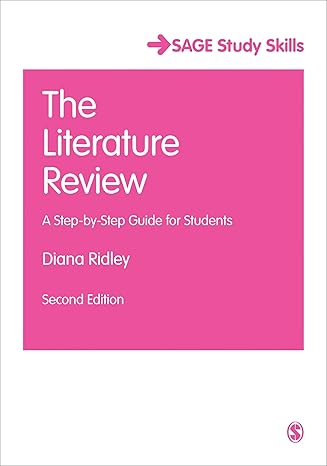
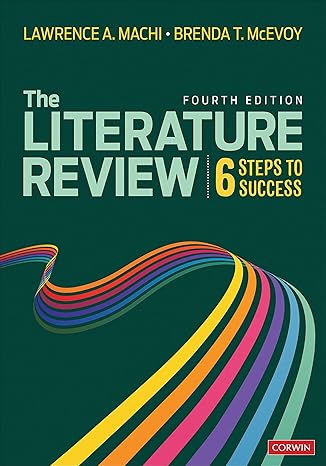
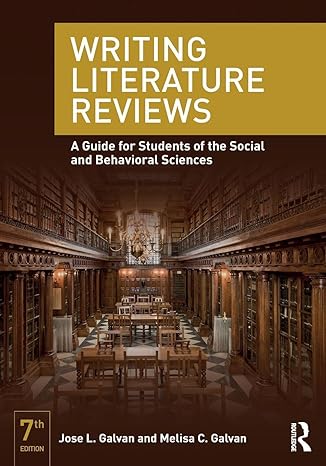
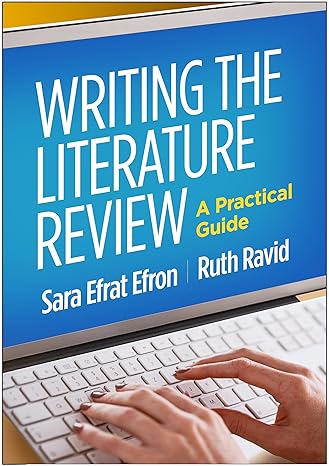
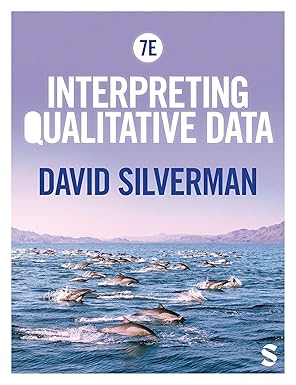
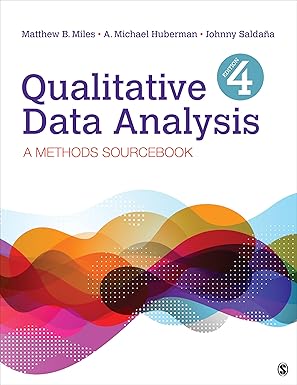
Several high-quality resources can help you write a strong literature review. They provide guidance on how to structure and critically analyze the articles you read.

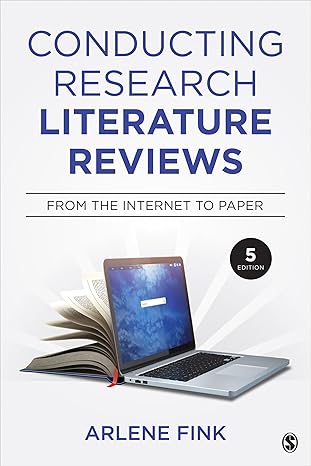
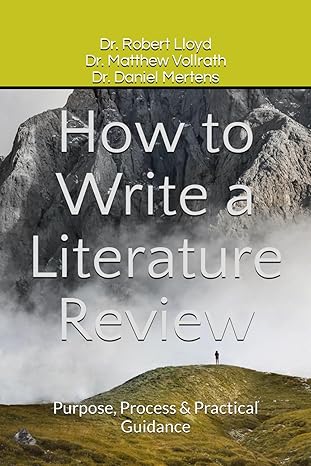
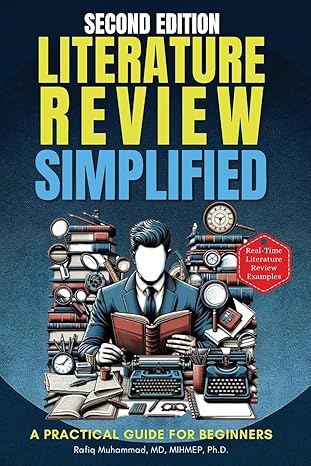
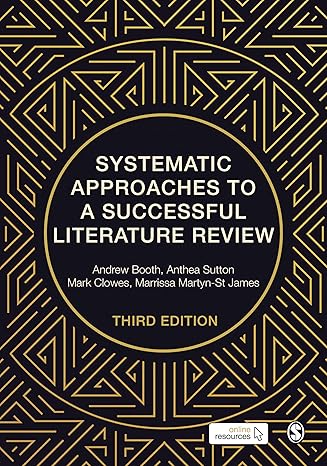
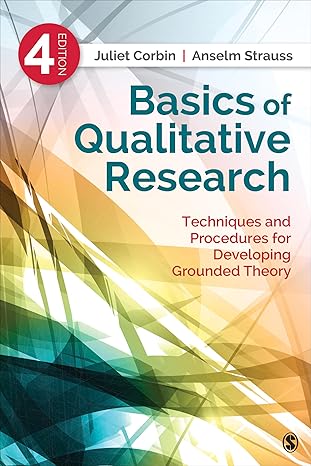
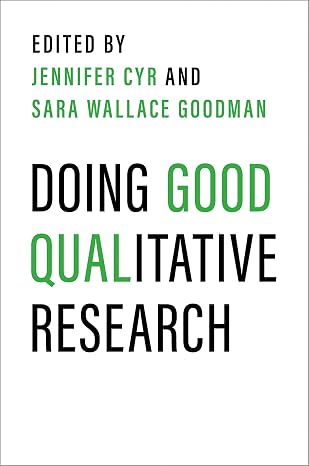
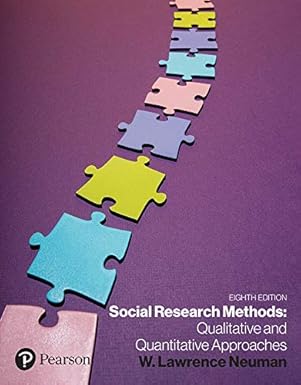
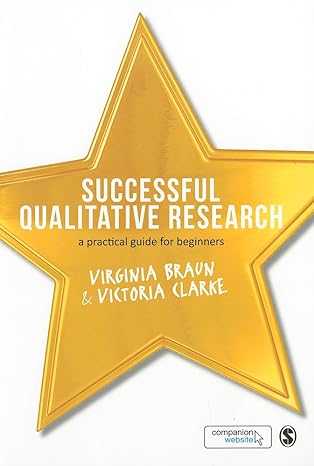
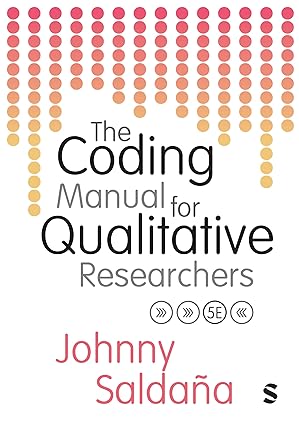
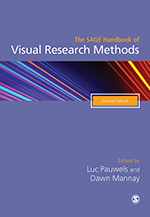
One of the best free, quality resources available online is Writing a Literature Review (Owl Purdue), produced by the Purdue University OWL (Online Writing Lab), which provides comprehensive writing resources, including guidance on writing a literature review. Also consider one of the following books that should be available in your library.

Your research methodology refers to the approach you take to conduct your research. This includes gathering and analyzing data and drawing conclusions. The most important factor in your methodology will be your chosen research design, which serves as the basis for any project or study.
Your research design should outline the research’s goals and objectives, the methods for data collection (e.g., surveys, interviews, observations, or analyzing other people's data), and the strategies for analysis. There are various research methods to choose from depending on the type of study you are conducting. The three most common are as follows:

  • Quantitative Methods (number,  statistical analysis),
  • Qualitative Methods (evaluating meanings, feelings, experiences, or perceptions),
  • Mixed Methods (a combination of both quantitative and qualitative).

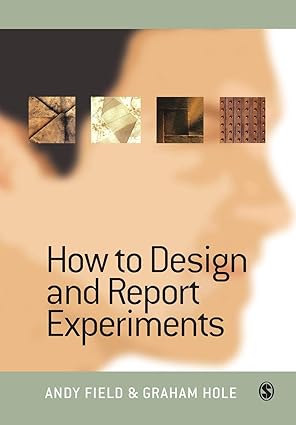
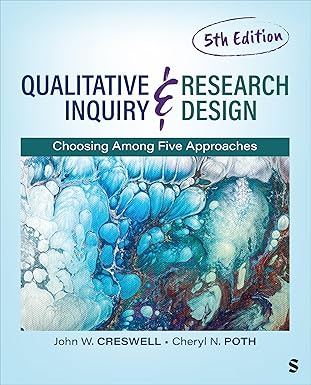
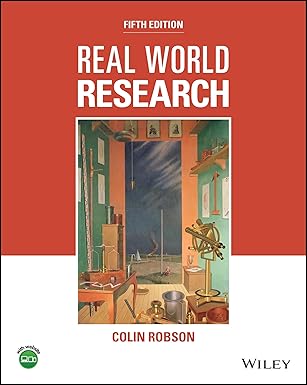
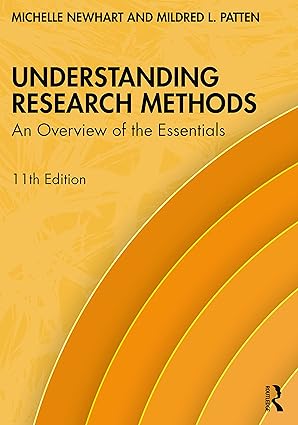
These are only a few methods; for a more comprehensive understanding of research methods, we recommend consulting the following resources for further explanations. Although specific to different universities, the general information provided will be very helpful:

Taking a research methods or design course is one of the most effective ways to prepare for a research project. A research methods course teaches you how to find, organize, and study information in your field. You’ll learn about both qualitative methods (interviews or observations) and quantitative methods (surveys or data analysis), and how to choose the right approach for your research question.

A research methods course is required for many majors, especially in the social sciences. But even if not, taking one as an elective early in your college career is smart. That way, when it’s time to do your research, you’ll already know how to plan your project and can focus more on reading, writing, and improving your work.

Get Started With Research

The following sections introduce the essential tools and services you’ll use as a researcher. Learn how to navigate library resources, including reference materials and research databases. Learn how to use citation management software, obtain materials from other institutions, and access library resources from off campus.

  • Hipster student studying in library

    Use library resources as starting points to ensure credible, relevant, and high-quality research.
  • Encyclopedias: E-encyclopedia concept. Open laptop and book compilation in a classroom.

    Use reference resources for overviews and background information on topics.
  • Person who attends online lessons on a digital screen

    Use general and subject databases to locate articles of all kinds on your topic.
  • Citation

    Use citation management software to keep track of your sources.
  • Interlibrary Loan: A woman puts books into boxes to mail.

    If your library doesn't have it, get it through interlibrary loan (ILL).
  • Cyber security concept, Woman hand typing on keyboard with login and password on screen display. Data protection and secured internet access.

    Learn how to access your school's online library resources while off-campus.
Ad