Interlibrary Loan
If your library doesn't have a book, journal article, or other type of resource, get it from another library.

Overview
Need a book, article, or other resource your school library doesn’t have? Ask your librarian about interlibrary loan (ILL). This service lets you borrow materials from other libraries if your home library doesn’t have what you need.
When you request a book through interlibrary loan, the physical copy is shipped to your library for pickup. If you need one or two chapters of a book or an article from a journal, those are typically scanned and emailed directly to your school email address. Libraries rely on fair use for scanning book chapters or articles for student use.
Each college or university adheres to copyright law and fair use policies, so check with your library if you have questions about their copyright policies.
Library Consortiums
Check to see if your library is part of a consortium of multiple libraries. A library consortium is a group of independent institutions that agree to work together and pool their library resources to provide materials to their students that might be difficult for them to purchase alone.
For example, Borrow Direct is the resource-sharing program of the Ivy Plus Libraries Confederation, a group of Ivy League institutions and other partners such as MIT, Stanford, the University of Chicago, Duke, and Johns Hopkins.
Another well-known consortium is EZBorrow, an interlibrary loan service used by academic libraries, primarily in Pennsylvania and other East Coast states. It allows students, faculty, and staff at participating institutions to request books directly from other member libraries when their own library does not have the item or when its copy is unavailable.
Students and faculty at member institutions of a consortium can search a combined catalog of participating libraries and request books directly, without going through a librarian. Requested items are typically delivered within a few business days, making the service much faster than traditional interlibrary loan.
There are hundreds of library consortia and other resource-sharing networks across the United States, covering every state and region, including academic, public, and other types of libraries. Check your library’s Interlibrary Loan or borrowing services library page to find out whether it participates in a consortium.
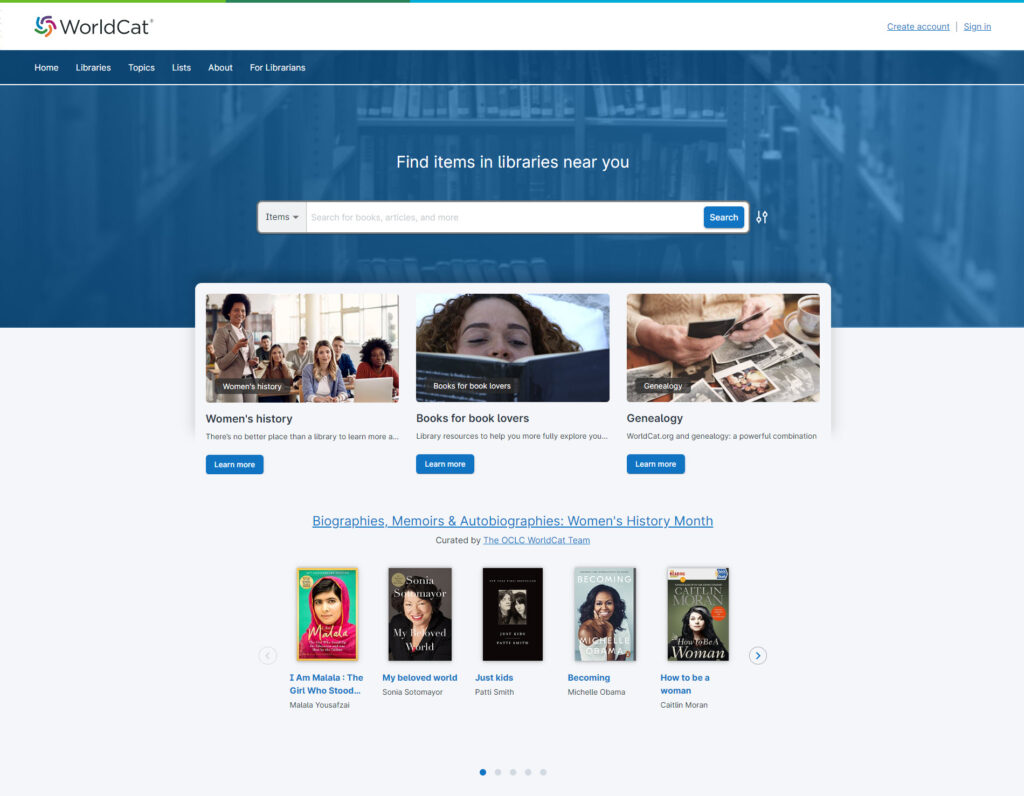
One way to check if materials are available at another institution is to use WorldCat, the world’s most comprehensive library catalog, listing the world’s library collections. It is available through two different platforms:
- The publicly available version (WorldCat)
- The subscription versions (OCLC WorldCat Discovery and FirstSearch).
WorldCat
WorldCat is a free online catalog that allows users to search the collections of thousands of libraries worldwide. You can search for books, journals, dissertations, archival materials, and other resources, and identify libraries that own them. WorldCat is especially useful for discovering materials that may not be available at your own library and that you may be able to request through interlibrary loan.
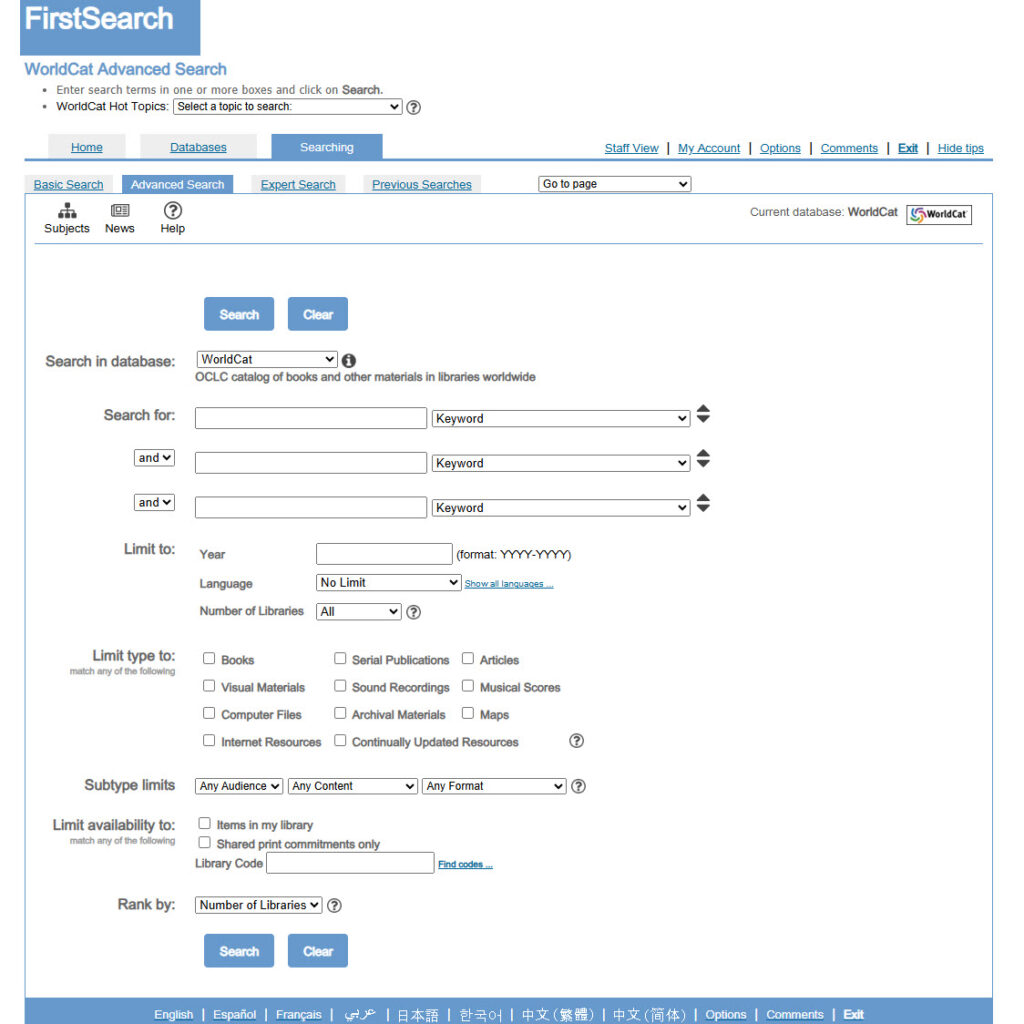
FirstSearch is the subscription-based, advanced search platform for WorldCat, designed for researchers who need more precise searching. Unlike the free public version of WorldCat, FirstSearch provides more powerful search options and access to all library holdings recorded in WorldCat, making it especially useful for identifying materials for interlibrary loan.
The icons next to each resource indicate its access requirements.
Open source/ Free
Subscription required
Interlibrary loan can help you obtain older, obscure, foreign-language, or highly specialized materials that your library does not own. Although some rare or fragile items cannot be shipped, a lending library may provide a digital copy or require that the material be used under special conditions. The Library of Congress (LOC), for example, lends materials to other institutions, allowing researchers to use items from its collections when they are unable to travel to the Library in person.

Credit: iStock