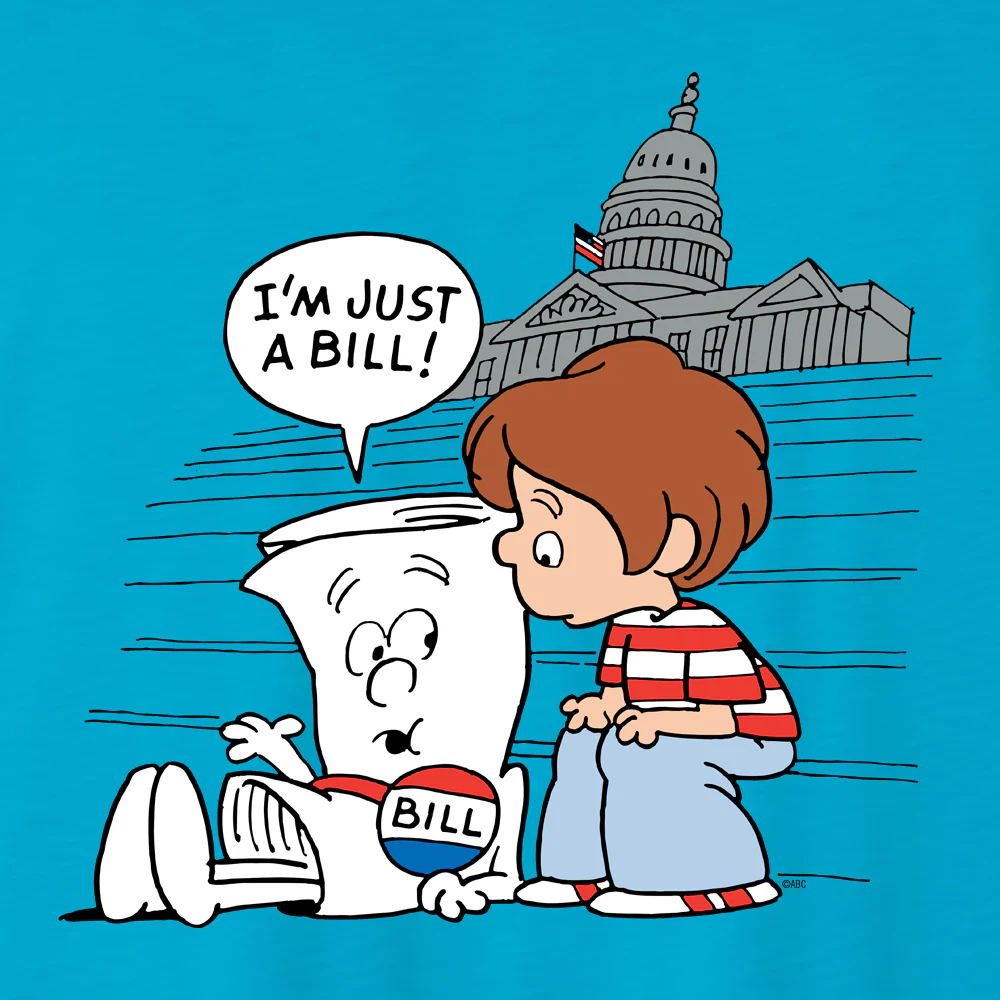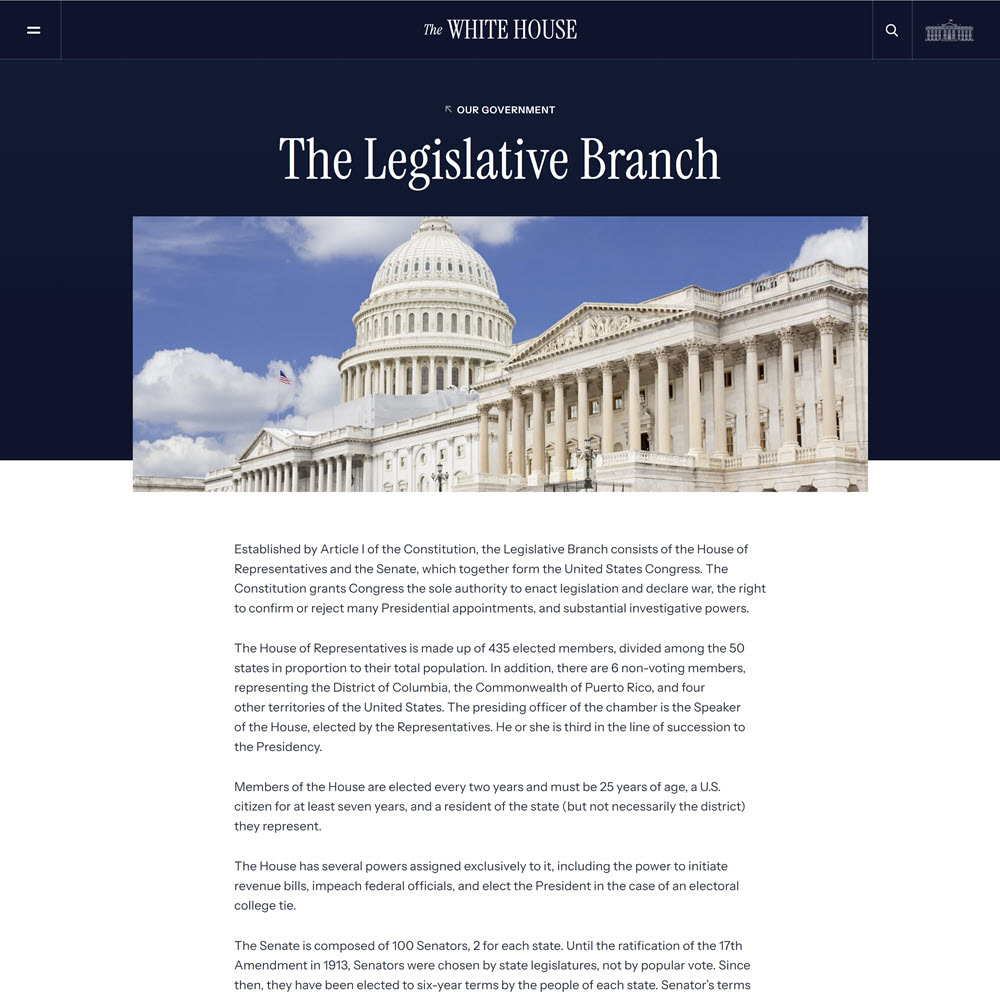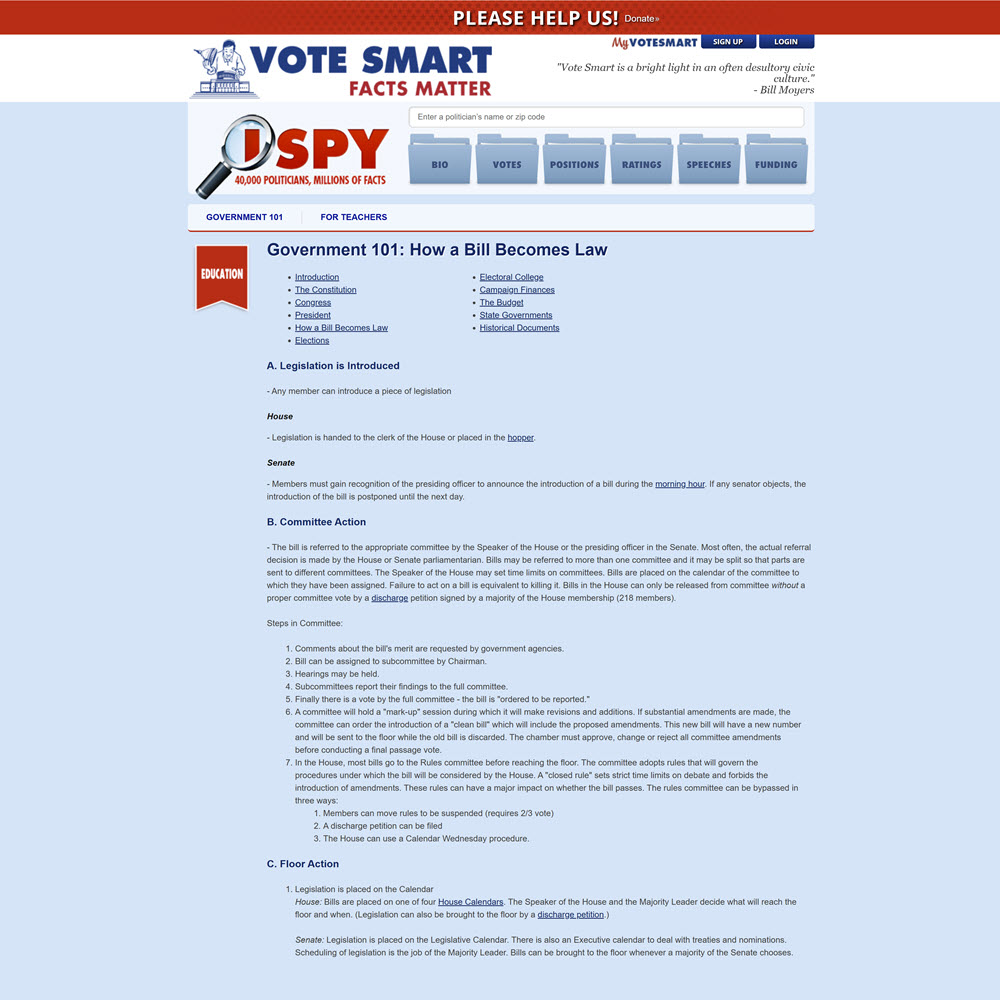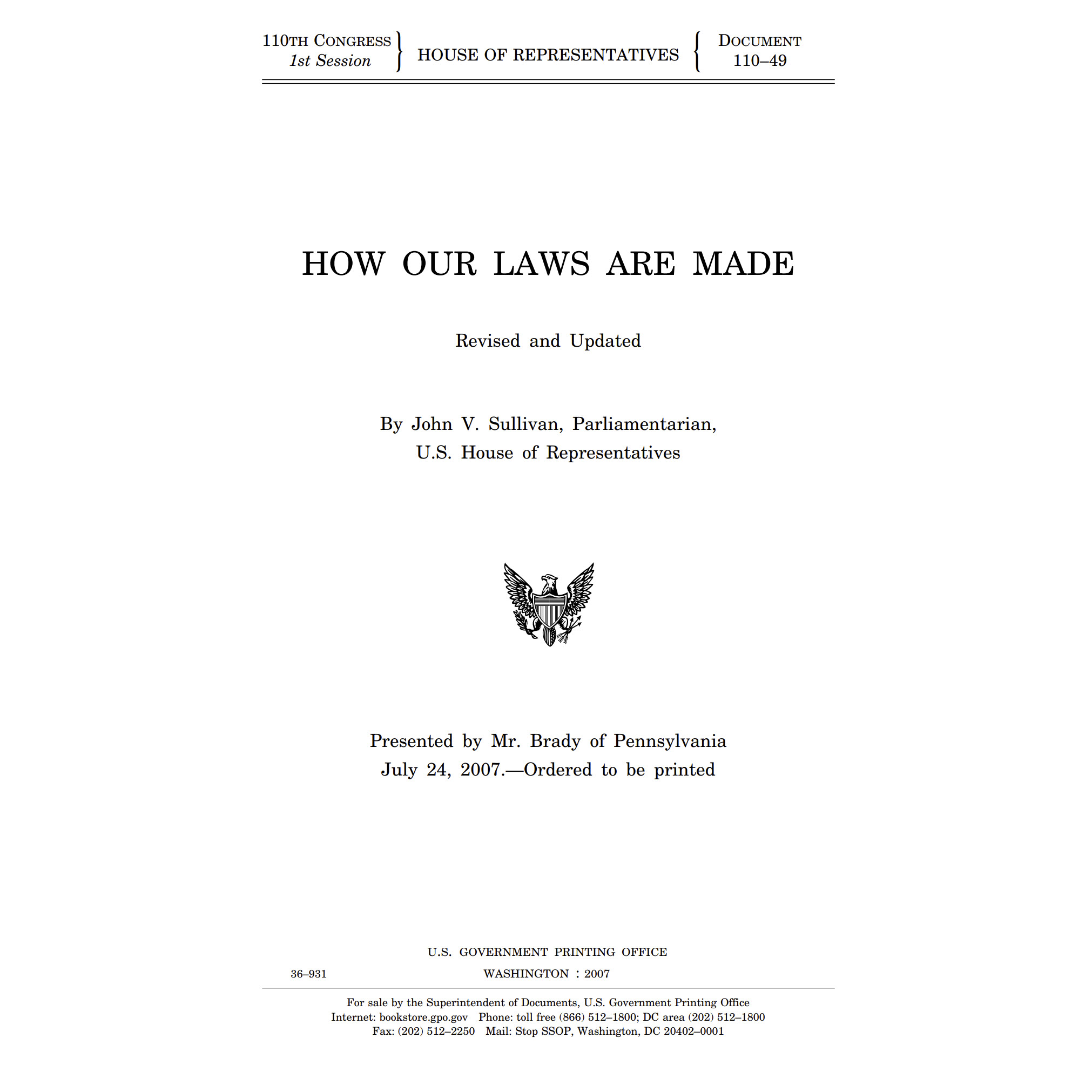

I’m Just a Bill is from the Schoolhouse Rock! series, a classic educational cartoon first aired on ABC in 1976. It explains the basics of how a bill becomes a law in the United States. This video was updated in 2021 by POLITICO to show the realistic way a bill becomes a law in the modern Congress.
Legislative Documents

Resources for U.S. government legislative documents available free online or through subscription.

The Legislative Process
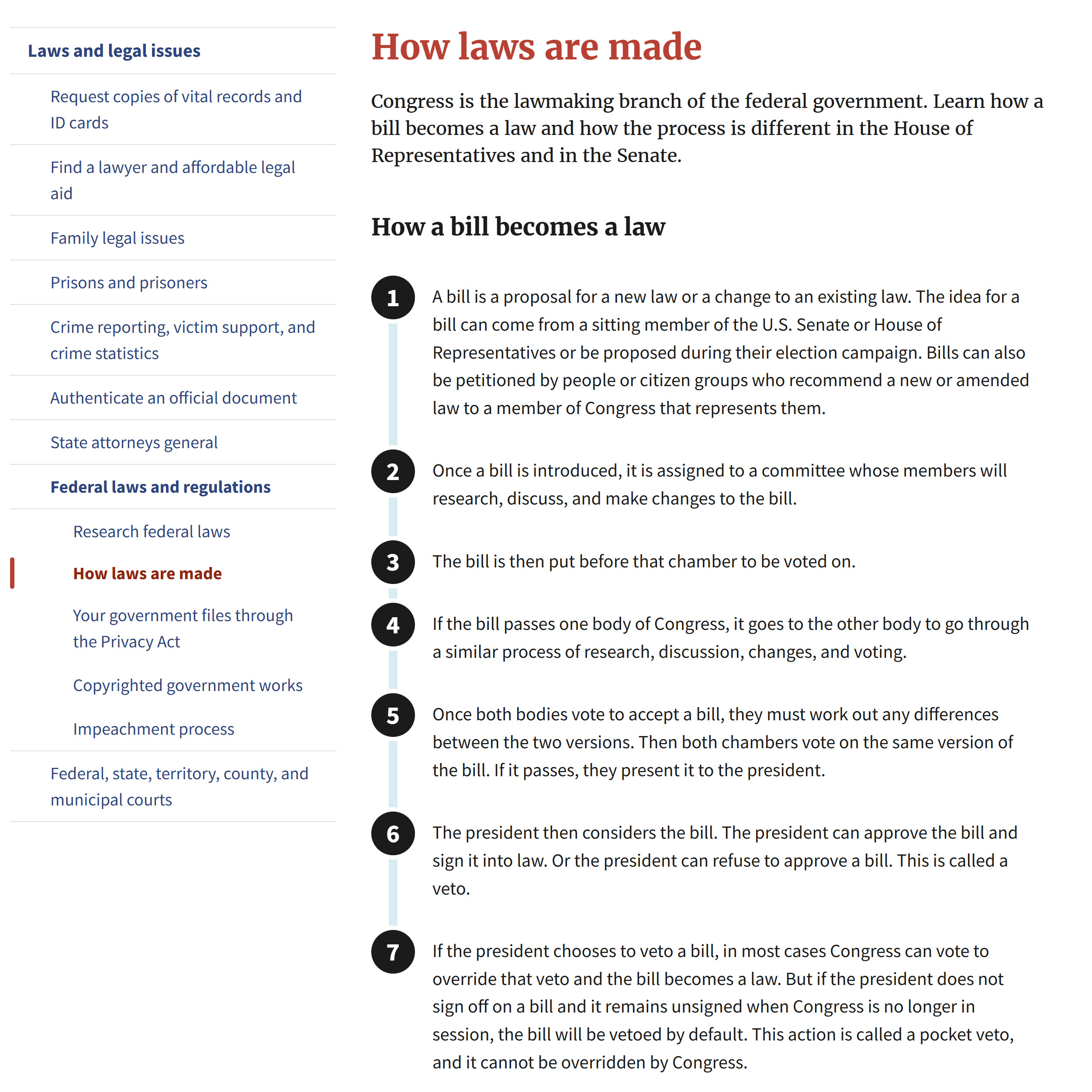
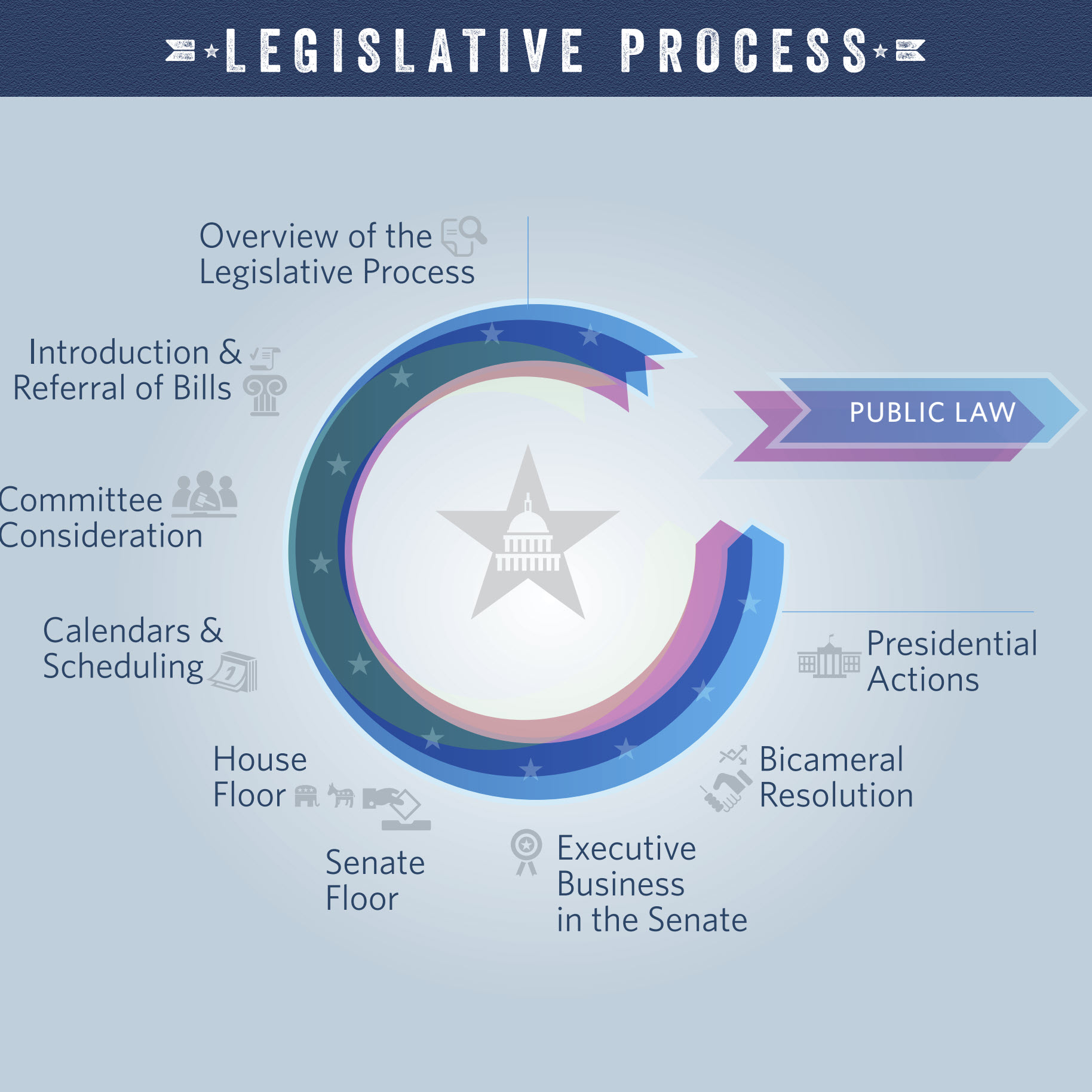
If you’re unfamiliar with how a bill becomes law, there are several helpful resources that explain the process. Understanding the basic steps of lawmaking will help you identify the most relevant documents for your research.
Legislative Histories
A legislative history is a ollection of documents and records created during the process of introducing, debating, amending, and enacting a law. It is used to understand the intent of Congress or the meaning of specific statutory language. There are several subscription databases that provide pre-compiled legislative histories.
Bills & Resolutions
Congress takes action through four main types of legislation: bills, joint resolutions, concurrent resolutions, and simple resolutions. Once introduced, each is assigned a legislative number, printed, and referred to a committee for consideration. The resources below are the most comprehensive for accessing the full text of bills.
Open Access
Free, open‑access resources where you can read the full text of U.S. bills and resolutions, as well as related legislative documents.
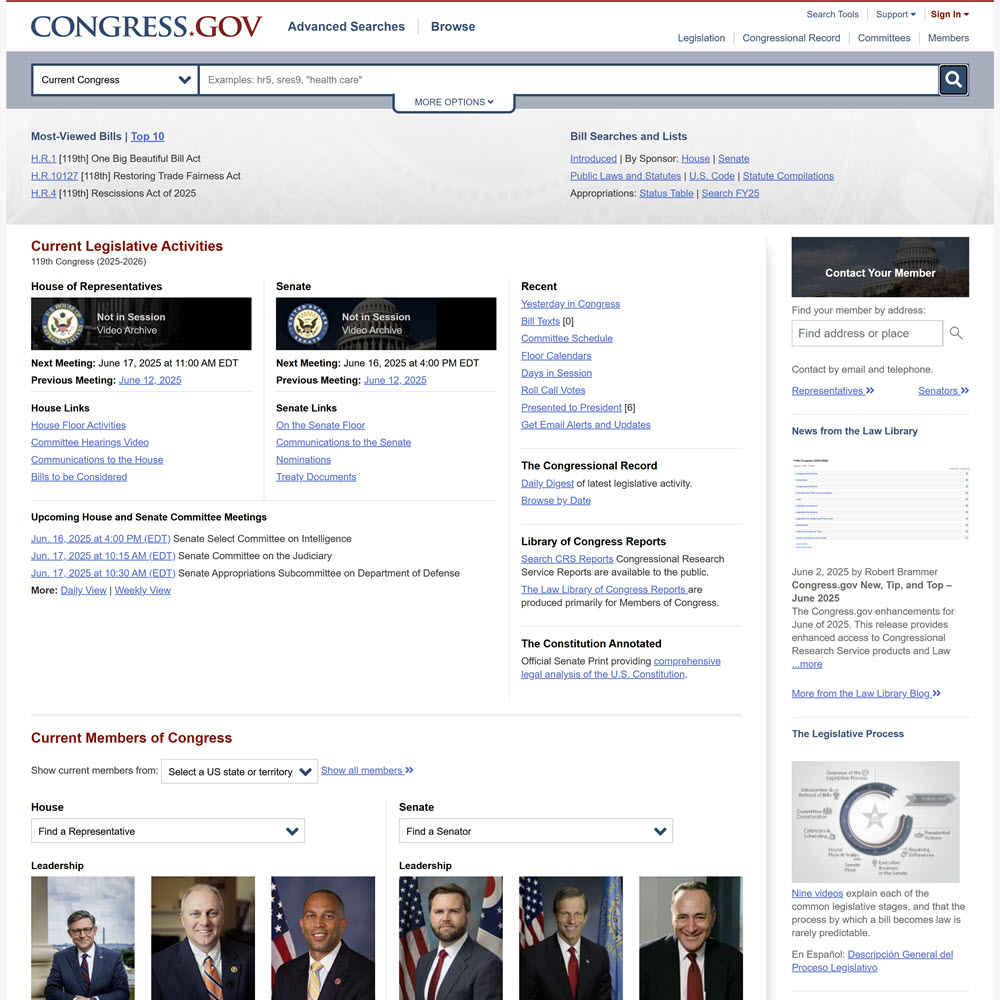
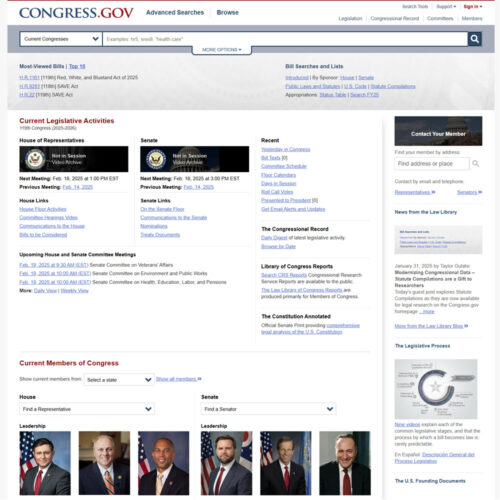
Congress.gov - Bills
Congress.gov is the official website for U.S. federal legislative information. It provides access to the full text of bills, resolutions, and public laws from the 6th to the current Congress, except the 12th Congress; and Senate bills & resolutions from the 16th to 42nd Congresses to the present.
Check the coverage dates of collections for specific date ranges. Use the Advanced Search to search for bills and resolutions by Congress, legislation and law numbers, words and phrases, legislation type, action/status, sponsors and co-sponsors, and committees.
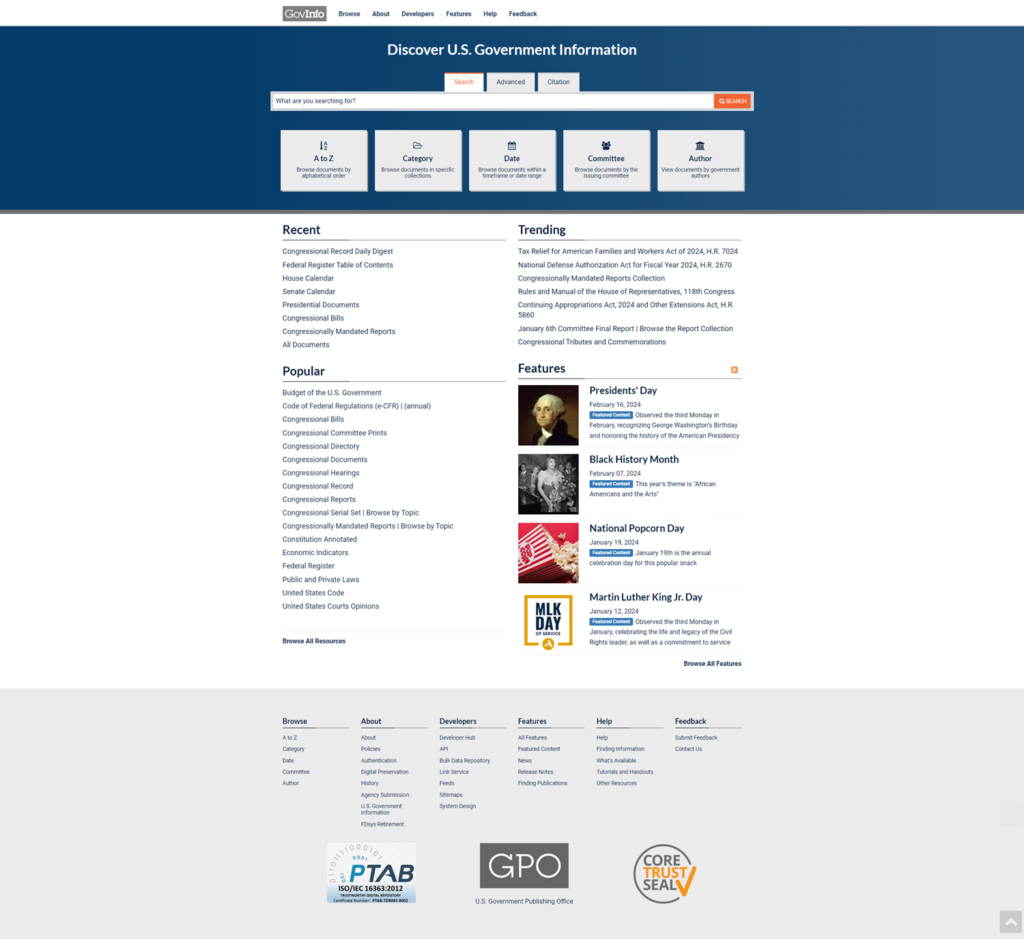
GovInfo.gov - Bills
GovInfo, a service of the United States Government Publishing Office (GPO), provides free public access to official publications from all three branches of the U.S. Federal Government including congressional bills, hearings, reports, and other documents. It serves as a digital repository for information produced by the federal government.
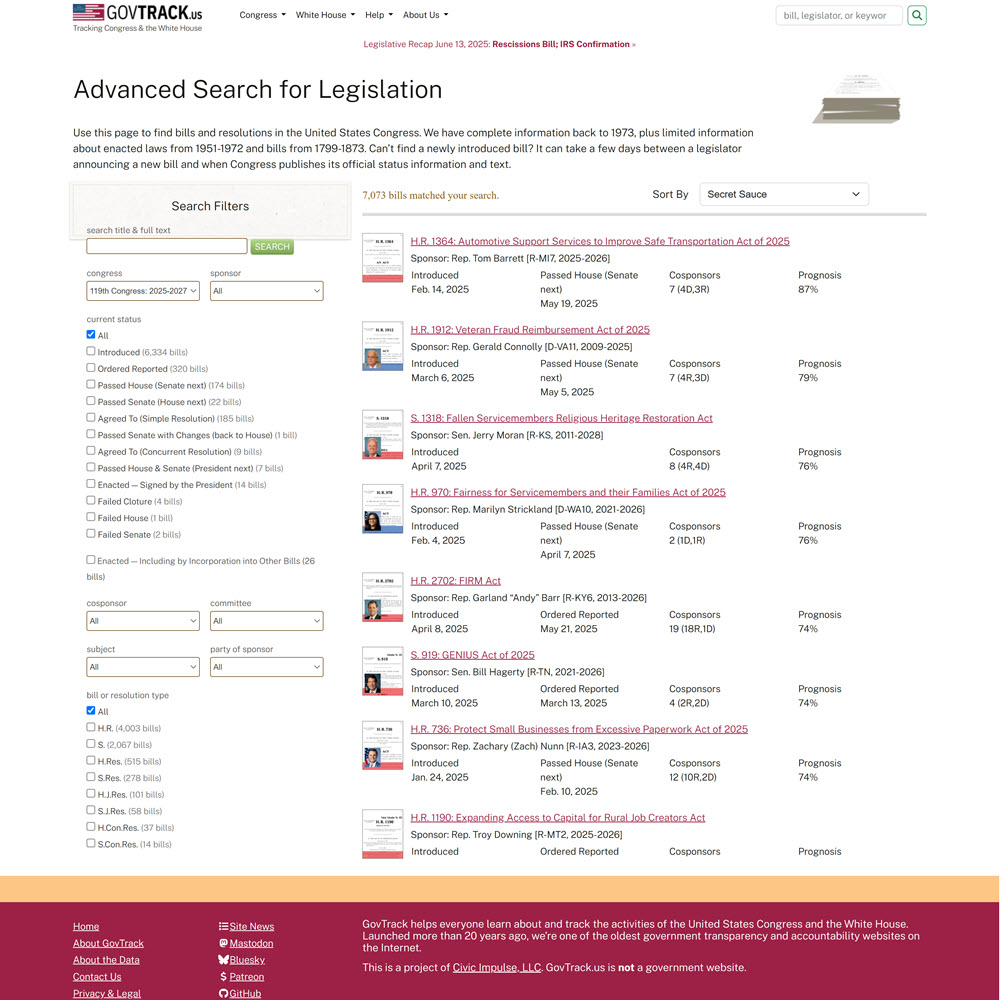
GovTrack.gov
GovTrack provides complete information on bills back to 1973, plus limited information on enacted laws from 1951-1972, and bills from 1799-1873. GovTrack follows the status of bills in Congress from introduction to enactment. Users can track bills by subject or keyword and set up alerts for important legislation of interest. GovTrack allows you to track the activities of the U.S. Congress in real time.
Subscription
Subscription-based resources that provide access to the full text of U.S. bills and resolutions, often with extra features such as legislative histories, tracking tools, and editorial commentary. Go to your school’s library website and search the catalog by title to determine whether your school has access to these subscription databases.
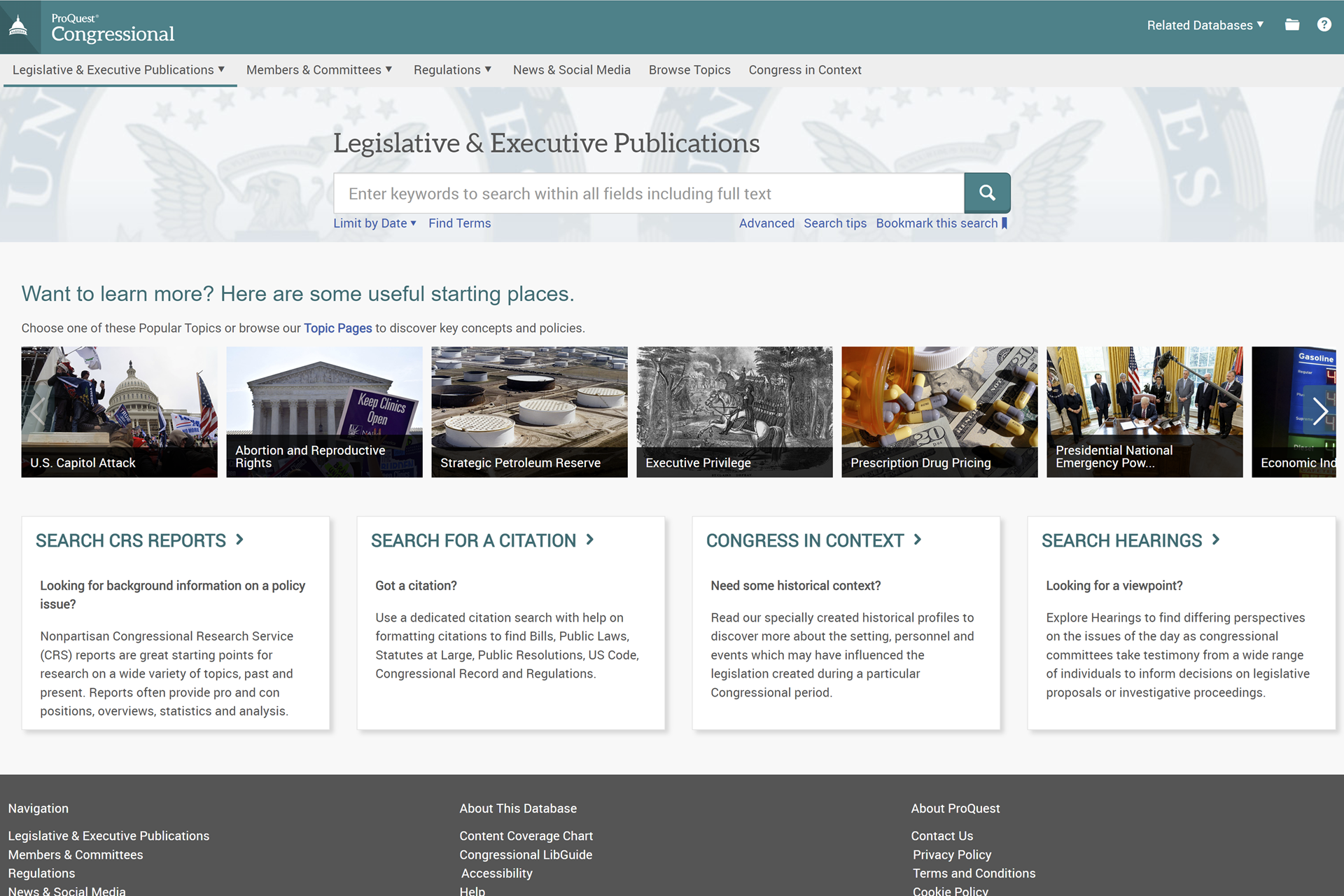
ProQuest Congressional - Bills
ProQuest Congressional specializes in providing U.S. legislative publications and government information. Much of the material is available in full text. This includes pending bills, laws, legislative histories, committee reports and documents, congressional hearings and select committee prints, and biographical data about members of Congress. The date ranges of full-text publications vary depending on an institution’s subscription.
- Congressional Basic provides indexing for all bills from 1970 to the present.
- Historical Indexes provide indexing for bills up to 1969.
- Digital U.S. Bills and Resolutions provides the full text of bills from 1789 forward.
Title
“Lorem ipsum dolor sit amet, consectetur adipiscing elit, sed do eiusmod tempor incididunt ut labore et dolore magna aliqua. Ut enim ad minim veniam, quis nostrud exercitation ullamco laboris nisi ut aliquip ex ea commodo consequat. Duis aute irure dolor in reprehenderit in voluptate velit esse cillum dolore eu fugiat nulla pariatur. Excepteur sint occaecat cupidatat non proident, sunt in culpa qui officia deserunt mollit anim id est laborum.”
Title
“Lorem ipsum dolor sit amet, consectetur adipiscing elit, sed do eiusmod tempor incididunt ut labore et dolore magna aliqua. Ut enim ad minim veniam, quis nostrud exercitation ullamco laboris nisi ut aliquip ex ea commodo consequat. Duis aute irure dolor in reprehenderit in voluptate velit esse cillum dolore eu fugiat nulla pariatur. Excepteur sint occaecat cupidatat non proident, sunt in culpa qui officia deserunt mollit anim id est laborum.”
Title
“Lorem ipsum dolor sit amet, consectetur adipiscing elit, sed do eiusmod tempor incididunt ut labore et dolore magna aliqua. Ut enim ad minim veniam, quis nostrud exercitation ullamco laboris nisi ut aliquip ex ea commodo consequat. Duis aute irure dolor in reprehenderit in voluptate velit esse cillum dolore eu fugiat nulla pariatur. Excepteur sint occaecat cupidatat non proident, sunt in culpa qui officia deserunt mollit anim id est laborum.”
Title
“Lorem ipsum dolor sit amet, consectetur adipiscing elit, sed do eiusmod tempor incididunt ut labore et dolore magna aliqua. Ut enim ad minim veniam, quis nostrud exercitation ullamco laboris nisi ut aliquip ex ea commodo consequat. Duis aute irure dolor in reprehenderit in voluptate velit esse cillum dolore eu fugiat nulla pariatur. Excepteur sint occaecat cupidatat non proident, sunt in culpa qui officia deserunt mollit anim id est laborum.”
Title
“Lorem ipsum dolor sit amet, consectetur adipiscing elit, sed do eiusmod tempor incididunt ut labore et dolore magna aliqua. Ut enim ad minim veniam, quis nostrud exercitation ullamco laboris nisi ut aliquip ex ea commodo consequat. Duis aute irure dolor in reprehenderit in voluptate velit esse cillum dolore eu fugiat nulla pariatur. Excepteur sint occaecat cupidatat non proident, sunt in culpa qui officia deserunt mollit anim id est laborum.”