Behavioral Economics
A subfield of economics that uses research from psychology, sociology, and other disciplines to study of how individuals make economic decisions.


Economics is the branch of social science that looks at how people make decisions about producing, distributing, and consuming goods and services. It primarily deals with "scarcity" and how individuals, businesses, governments, and societies allocate their limited resources to satisfy their wants and needs.
For an in-depth explanation of economics, go to Encyclopedia Britannica's public website.
Most schools traditionally divide economic fields into the following main areas. If you would like to read more about these subfields and their concepts, use the links to the International Monetary Fund and the peer-reviewed OpenStax Principle of Economics textbook provided. OpenStax provides free, high-quality textbooks written by subject experts, reviewed by faculty, and commonly used in introductory and core undergraduate courses.
Along with the above listings, most American universities offer courses in major economic fields such as finance, money, and banking.
Economics is interdisciplinary and draws from different fields, including business, law, history, public policy, psychology, sociology, and political science. Economics students usually also take preparatory mathematics courses (e.g., Algebra and Calculus) and statistics.
If you’re thinking about majoring in economics, these resources can provide useful background information and help guide your next steps. They explain what to expect from the major and the wide variety of career paths available to you.
A subfield of economics that uses research from psychology, sociology, and other disciplines to study of how individuals make economic decisions.
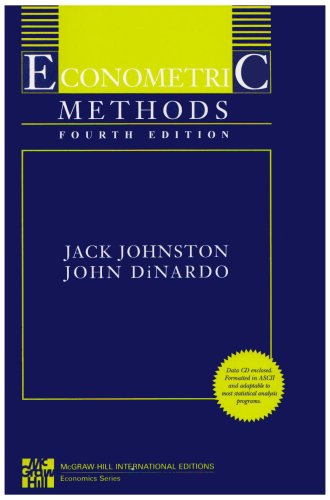
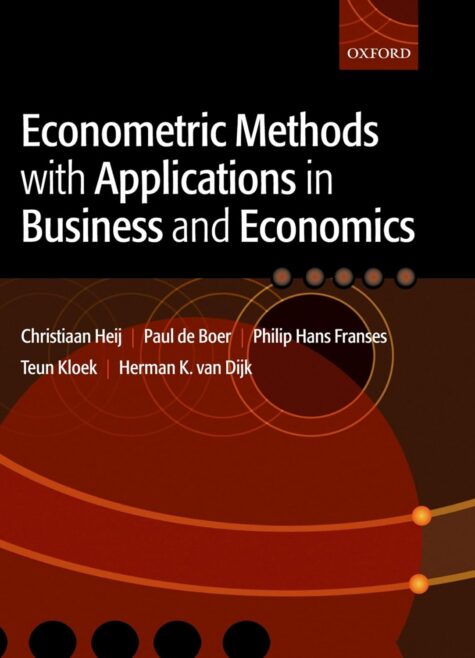
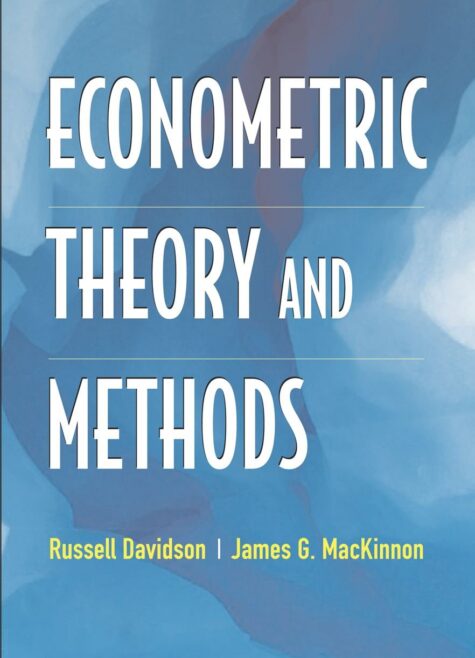
A branch of economics that uses economic theory, mathematics, and statistical methods to analyze economic data.
Branch of economics that studies how to improve the economic, social, and institutional conditions of countries.
The historical study of the economic development and evolution over time in social, political, and cultural contexts.
A branch of economics that studies the interactions between the environment and economic systems.
The branch of economics that studies financial markets, instruments, institutions, and uncertainty in the decision-making of individuals.
The application of economic theories to the role of production and consumption in health and healthcare systems.
Focuses on economics at an international scale and the economic interactions between countries.
A branch of economics that focuses on the dynamics of labor markets and the behavior of workers and employers.
An interdisciplinary field that applies the principles and methods of economics to analyze and understand legal systems, institutions, and rules.
An area of financial economics that focuses on the global financial system, monetary policy, and the banking system.
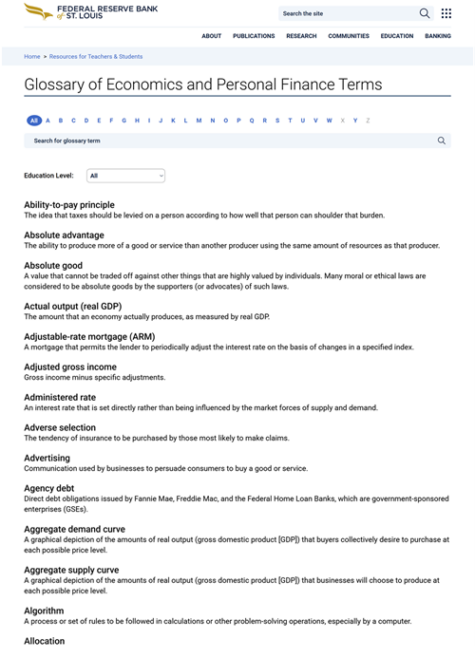
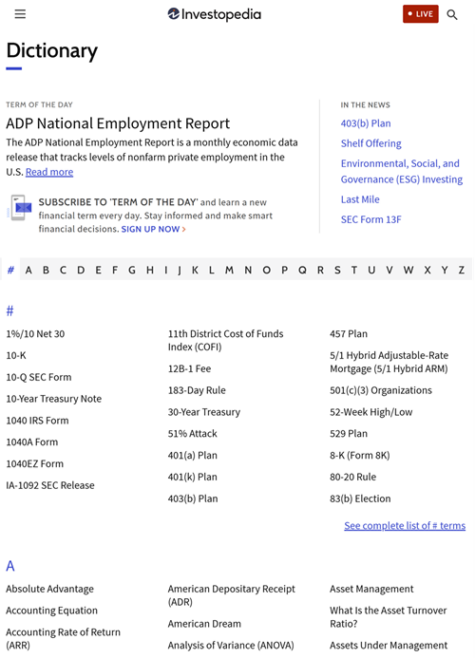
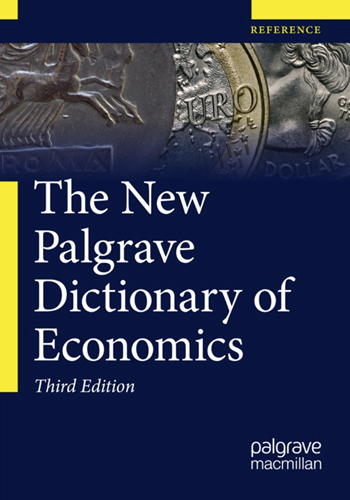
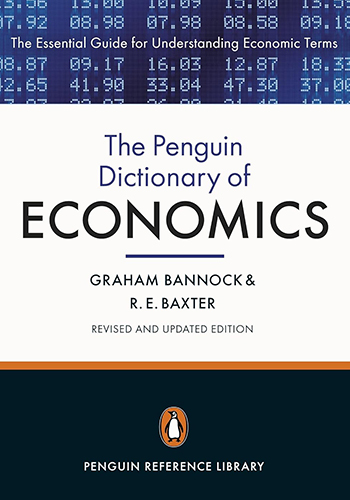
Dictionaries are important for understanding and contextualizing words, concepts, and terminology. Various economics dictionaries provide clarity when exploring complex political concepts, systems, and theories, offering clear definitions of key economic terms.
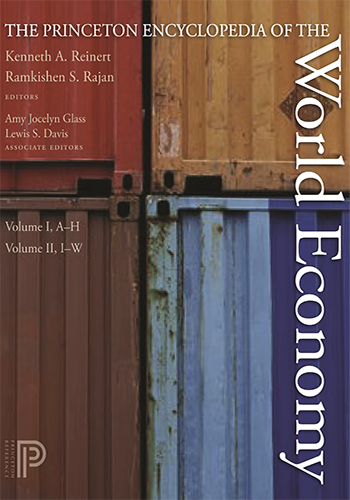
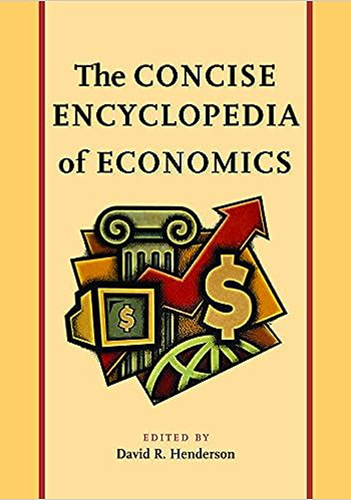
Subject encyclopedias are specialized reference works providing in-depth information on specific discipline topics. Unlike general encyclopedias that cover a wide range of topics, subject encyclopedias focus exclusively on one discipline, offering detailed and comprehensive entries written by experts. For a list of general and specialized encyclopedia databases, go to Getting Started – Reference Resources.
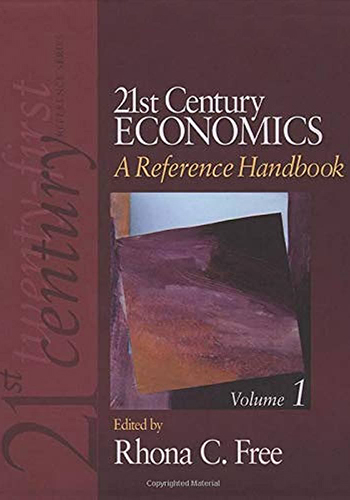
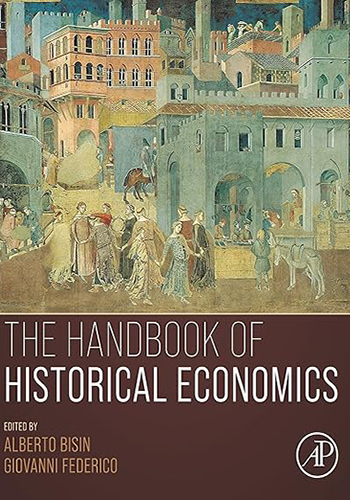
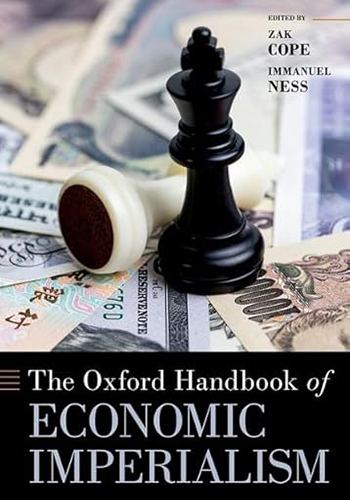
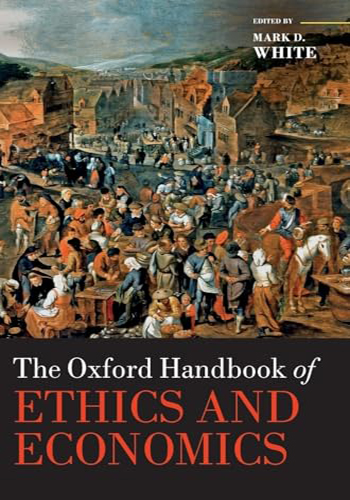
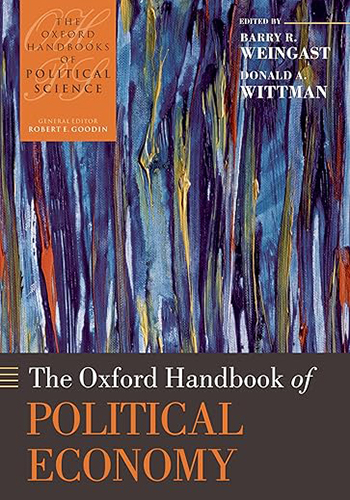
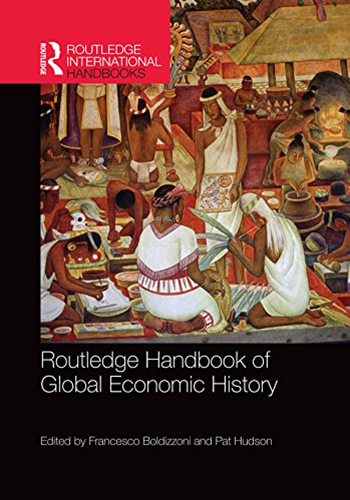
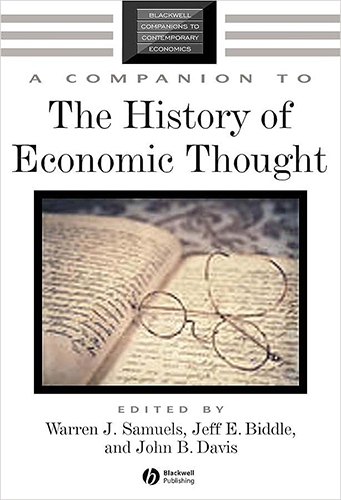
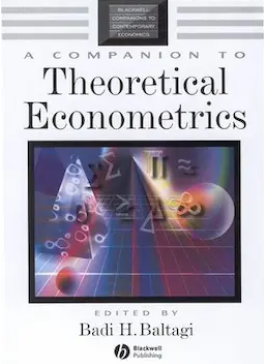
Handbooks provide authoritative overviews, in-depth analyses, and critical discussions of a particular academic field, discipline, or topic. The following are important general handbooks in economics.
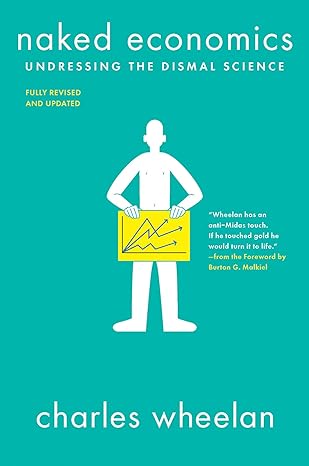
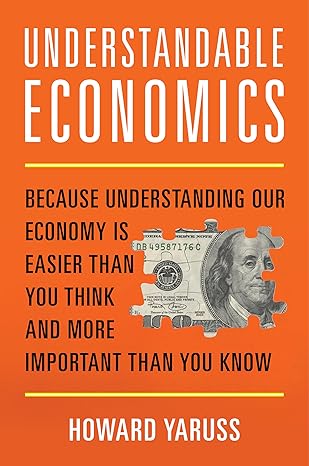
Most economic textbooks are structured for academic courses. They cover foundational economic principles systematically with mathematical models, graphs, and exercises. The following "non-textbook" companions and introductions provide comprehensive yet understandable introductions to economics. Written by experts, they present key ideas, theories, and debates in an understandable way that is ideal for readers new to economics, providing foundational knowledge without requiring prior expertise.
 EBSCO
EBSCO
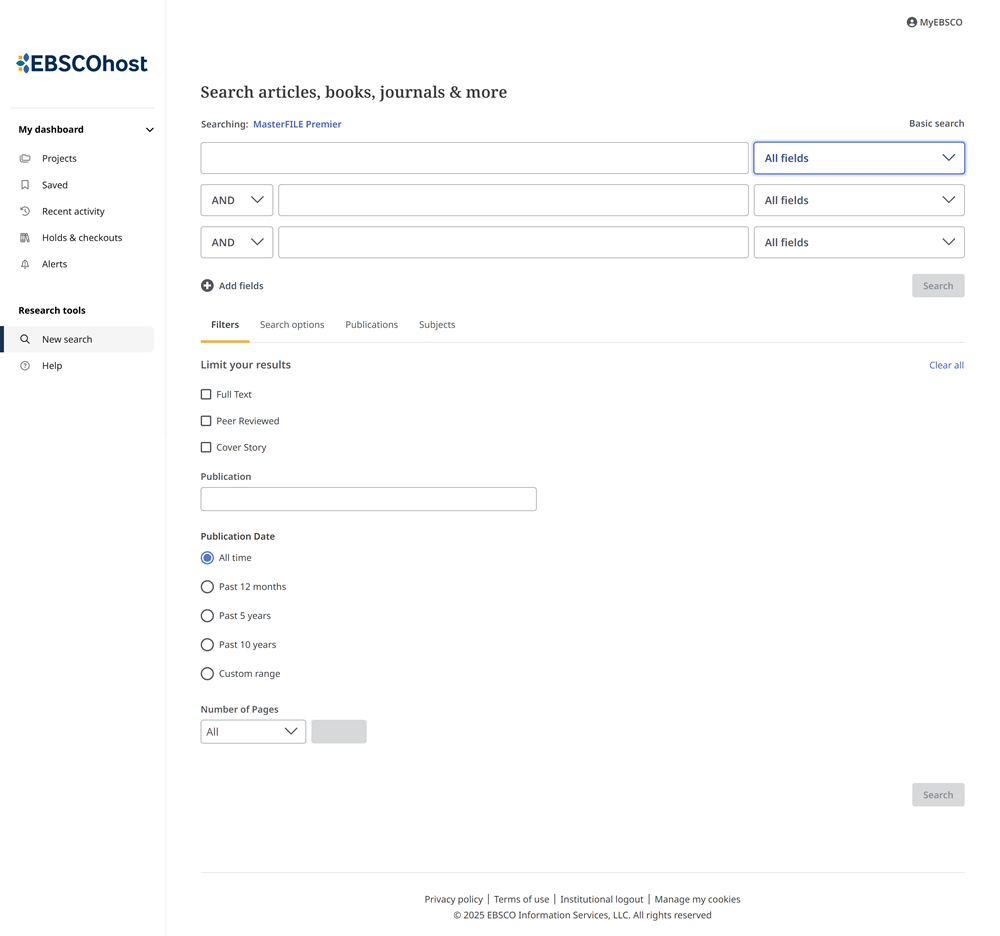
EBSCOhost is a major research database platform that allows users to search multiple EBSCO databases simultaneously. The difference between EBSCOhost and Academic Search is that Academic Search can be searched as part of the EBSCOhost platform or searched separately if your institution has a subscription. To check if your institution subscribes to EBSCOhost, use EBSCO’s Find your institution page.
 ProQuest
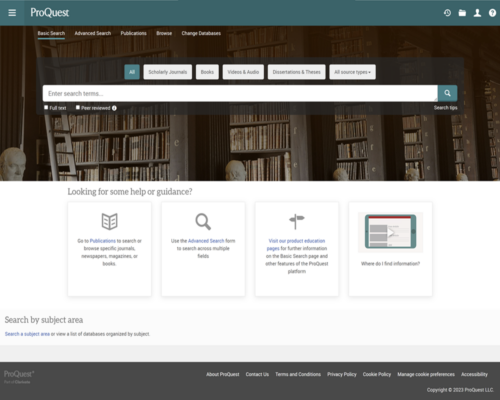
ProQuest is a major database vendor and platform that provides access to hundreds of database collections. The ProQuest platform provides a multidisciplinary search with access to scholarly ebooks, journals, video and audio, newspapers, and more, all searchable simultaneously. ProQuest is unique for providing dissertations and theses, historical newspapers, and other primary sources.
 Google Scholar
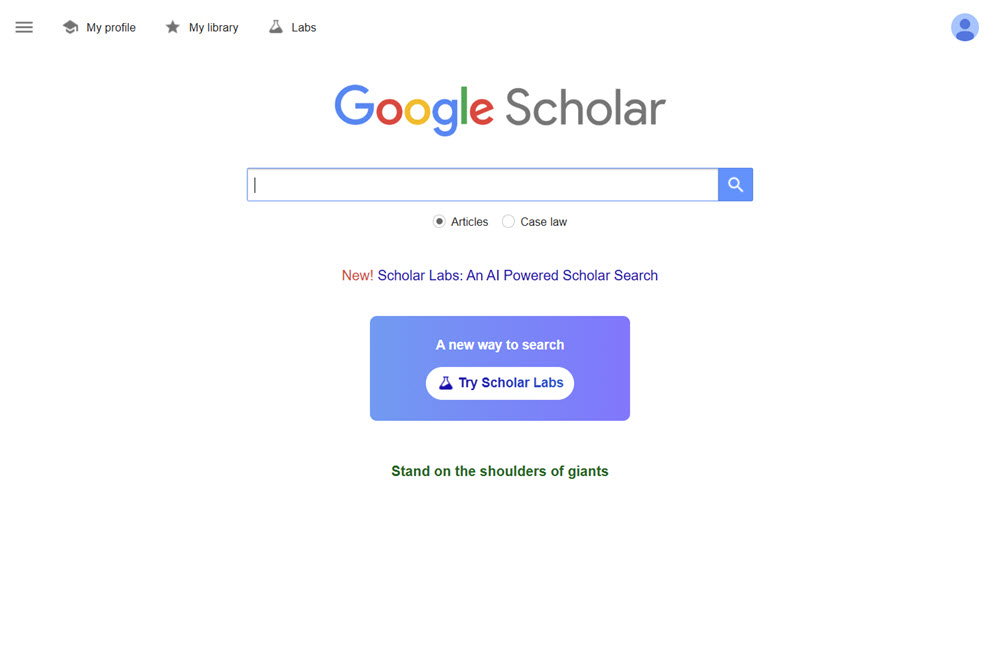
Google Scholar is a free academic search engine that helps researchers and studentsfind scholarly literature across disciplines. It indexes journal articles, books, conference papers, theses, patents, and other resources from academic publishers, universities, and professional organizations.
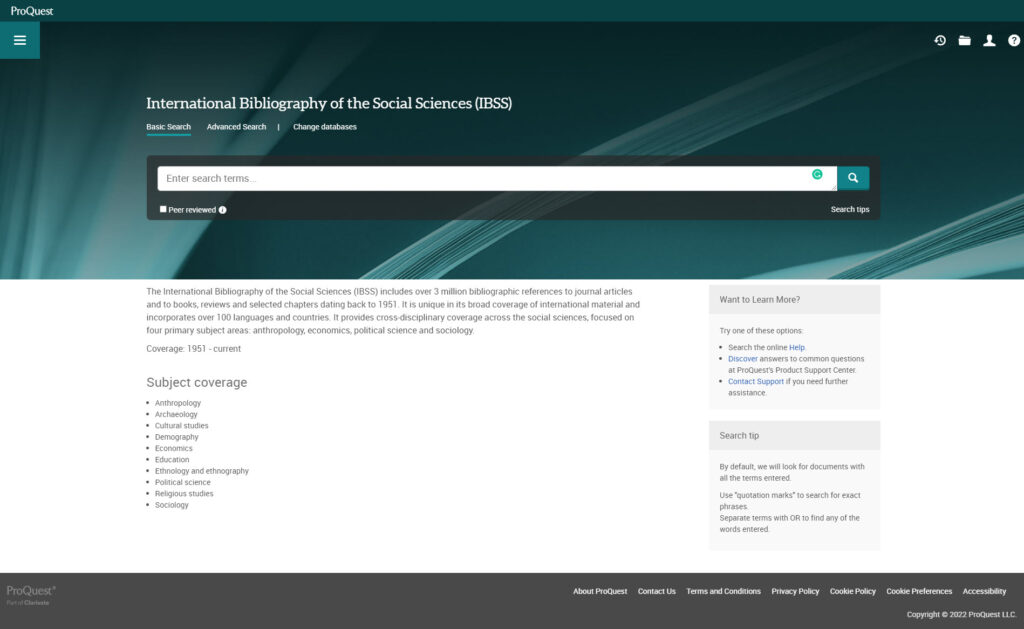
 International Bibliography of the Social Sciences
The International Bibliography of the Social Sciences (IBSS), compiled by the British Library of Political and Economic Science at the London School of Economics, provides access to a vast collection of scholarly literature in the social sciences. Covering multiple disciplines, IBSS includes references to journal articles, books, newspapers, and dissertations, with records dating back to 1951.
 JSTOR
JSTOR
JSTOR is an important scholarly research database for the humanities, social sciences, and sciences. It provides the full text of articles from thousands of influential academic journals. In addition to journal articles, users can access eBooks, book chapters, images, and primary source documents. JSTOR also provides an AI research tool that provides key points and arguments of articles.
JSTOR contains the full text of more than 2,000 journals from 1,000 publishers, with publication dates ranging from 1665 to 2015 (for certain titles). JSTOR also provides:
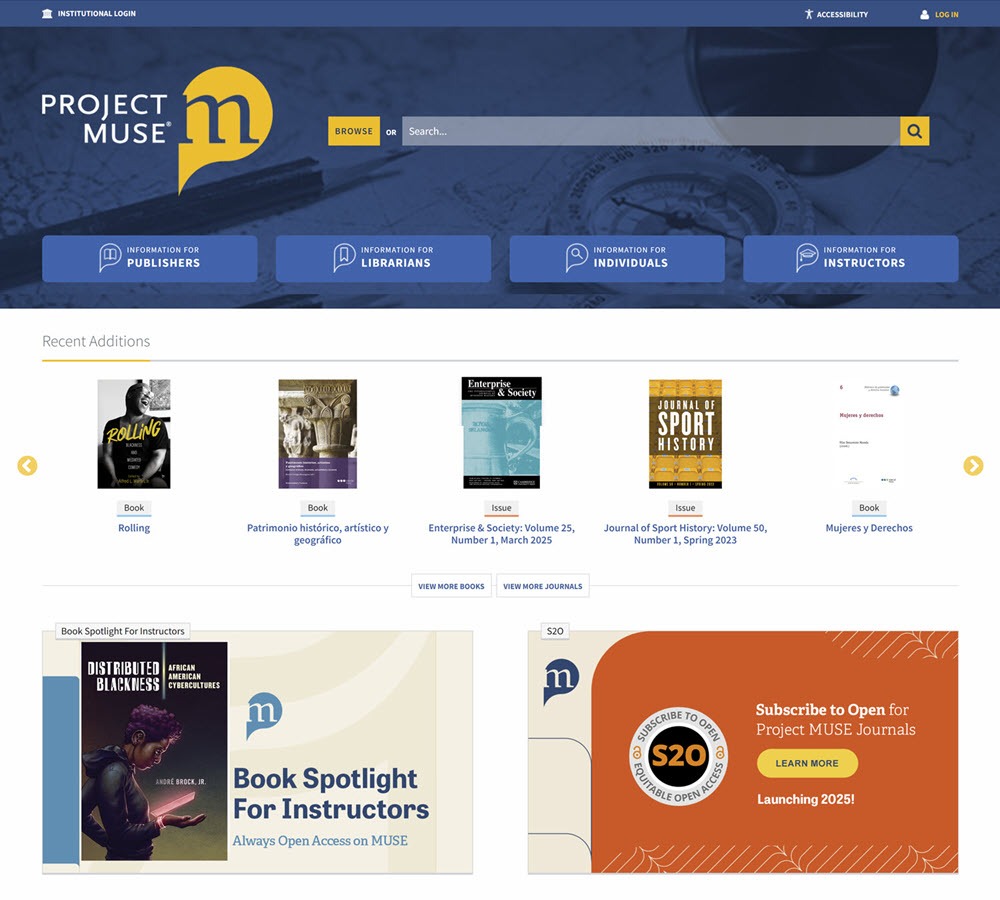
 Project Muse
Project MUSE offers online access to a vast collection of scholarly journals, books, and academic resources in the humanities, social sciences, and arts. As a leading provider of digital humanities content, it features high-quality, peer-reviewed publications from prestigious university presses, scholarly societies, and academic publishers.
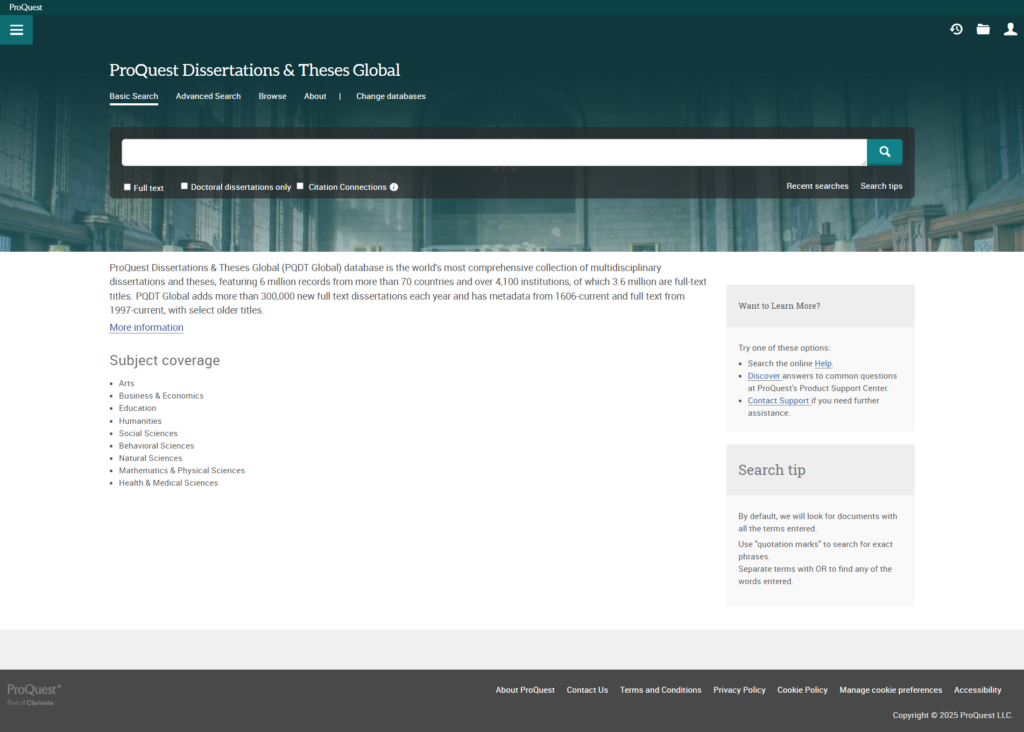
 ProQuest Dissertations & Theses Global
ProQuest Dissertations & Theses is a database of dissertations and theses from universities worldwide. It provides access to millions of full-text works across many disciplines, including the social sciences, humanities, sciences, and business. Each dissertation includes an abstract or summary that provides a concise overview of the research, its methodology, and key findings.
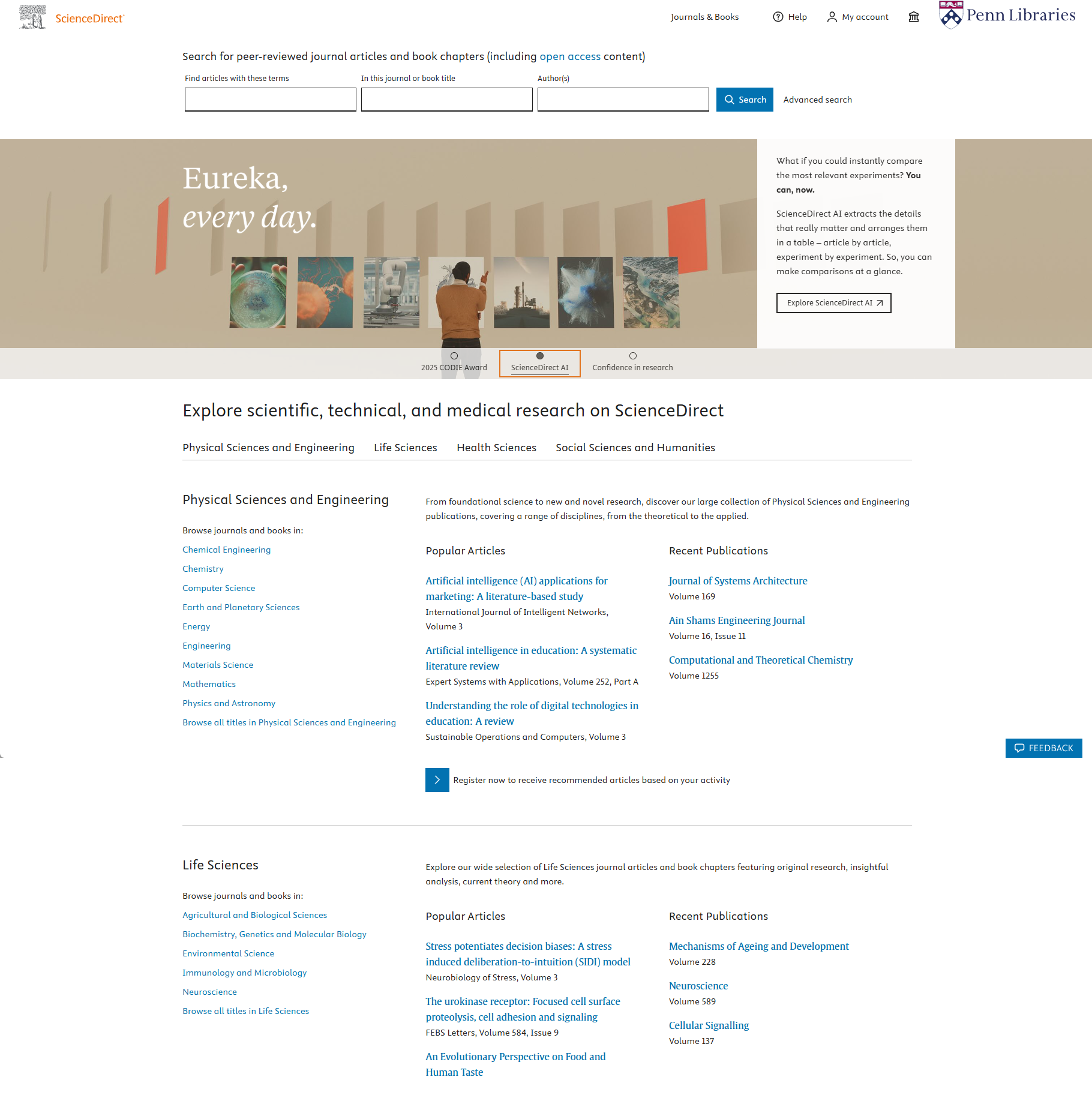
 ScienceDirect
ScienceDirect is a leading full-text scholarly scientific database that provides journal articles and book chapters from more than 2,500 peer-reviewed journals and more than 11,000 books. It covers over 24 major subjects in the physical sciences and engineering, life sciences, health sciences, social sciences, and the humanities.
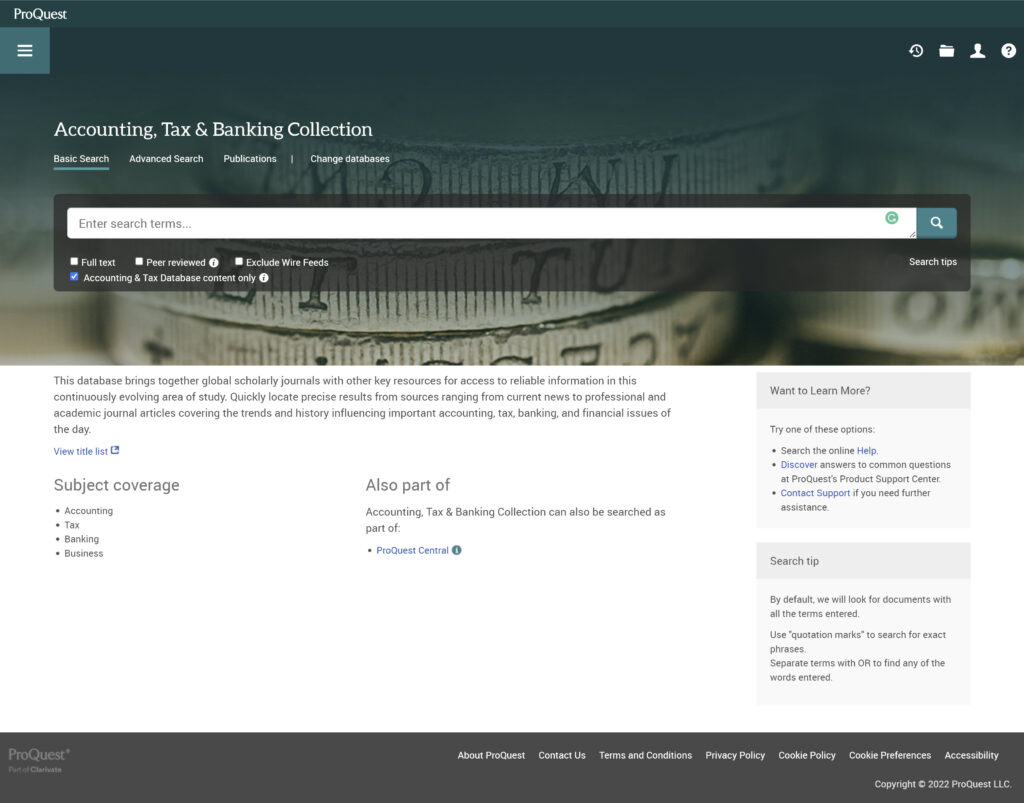
 Social Science Full Text
Social Sciences Full Text provides access to a wide range of scholarly literature in the social sciences. It covers many disciplines, including sociology, psychology, international relations, political science, anthropology, economics, and education.
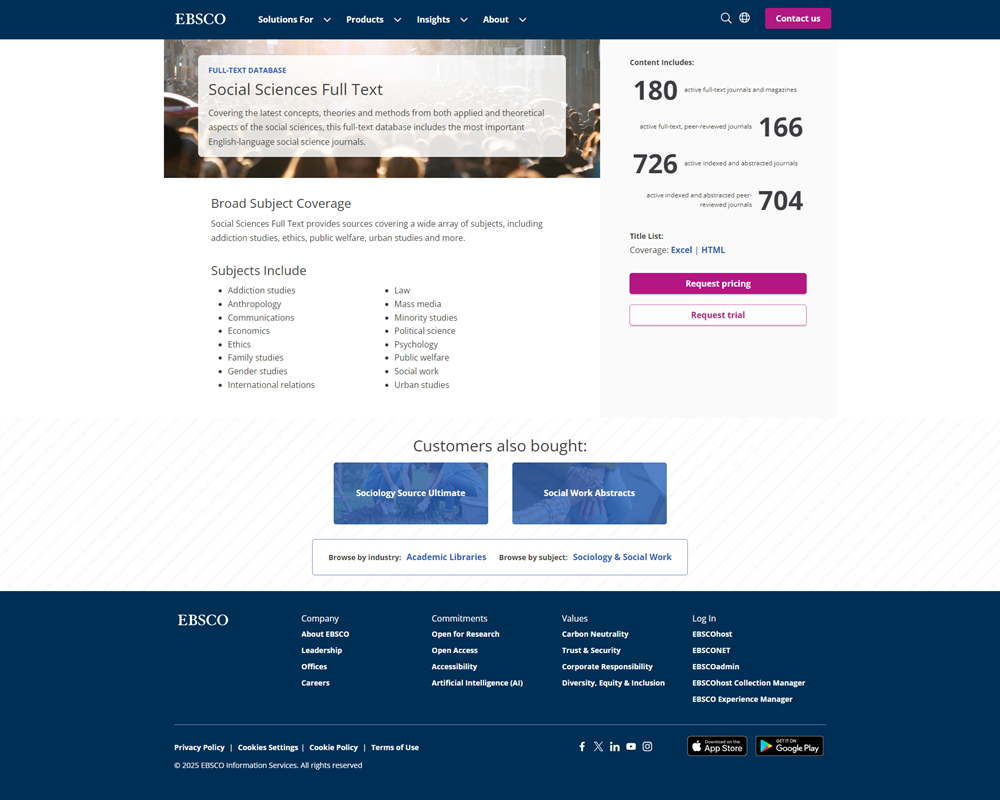 Web of Science
Web of Science is a comprehensive, multidisciplinary research and citation index that provides access to a wide range of scientific, technical, social science, and humanities research. It maintains rigorous criteria for the journals and publications it indexes, ensuring that only high-quality, peer-reviewed content is included. Web of Science includes 98 million papers dating back to 1900.
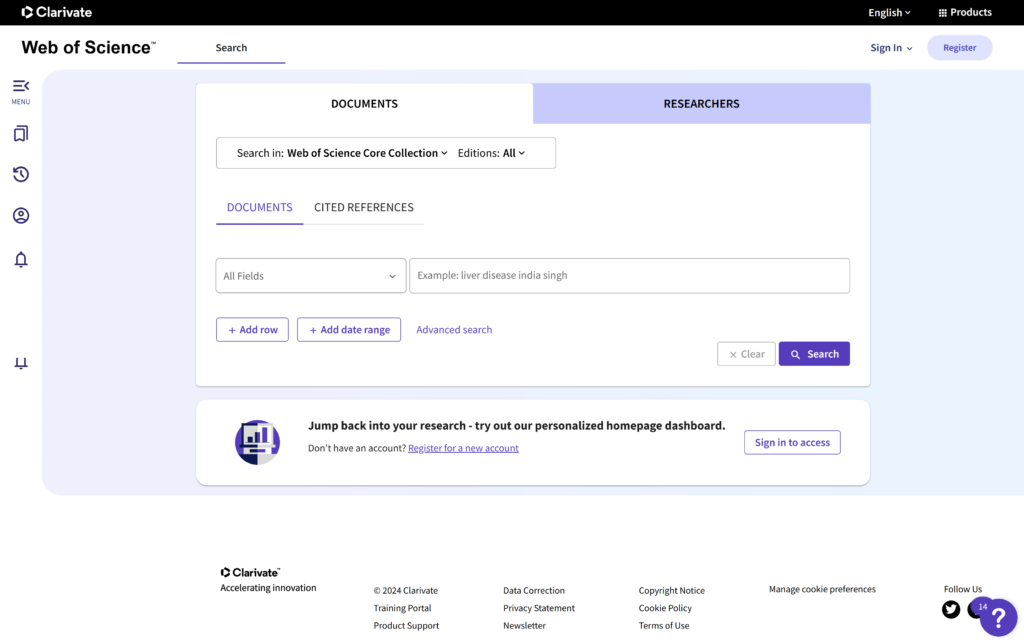 ABI/INFORM
ABI/INFORM and ABI/INFORM Global are international business and economics databases that provide access to a wide range of academic journals, magazines, and trade publications. It also provides access to thousands of full-text journals, dissertations, working papers, and key business and economics periodicals. ABI/INFORM covers hundreds of industries focusing on oil, gas, mining, energy, environment, and healthcare management.
If your institution subscribes to the entire ABI/INFORM Collection, you have access to ABI/INFORM Dateline™, which specializes in regional business publications; ABI/INFORM Global™, an international business and financial database; and ABI/INFORM Trade & Industry, which covers companies, products, executives, trends, and other topics.
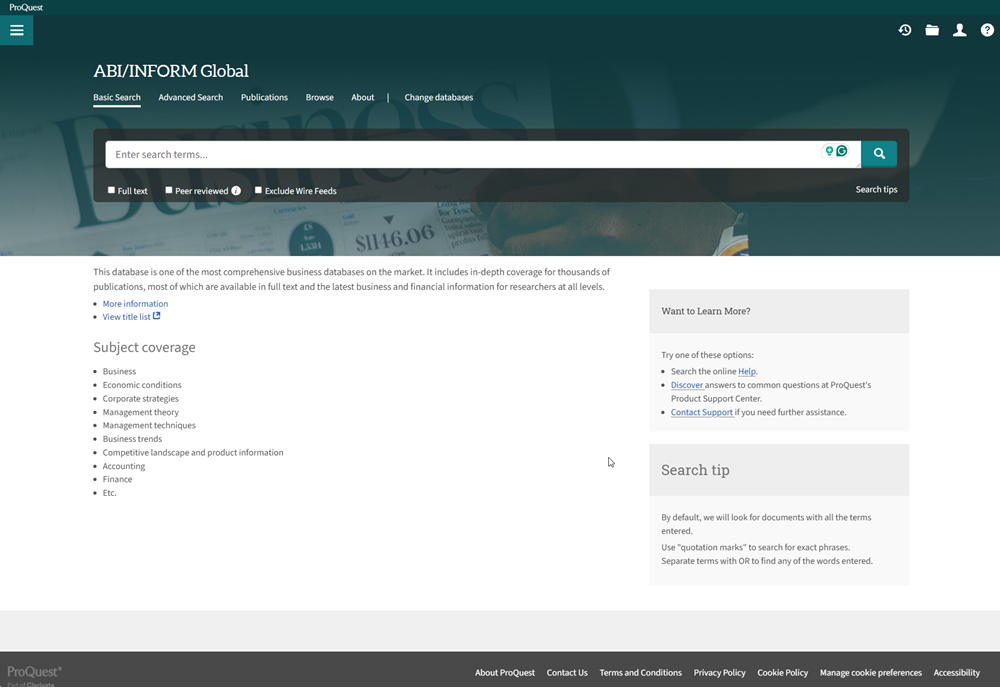 Accounting, Tax, & Banking Collection
Accounting, Tax & Banking Collection is a ProQuest database focusing on accounting, taxation, banking, and financial management. It provides full-text access to peer-reviewed journals, trade publications, industry periodicals, and resources on global banking trends, financial markets, regulations, tax codes, reforms, and global taxation policies. It also provides detailed company information, including financial performance and market analysis.
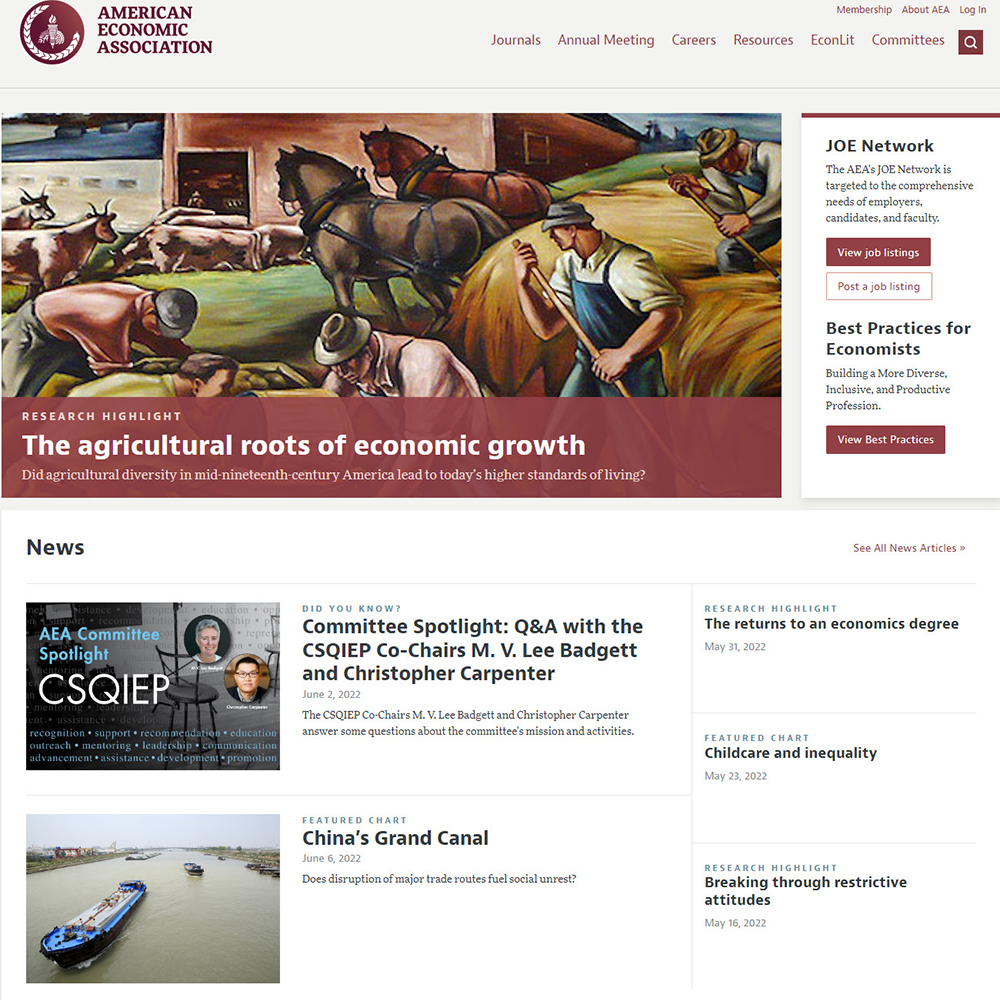
 American Economic Association (AEA) Journals
Founded in 1885, the American Economic Association (AEA) is one of the world’s largest and most prestigious economics associations dedicated to advancing economic research, knowledge, and education. AEA publishes several prominent academic journals that are highly regarded and influential in economics.
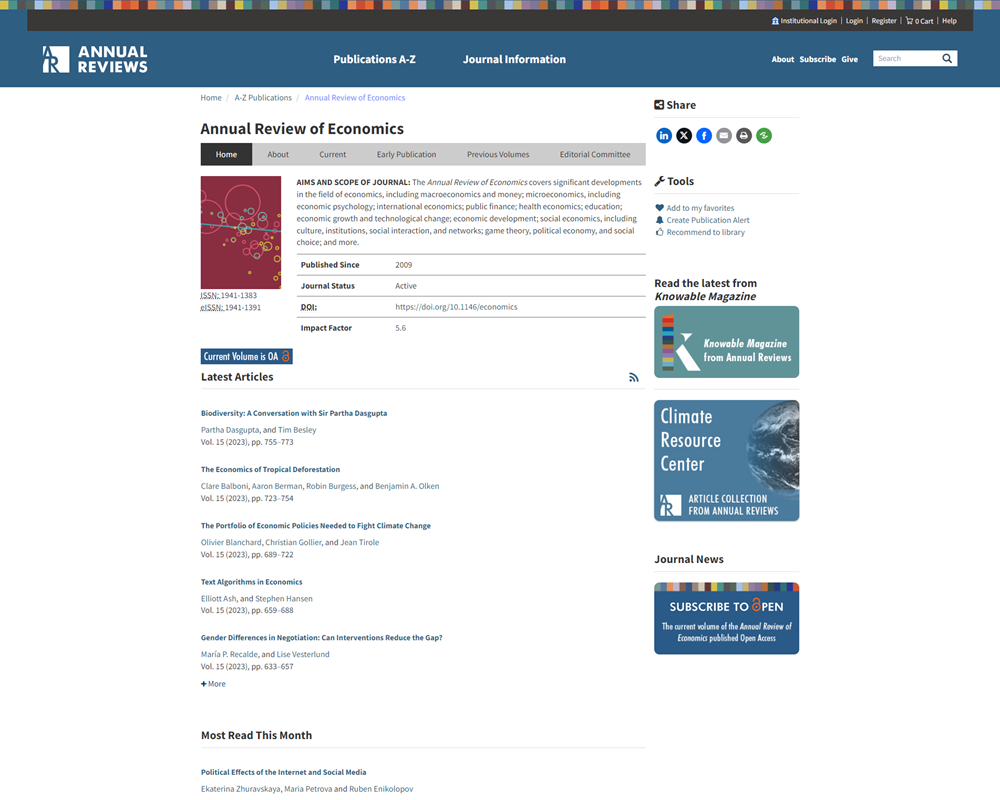
 Annual Review of Economics
The Annual Review of Economics is a peer-reviewed academic journal that publishes authoritative literature reviews of research in the field of economics. Each year, the Annual Review of Economics releases a new volume consisting of a series of review articles written by leading experts in the field, providing overviews of the most important and influential research and scholarship in economics. It also covers significant developments in all subfields of economics.
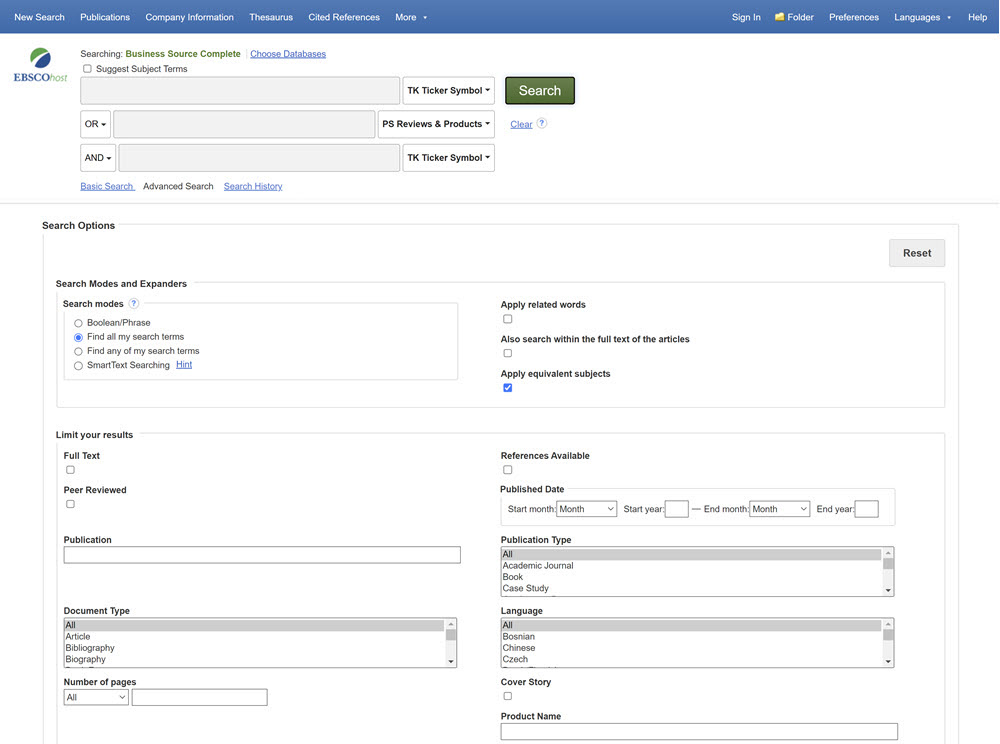
 Business Source Complete
Business Source Complete is a business research database that provides access to a wide range of resources related to business, management, economics, finance, marketing, accounting, and other related fields. It contains a combination of scholarly, academic, and trade publications and company profiles, market research reports, and country profiles.
 EconLit
EconLit is a bibliographic economics database provided by the American Economics Association. It offers scholarly literature on economics and other related disciplines. EconLit is widely used to search for economics peer-reviewed journal articles, working papers, PhD dissertations, books, book reviews, and conference papers. EconLit is available on various platforms, including EBSCO and ProQuest.
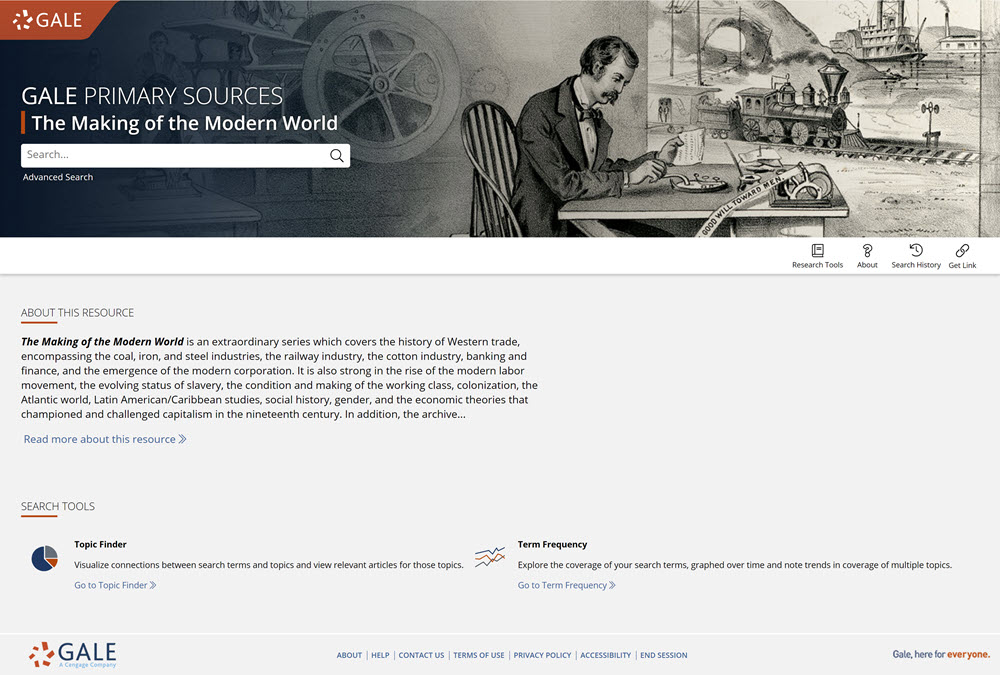
 The Making of the Modern World
The Making of the Modern World is a digitized collection of rare, historical materials related to economics, commerce, finance, and social history. Useful for researchers interested in the history of economic thought and the development of economic ideas from the Renaissance to the 19th century.
The Making of the Modern World comes in two parts: The Goldsmiths’-Kress Library of Economic Literature – The Making of the Modern World, Part I (1450-1850) and Part 2 (1851-1914)
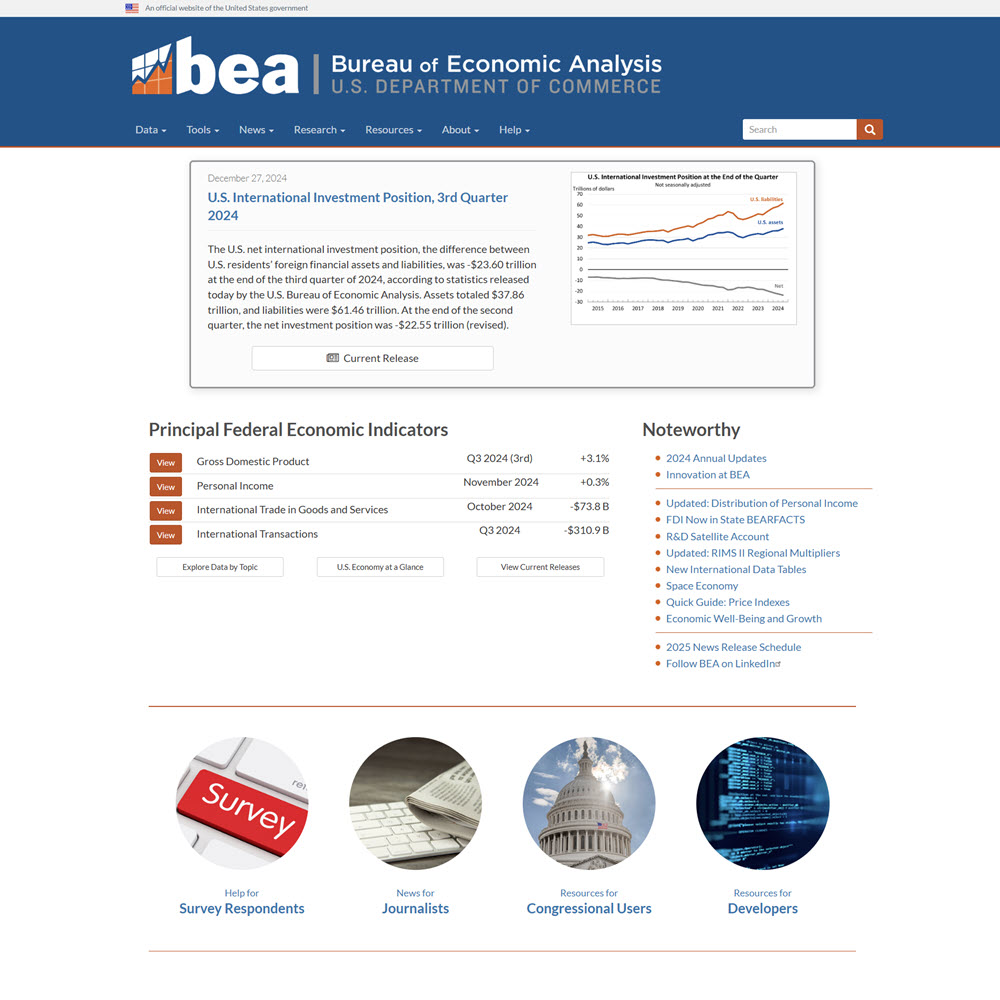
 Bureau of Economic Analysis (BEA)
The Bureau of Economic Analysis (BEA) is an agency of the United States Department of Commerce responsible for collecting, analyzing, and reporting on U.S. economic data and statistics. The primary mission of the BEA is to provide accurate and comprehensive economic information to policymakers, businesses, researchers, and the public, including Gross Domestic Product (GDP), regional and state-level economies within the United States, industries and sectors of the U.S. economy, international economic data, research and economic analysis, and economic accounts data.
 Bureau of Labor Statistics (BLS)
Census.gov - Economic Indicators
Bureau of Labor Statistics (BLS)
Census.gov - Economic Indicators
Economic Indicators is a monthly publication prepared by the Council of Economic Advisers for the Joint Economic Committee. It provides information on gross domestic product, income, employment, production, business activity, prices, money, credit, security markets, Federal finance, and international statistics. Economic Indicators are available through GovInfo from April 1995 to the present. Older economic indicators are available through FRASER, the Federal Reserve Archival System for Economic Research.
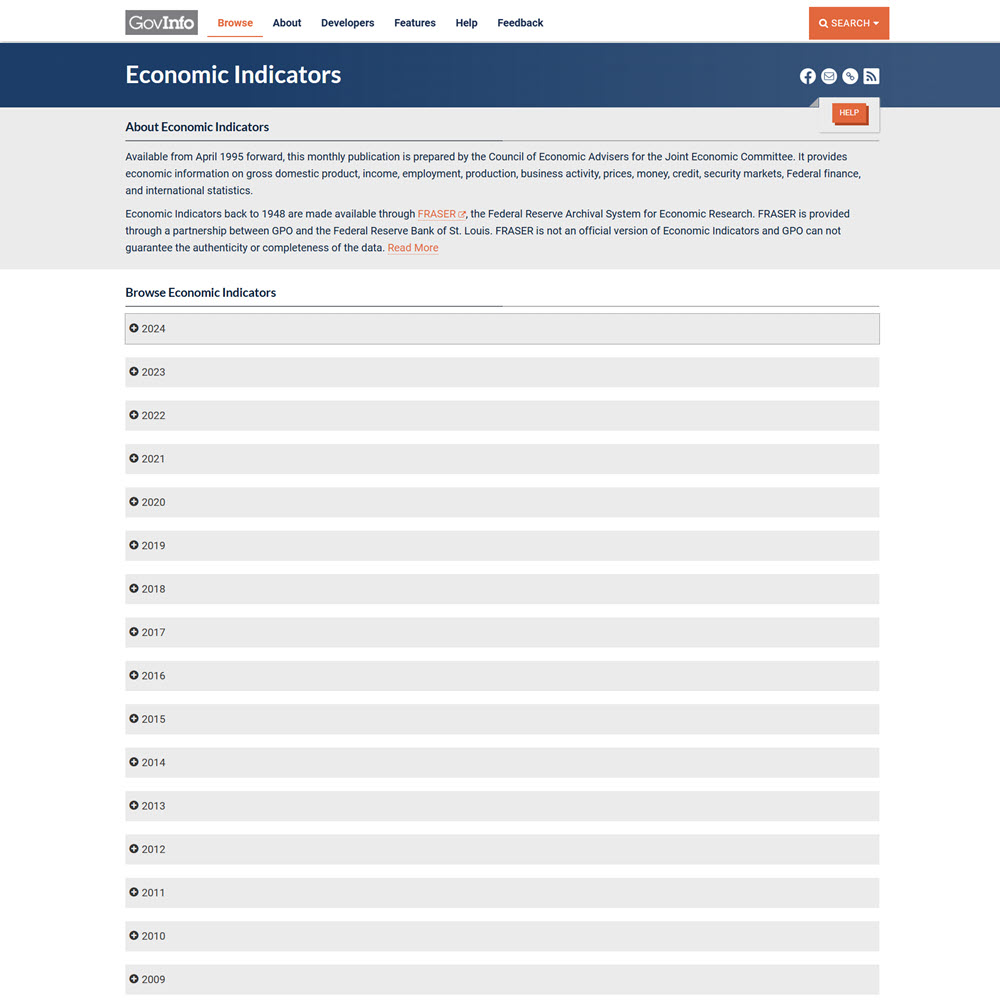 Federal Reserve Economic Database (FRED)
FRED, which stands for Federal Reserve Economic Data, is an online database of economic and financial data provided by the Federal Reserve Bank of St. Louis. FRED offers a collection of economic time series data covering various topics, including macroeconomic indicators, financial markets, labor markets, housing markets, trade balances, international economic indicators, banking and finance, regional and state-level data, and data related to specific industries. Archival Data is available through ALFRED.
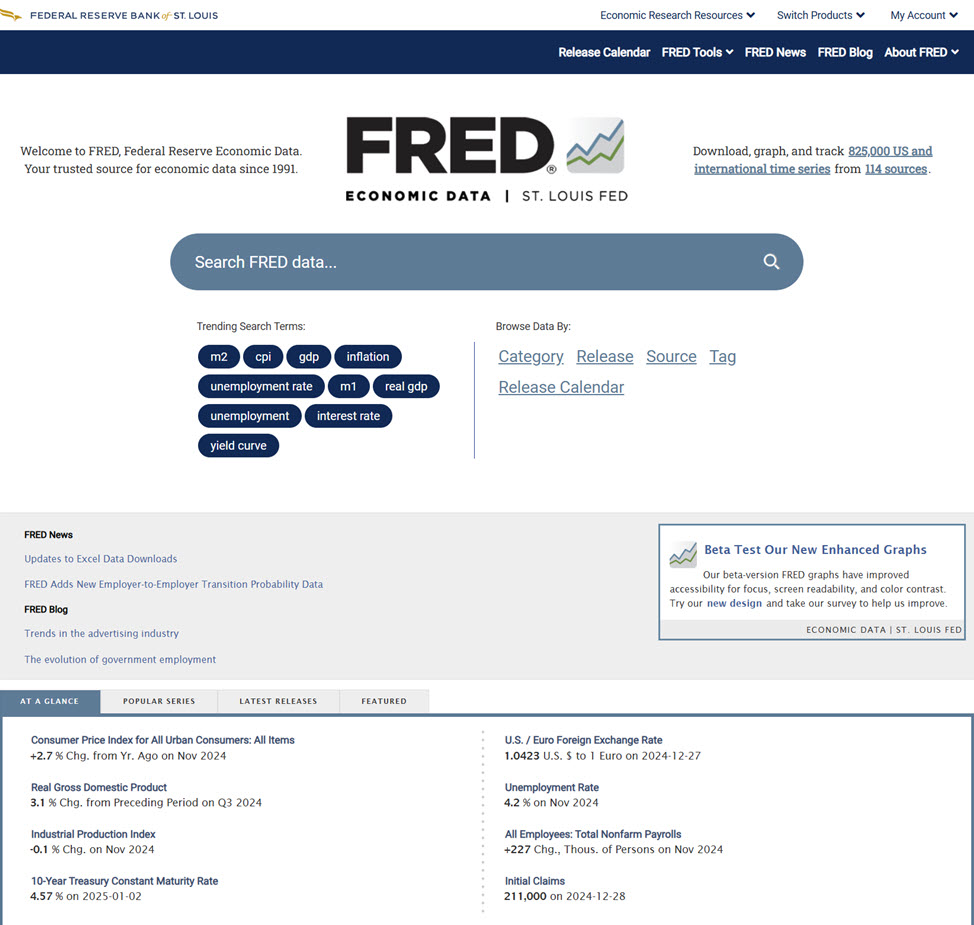 GovInfo - Economic Indicators
Economic Indicators is a monthly publication prepared by the Council of Economic Advisers for the Joint Economic Committee. It provides information on gross domestic product, income, employment, production, business activity, prices, money, credit, security markets, Federal finance, and international statistics. Economic Indicators are available through GovInfo from April 1995 to the present. Older economic indicators are available through FRASER, the Federal Reserve Archival System for Economic Research.
IPUMS (Integrated Public Use Microdata Series)
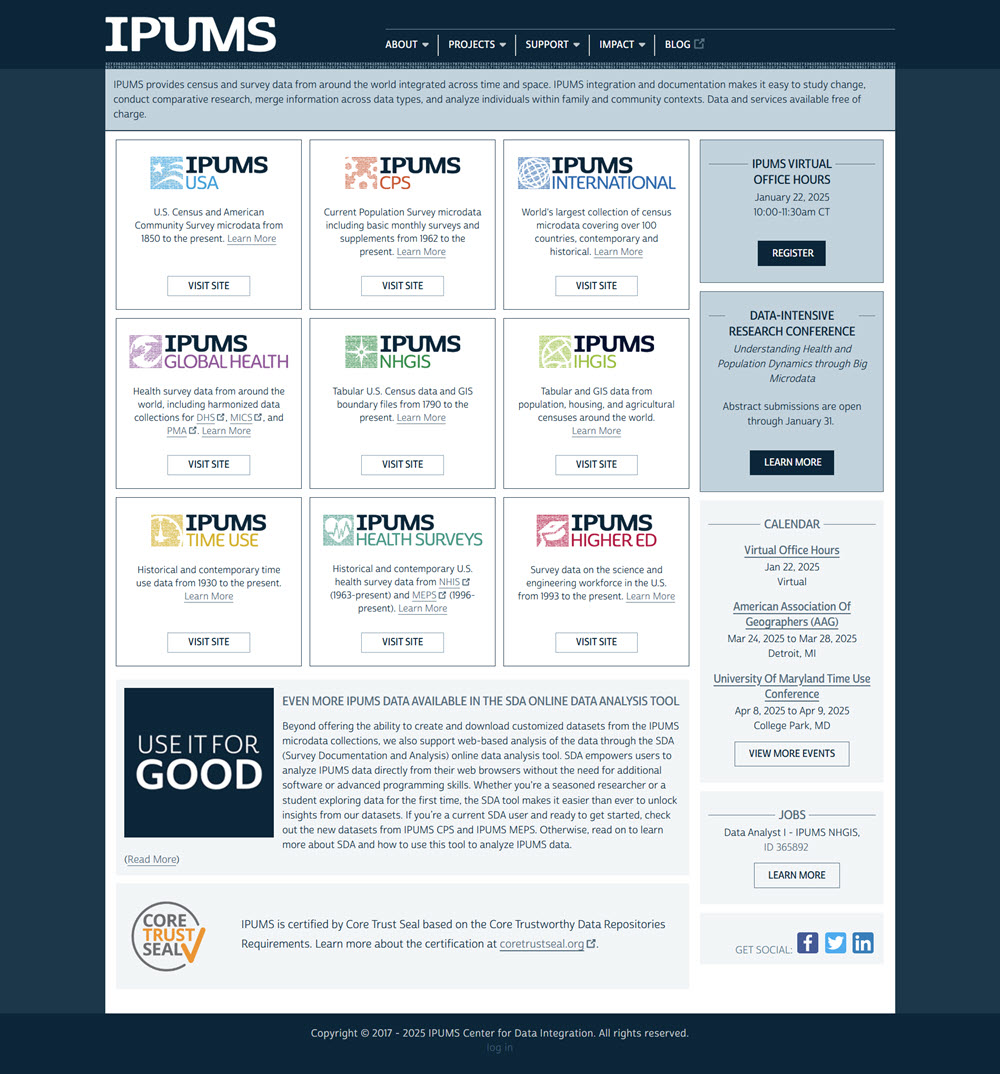
IPUMS (Integrated Public Use Microdata Series) is a comprehensive and freely accessible collection of harmonized microdata from censuses and surveys, created to facilitate social, demographic, and economic research. IPUMS provides census and survey data from around the world integrated across time and space. The IPUMS project is managed by the Minnesota Population Center at the University of Minnesota.
 NBER Public Use Data Archive
Eurostat International Trade in Goods
NBER Public Use Data Archive
Eurostat International Trade in Goods
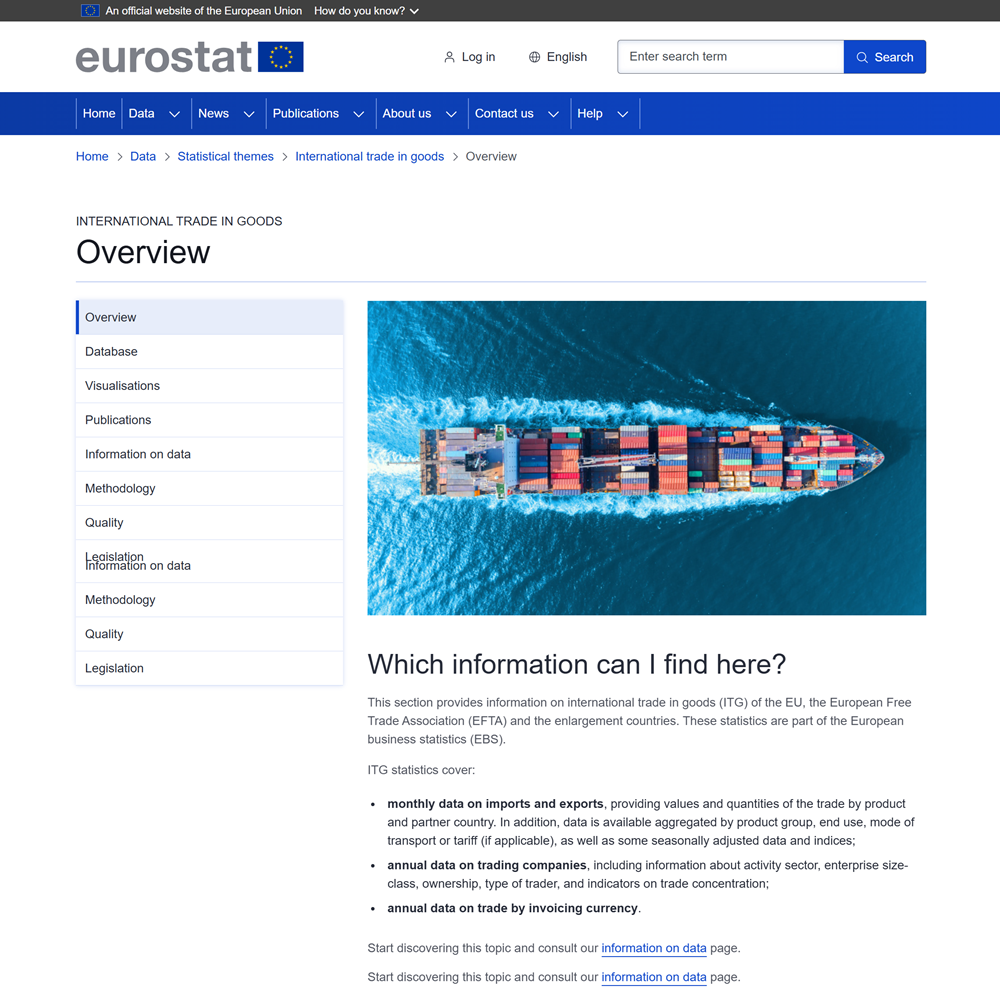
Eurostat is the European Union’s (EU) statistical office, responsible for collecting, processing, and publishing comparable and harmonized statistics across EU member states and partner countries. Eurostat provides monthly data on imports and exports, values and quantities of trade by product and partner country, annual data on trading companies, and annual data on trade by invoicing currency.
 International Monetary Fund (IMF) Data
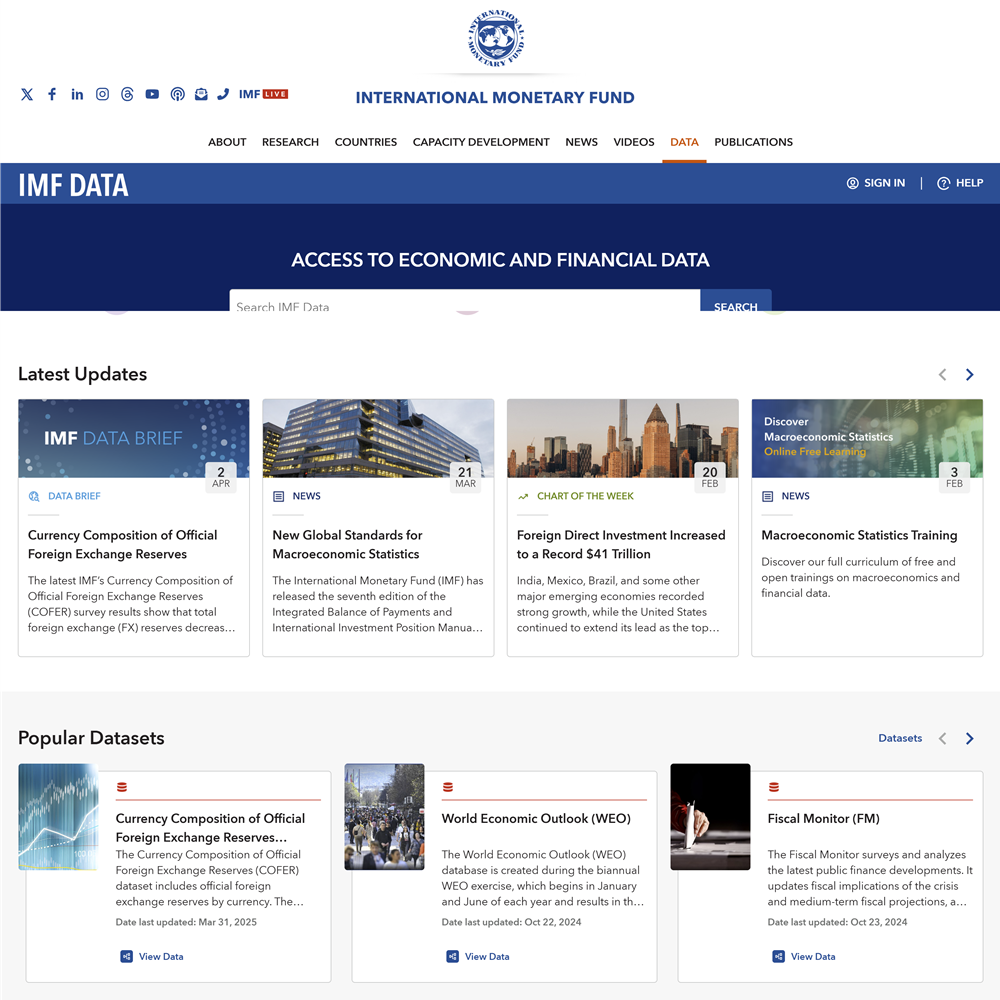
The International Monetary Fund (IMF) Data platform provides access to a wide range of global economic and financial datasets collected and maintained by the International Monetary Fund, including:
 International Trade Centre (ITC) - Trade Map
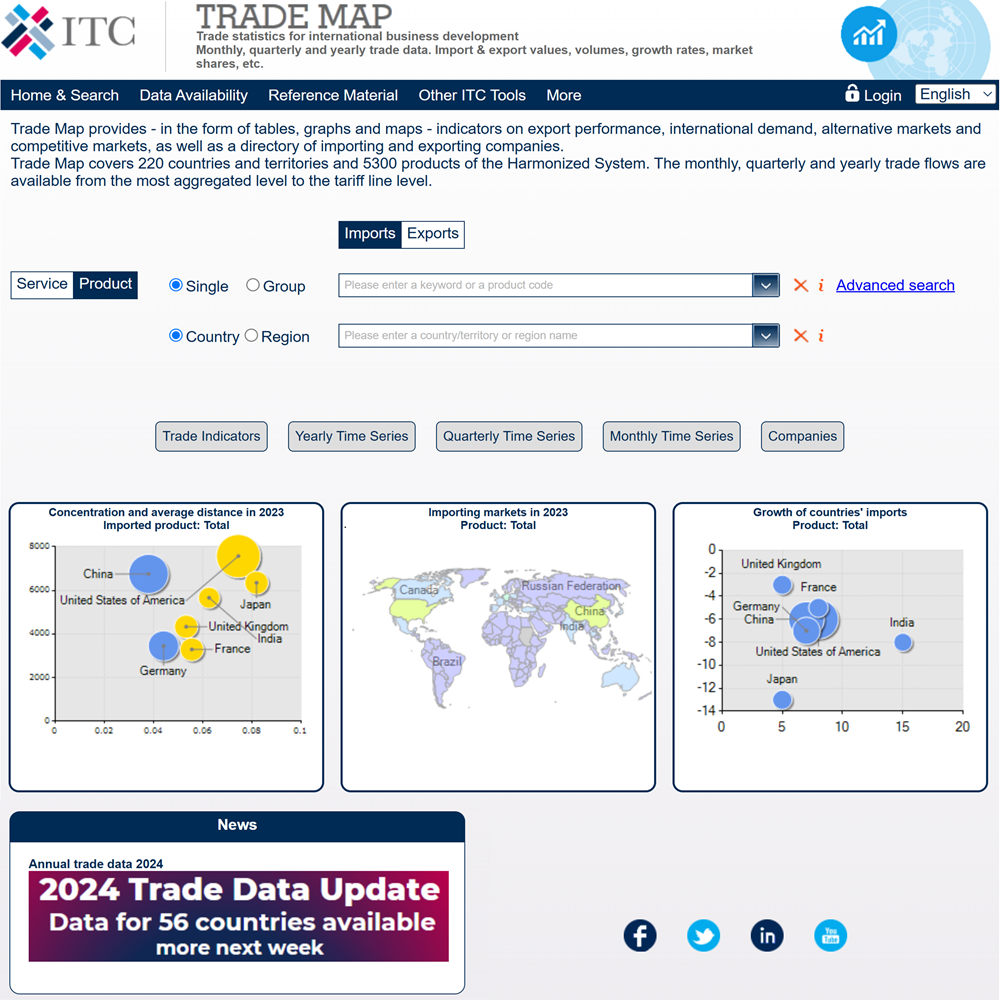
The International Trade Centre’s (ITC) Trade Map is a comprehensive online tool that provides detailed international trade statistics and market analysis. It enables users to access trade data for over 220 countries and territories, as well as analyze more than 5,300 products categorized under the Harmonized System (HS) at 2-, 4-, and 6-digit levels. Data includes annual, quarterly, and monthly trade flows, including values, volumes, growth rates, and market shares.
 International Trade Statistics Yearbook (ITSY)
The International Trade Statistics Yearbook (ITSY) is an annual publication produced by the United Nations Statistics Division (UNSD) that provides comprehensive international merchandise trade data and analysis. IT is published annually in two volumes: Volume I: Trade by country; and Volume II: Trade by commodity. It presents global trade data by country and product and provides detailed import and export statistics for over 200 countries and territories. It also includes partner countries and product breakdowns using Harmonized System (HS) codes.
Free online versions of ITSY are available from 2011. Older physical or digital copies are available for purchase through the UN Publications website or by searching in your university library catalog.
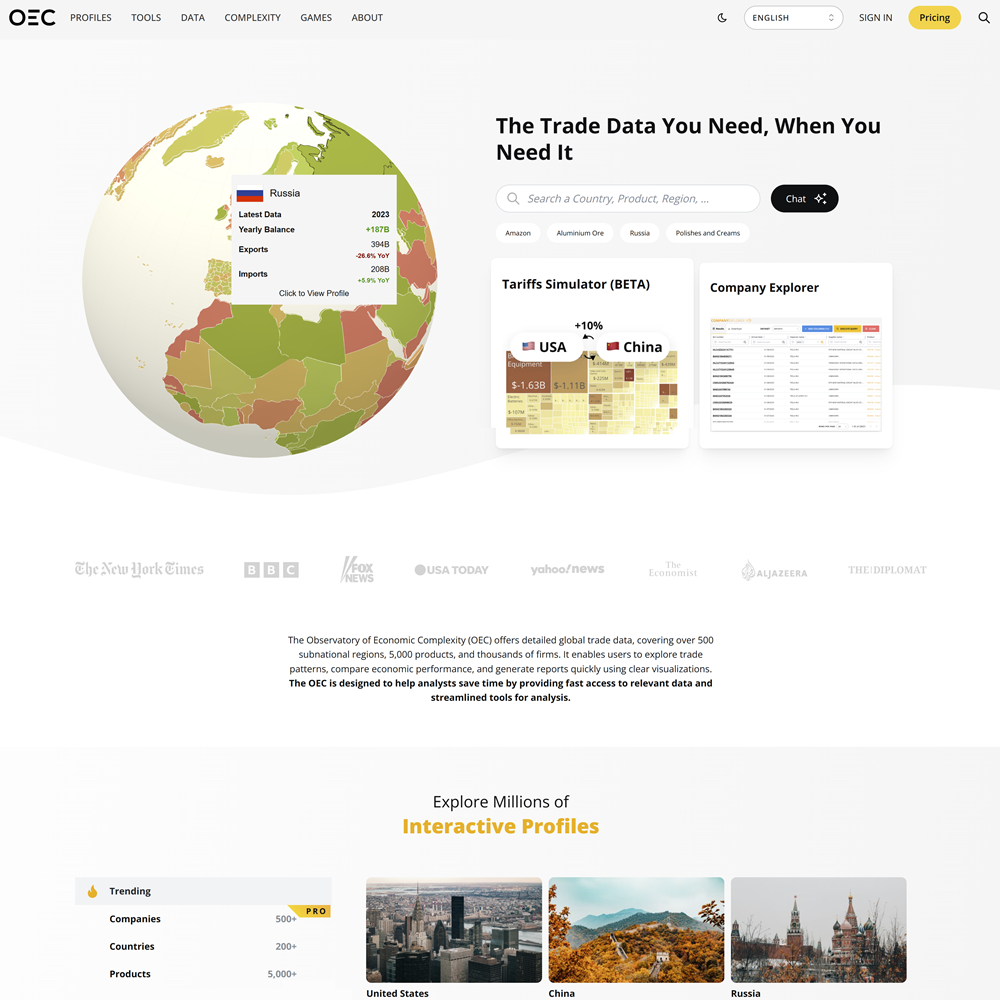
 Observatory of Economic Complexity (OEC)
The Observatory of Economic Complexity (OEC) is a free, interactive data visualization platform that provides detailed information and data on global trade. Originally developed at the MIT Media Lab and now maintained by Datawheel, the OEC allows users to explore international trade patterns through visualizations and analytical tools. Users can access over 50 years of international trade data, including 5,000 products and over 200 countries and territories.
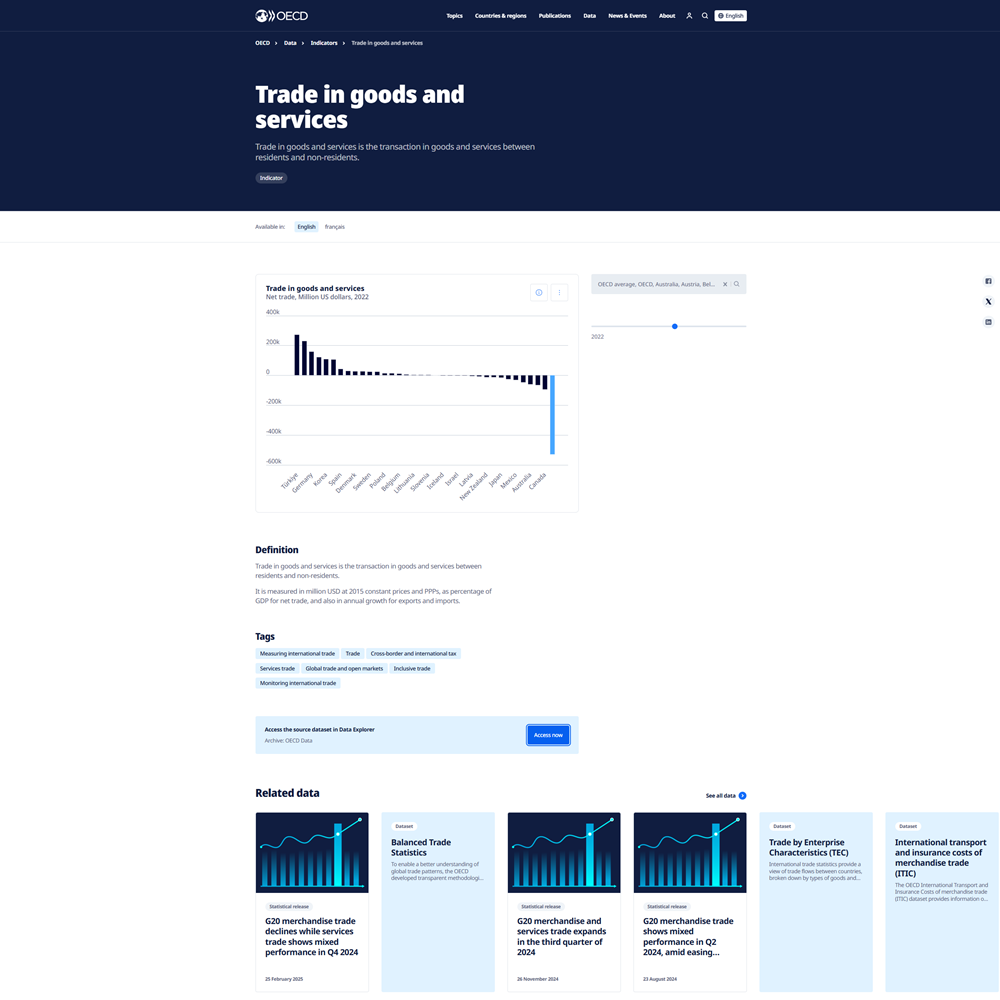
 Trade in Goods and Services Data (OECD)
The OECD Trade in Goods and Services page gives you access to high-quality, internationally comparable data on merchandise and trade in services for OECD countries and select partner countries. NOTE: The OECD does not provide as granular detail on goods and services as UN Comtrade (e.g., HS 6-digit level). While UN Comtrade is designed to be a comprehensive trade data warehouse, storing raw customs-level data reported by countries, the OECD is focused on cross-country comparability and macroeconomic trends. Data is aggregated to make it more uniform and usable across different reporting methods.
 United Nations (UN) Comtrade
The UN Comtrade Database is a global trade data repository maintained by the United Nations Statistics Division (UNSD). It provides detailed import and export statistics reported back to 1962 of countries worldwide, covering goods and services traded between nations. It includes trade data from over 200 reporting countries and territories classified using the Harmonized System (HS) and Standard International Trade Classification (SITC) codes, allowing for detailed product-level analysis.
UN Comtrade offers both free and subscription-based access. The free version is sufficient for most needs. However, the premium version provides more advanced features and usability, such as:
If you’re affiliated with a university, ask your librarian if your library subscribes to the premium version.
BACI (Base pour l’Analyse du Commerce International) is a global trade database developed by CEPII, a French research center in international economics. BACI provides bilateral trade flows between more than 200 countries, broken down by detailed product classification codes (HS 6-digit). BACI is based on UN Comtrade data, but it reconciles discrepancies between what exporters and importers report—a known issue in raw Comtrade data.
 World Integrated Trade Solution (WITS)
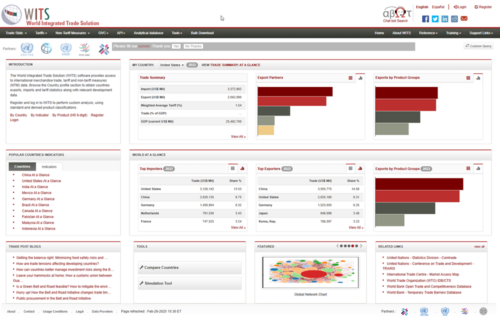
The World Integrated Trade Solution (WITS) is an online data platform that provides comprehensive trade-related data, tariff data, Non-Tariff Measures (NTMs), data on trade agreements, and indicators & Analytical Tools. It was developed by the World Bank, in collaboration with organizations such as the United Nations Conference on Trade and Development (UNCTAD), the International Trade Centre (ITC), the United Nations Statistics Division (UNSD), and the World Trade Organization (WTO).
 World Trade Organization (WT0) International Trade and Tariff Data
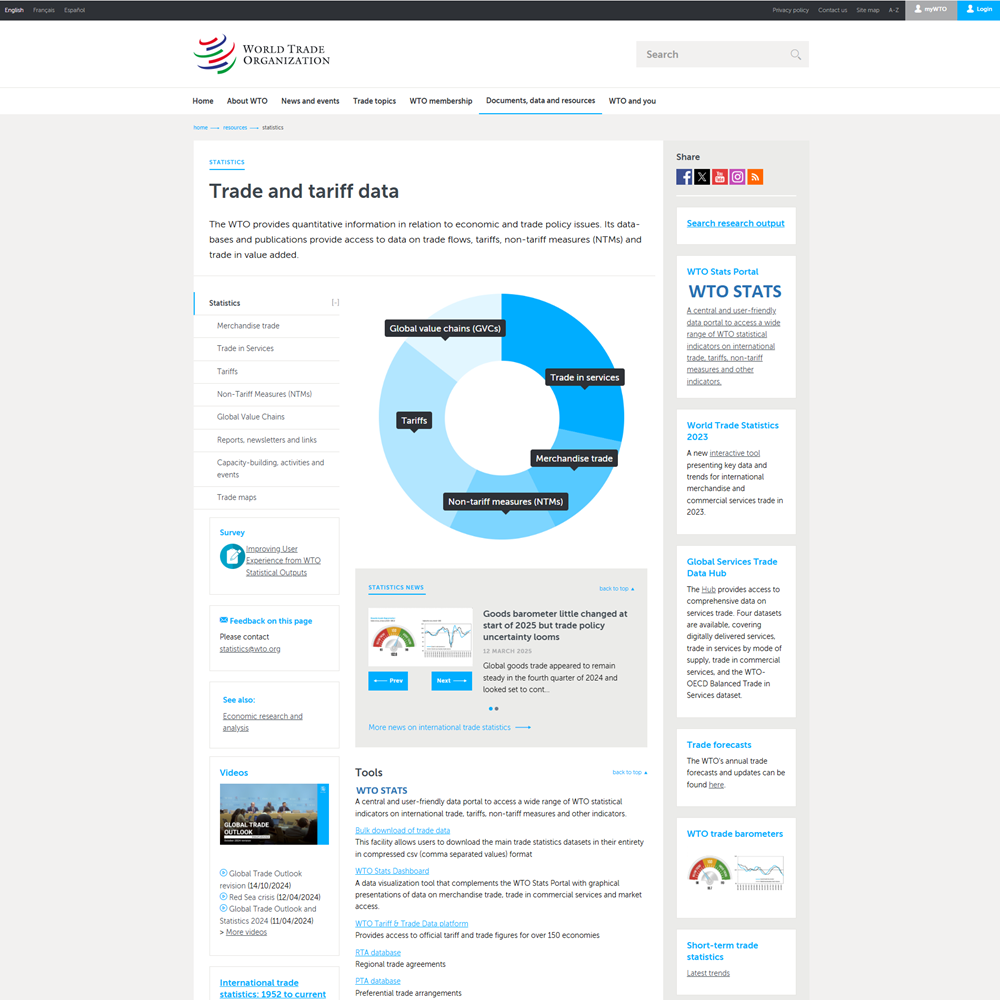
The World Trade Organization (WTO) Trade and Tariff Data Portal provides access to official data on international trade flows, tariffs, and trade policy measures for WTO member countries. Data includes merchandise trade by country, product category, and partner, and trade services data. Also provides official tariff and trade figures for over 150 economies.
 National Bureau of Economic Research (NBER) Working Papers
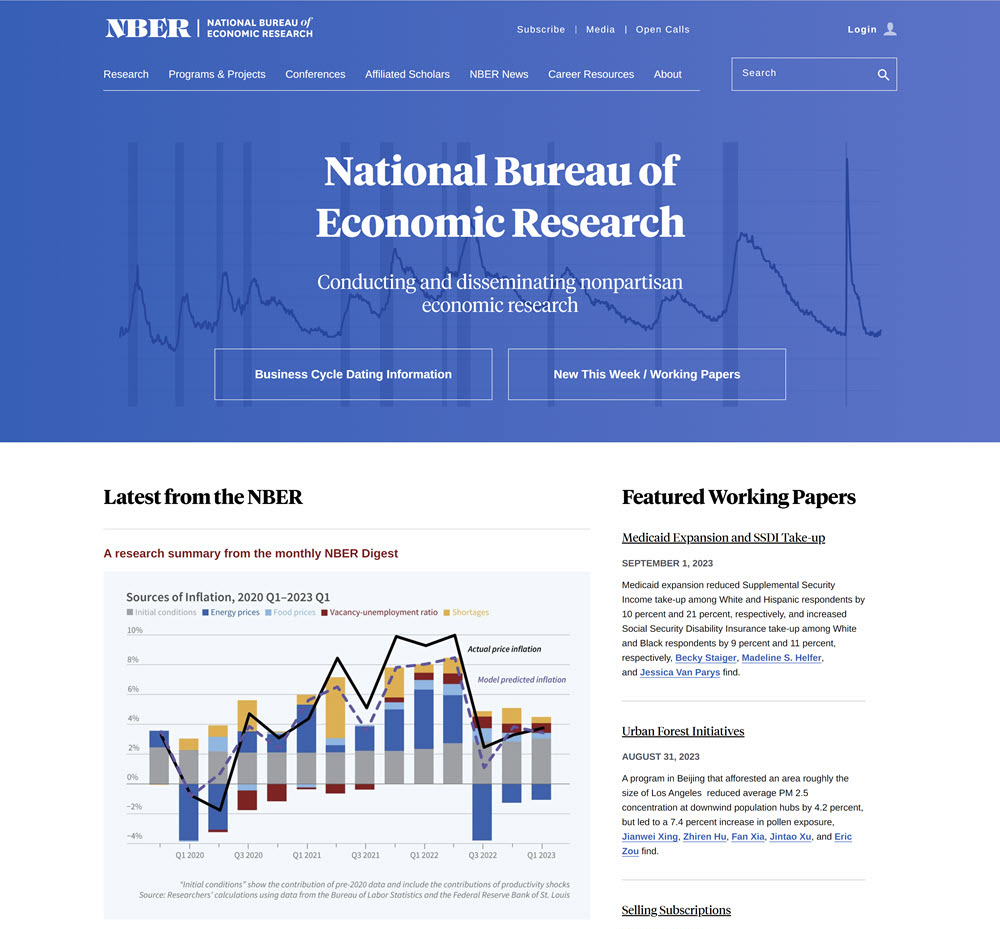
NBER Working Papers are a series of research papers published by the National Bureau of Economic Research (NBER), a prestigious and well-respected private, nonprofit research organization based in the United States. It serves as a hub for economic research and is known for producing high-quality research papers in various fields of economics.
NBER papers have not been peer reviewed.
 Research Papers in Economics (RePEc)
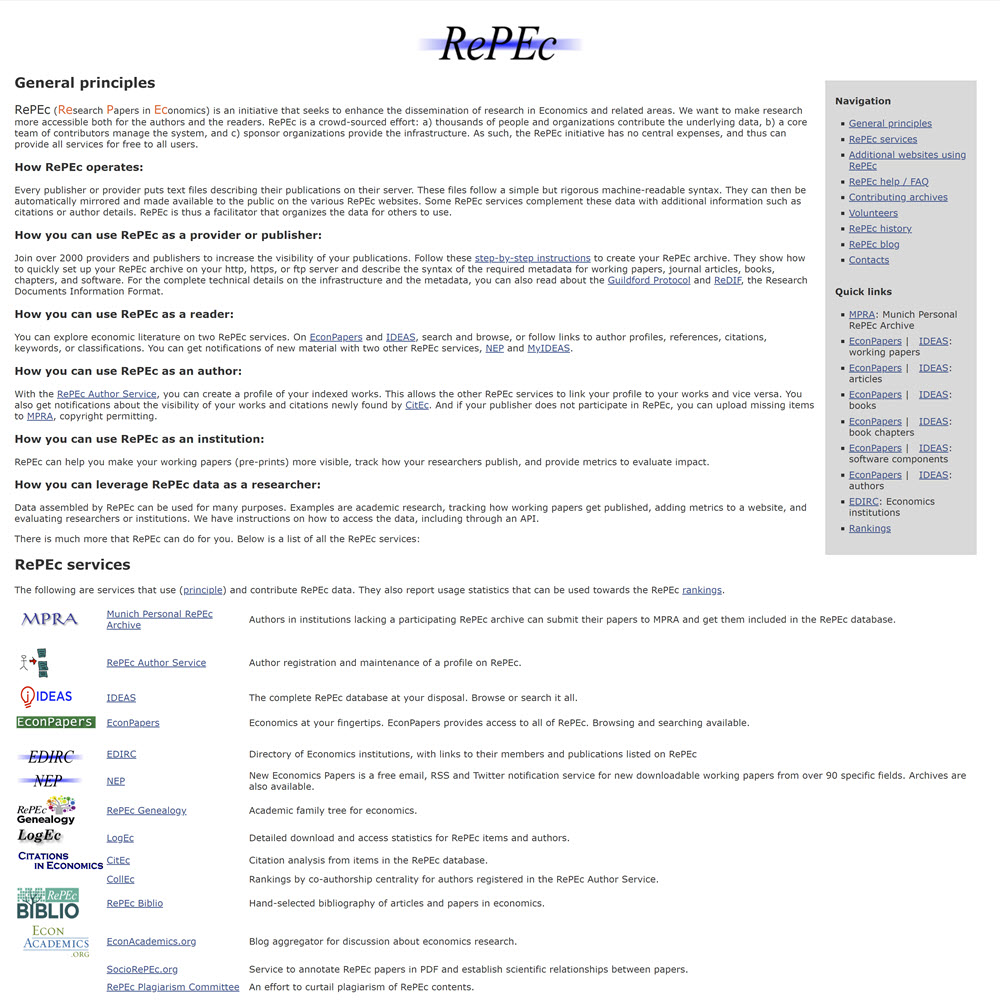
Research Papers in Economics (RePEc) is a decentralized network of academic institutions, research centers, and economists who contribute and share their research output. RePEc is a collaborative initiative that provides access to an open-access database of over 700,000 scholarly business and economic working papers, 1,000,000 journal articles, 4,000 software items, 27,000 downloadable books, and 27,500 book chapters. Most publications are available in full text; however, access to some journal articles requires an institutional subscription. EconPapers is the search interface for RePEc
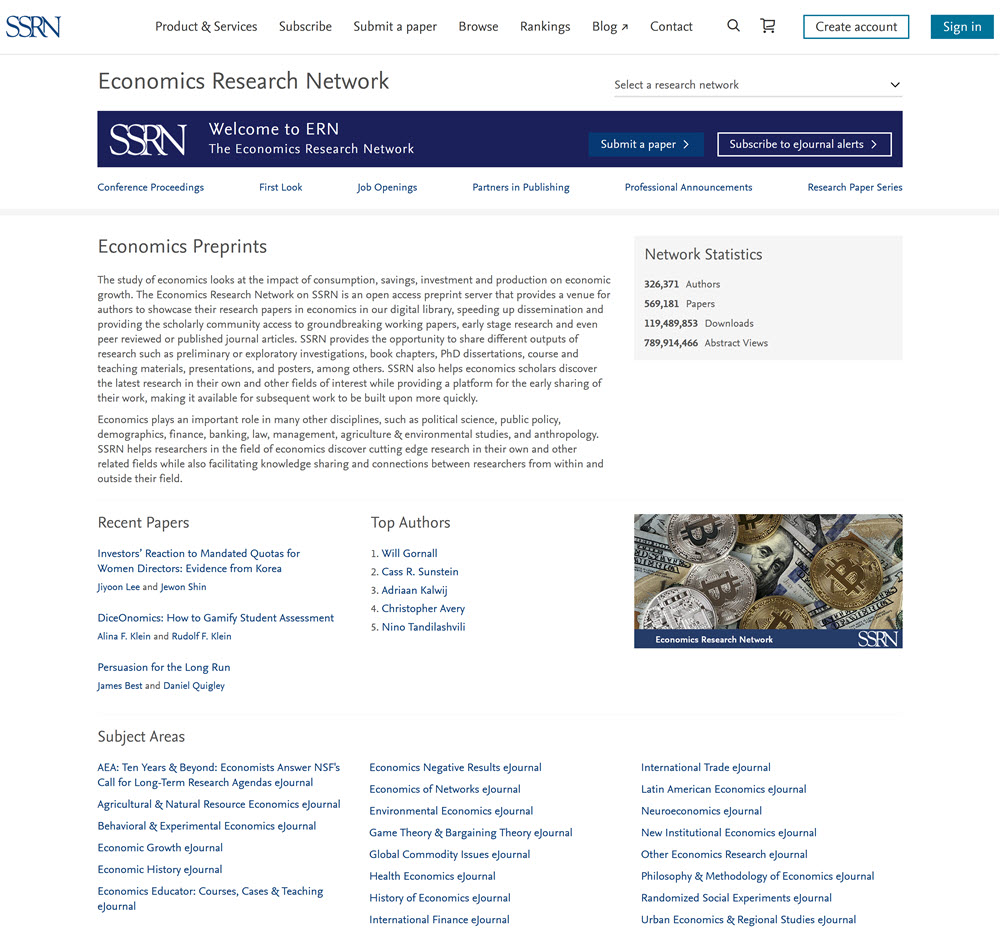
 SSRN (Social Science Research Network) Economic Preprints
SSRN (Social Science Research Network) is a major academic repository for research papers, preprints, and working papers across various social science disciplines, including economics. SSRN allows researchers to share their research findings, making their work accessible to others before formal publication in academic journals. SSRN includes several subsections or “networks” dedicated to specific fields, including the SSRN Economics Research Network, which focuses on economic preprints and working papers.
Preprints are not “peer-reviewed.” They are unreviewed manuscripts posted online. They are an important means for researchers to share findings with others in their discipline quickly.
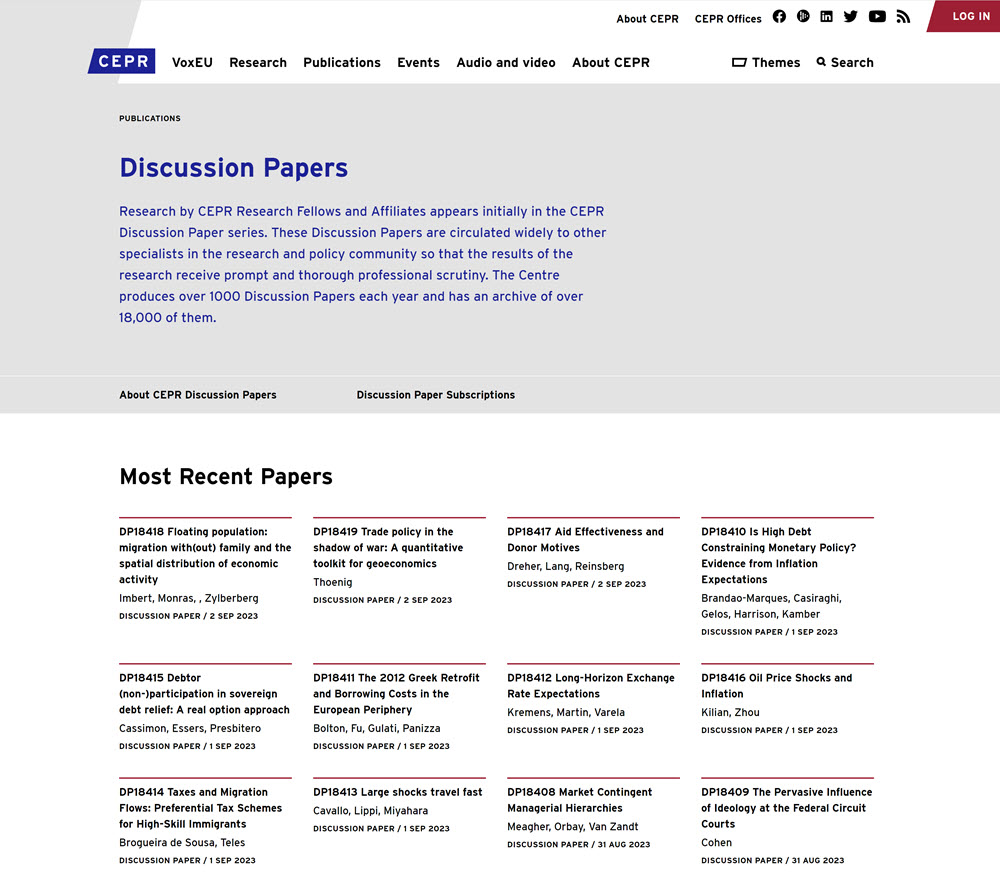
 The Centre for Economic Policy Research (CEPR) Discussion Papers
The Centre for Economic Policy Research (CEPR) Discussion Papers are a series of research papers published by the CEPR, a prominent European research organization dedicated to promoting research excellence and informing policy debates in economics and related fields. The Centre produces over 1000 economic discussion papers yearly, with a growing archive of over 18,000.
Journal Citation Reports (JCR) evaluates and compares journals using citation data from over 12,000 journals in the arts, humanities, sciences, and social sciences from respected publishers in over 80 countries. JCR shows journal rankings, impact factors, and citation data, which can help you quickly find the most credible and widely respected journals in your subject area.
 American Economic Review
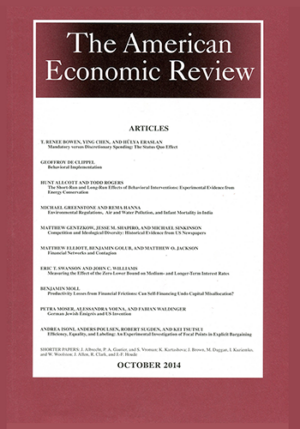
American Economic Review is a peer-reviewed, general-interest academic journal that publishes original research in economics, including articles on microeconomics, macroeconomics, labor markets, public economics, and econometrics.
 Energy Policy
Energy Policy is a peer-reviewed academic journal that publishes research about how energy supply and use affect public policy decisions. It includes studies on economic, social, planning, and environmental aspects of energy, such as regulation, energy security, market-based solutions, and how different policy choices influence energy systems at the local, national, or global level.
 Journal of Financial Economics
Journal of Financial Economics is a peer-reviewed academic journal that publishes theoretical and empirical articles on financial economics. Articles focus on topics such as how financial markets work, how firms and investors make financial decisions, and how economic forces shape financial outcomes.
 Energy Economics
Energy Economics is a peer-reviewed academic journal that publishes research on the economics of energy systems and markets. Articles focus on topics such as energy supply and demand, pricing and markets for energy commodities, regulation and taxation, forecasting, environmental impacts, and the intersection of energy issues with economic policy. Journal Site
 Journal of Finance
The Journal of Finance is a peer-reviewed academic journal and the official publication of The American Finance Association. It publishes research on all the major fields of finance. Its articles explore topics such as investing, corporate decision-making, financial markets, risk, and economic behavior, often using data to explain why markets behave the way they do.
 Econometrica
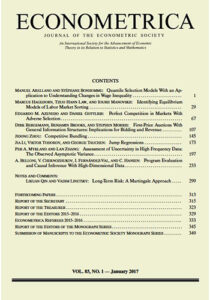
Econometrica is a peer-reviewed academic economics journal established in 1933 that publishes research across all fields of economics. It is the official publication of the Econometric Society and is published bimonthly. The journal focuses on the intersection of economic theory and statistical analysis, and uses mathematics and statistics to better understand economic behavior. Its primary objective is to advance studies that combine theoretical models with quantitative empirical data to better understand economic problems.
 Quarterly Journal of Economics
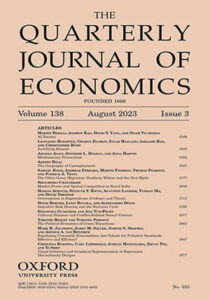
The Quarterly Journal of Economics (QJE), edited at Harvard University, is a peer-reviewed journal that publishes research that explores how individuals, firms, and governments make economic decisions and how those decisions shape markets and public policy.
 Ecological Economics
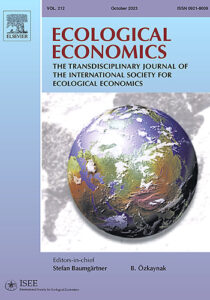
Ecological Economics is a peer-reviewed journal that explores how the economy and the natural world depend on each other. The journal focuses on issues such as the economics of sustainability, climate change, natural resources, and long-term human well-being. The Transdisciplinary Journal of the International Society for Ecological Economics (ISEE), Ecological Economics, draws from a diverse readership.
 Journal of Political Economy
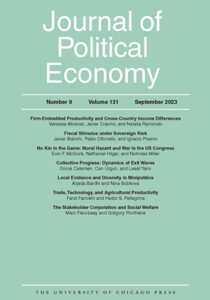
The Journal of Political Economy is a peer-reviewed economic journal that publishes analytical, interpretive, and empirical studies on how markets work and how economic policies shape everyday life. It features studies on topics in monetary theory, fiscal policy, labor economics, development, microeconomic and macroeconomic theory, international trade and finance, industrial organization, and social economics.
 World Development
World Development is a peer-reviewed journal that focuses on global poverty, inequality, and social change. It publishes research on economic growth, education, health, gender, governance, and sustainability in developing countries. Articles cover topics such as poverty, unemployment, malnutrition, disease, lack of shelter, environmental degradation, inadequate scientific and technological resources, trade and payments imbalances, international debt, gender and ethnic discrimination, militarism and civil conflict, and lack of popular participation in economic and political life.
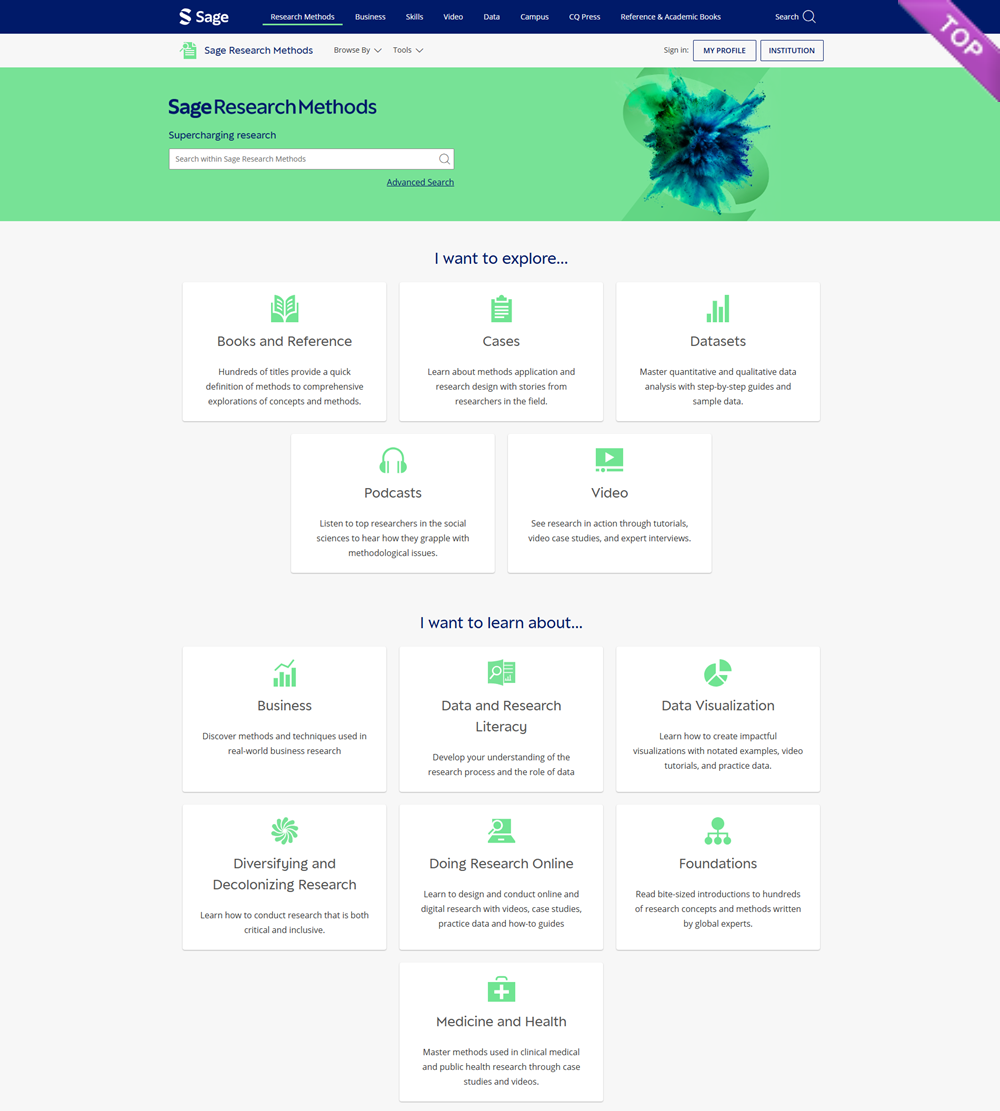
Sage Research Methods is a major subscription database that guides users in understanding research methodologies across different academic disciplines. It provides electronic access to reference books, journal articles, instructional videos, and other qualitative methods resources.