International Relations
The study of how countries, organizations, and other global actors interact on the world stage, focusing on diplomacy, conflict, and cooperation.
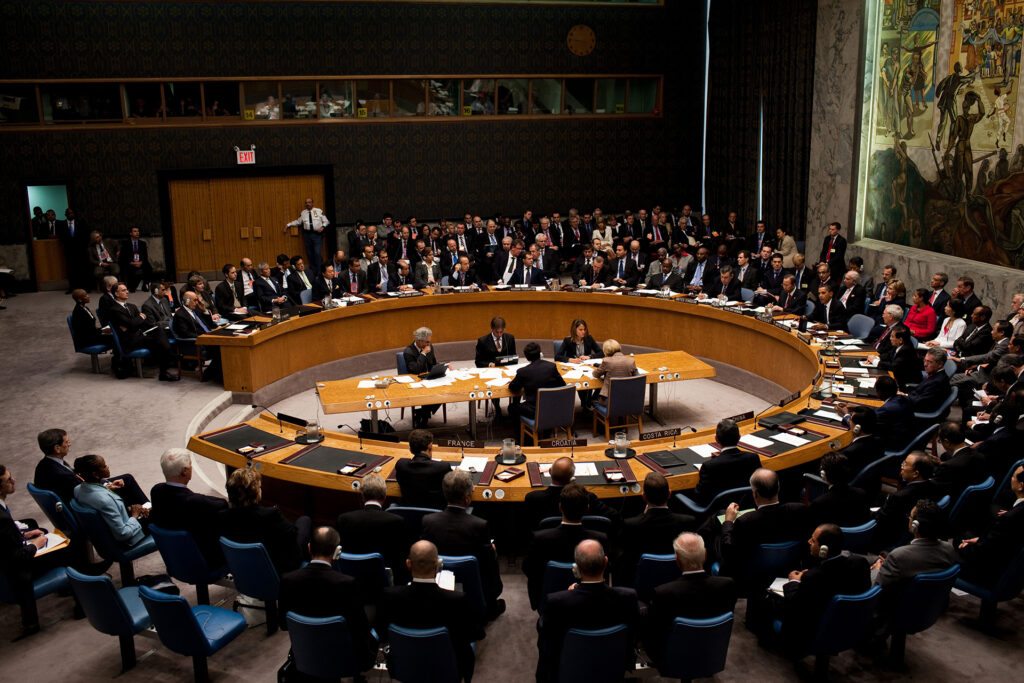
President Barack Obama chairs a United Nations Security Council meeting at U.N. Headquarters in New York City, Sept. 24, 2009. (Official White House photo by Pete Souza)
Overview
This overview provides a brief introduction to international relations, the study of relations among countries, international organizations, and other global actors (state and non-state). It highlights major areas of study, as well as related disciplines and resources for exploring an international relations major and careers in the field in greater depth.
What's international relations?
What's international relations?
International relations is the study of how sovereign states, non-state entities, and other global actors interact or come into conflict. It is a discipline focused on the interactions between countries and non-state actors such as multinational corporations and non-governmental organizations on a global scale.
International relations examines the political, economic, social, and cultural relationships that shape the behavior and decisions of states and non-state actors in the international system. It also explores how countries cooperate, compete, manage conflict, and engage with diplomacy, trade, security, human rights, and global governance
For an in-depth description of international relations, see the article provided by Encyclopedia Britannica’s public website.
Also take a look at the following 10-minute video from the Department of International Relations at the London School of Economics, one of the oldest and largest IR departments in the world.
What are the key areas of international relations?
What are the key areas of international relations?
International relations studies cover a wide range of topic areas. However, most universities traditionally divide these topical areas into the following key areas of study:
- Foreign Policy – The strategies, decisions, and actions a government uses to manage its relationships with other countries and international organizations.
- International Law – The body of rules, agreements, and treaties that governs relations between countries
- International Organizations– The study of institutions created by countries or other actors to promote cooperation and address issues that cross national borders.
- International Political Economy – The study of the relationship between politics and economics in the global system.
- International Security – How states, societies, and the international system protects against threats to peace and stability.
What other disciplines are important to international relations studies?
What other disciplines are important to international relations studies?
International relations is highly interdisciplinary and draws on many other disciplines to explain how countries, organizations, and people interact across borders. Here are important disciplines.
- Area and Regional Studies – Provides specialized knowledge of the politics, history, languages, and cultures of specific regions, helping researchers understand local contexts and regional dynamics.
- Economics – Explores international trade, globalization, development, finance, sanctions, and the economic forces that shape world affairs.
- History – Provides historical context needed to understand conflicts, alliances, and diplomacy in the international system.
- Law – Provides understanding of international law and the legal rules governing relations among states.
- Geography – Studies how location, natural resources, borders, climate, and geopolitics influence international relations and strategic decision-making.
- Political Science – The foundation of international relations. Studies governments, political institutions, public policy, international organizations, and the exercise of power between states.
- Sociology – Examines how societies, cultures, migration, social movements, and transnational networks affect global politics.
- Psychology – Explores decision-making, leadership, perception, nationalism, political behavior, and the psychological factors behind conflict and negotiation.
Security and Strategic Studies – Analyzes war, military strategy, defense policy, intelligence, terrorism, and national security.
How do I learn more about the majoring in of international relations?
How do I learn more about the majoring in of international relations?
- 10 Career Paths With a Degree in International Relations – Central Michigan University BLOG: All Things Higher Ed
- What You Need to Know About Becoming an International Relations and National Security Studies Major – U.S. News and World Report
International Relations Subfields



Literature Reviews in International Relations
After selecting a topic, conducting a literature review is an essential step in the research and writing process. Writing a literature review helps you:

- Understand how scholars have approached your topic
- Identify key debates and theoretical perspectives
- Recognize gaps in the existing research
- Situate your own work within the broader academic conversation.
If you are new to doing international relations literature reviews, the following databases are great places to start to help you locate major publications and relevant scholarship on international relations topics.
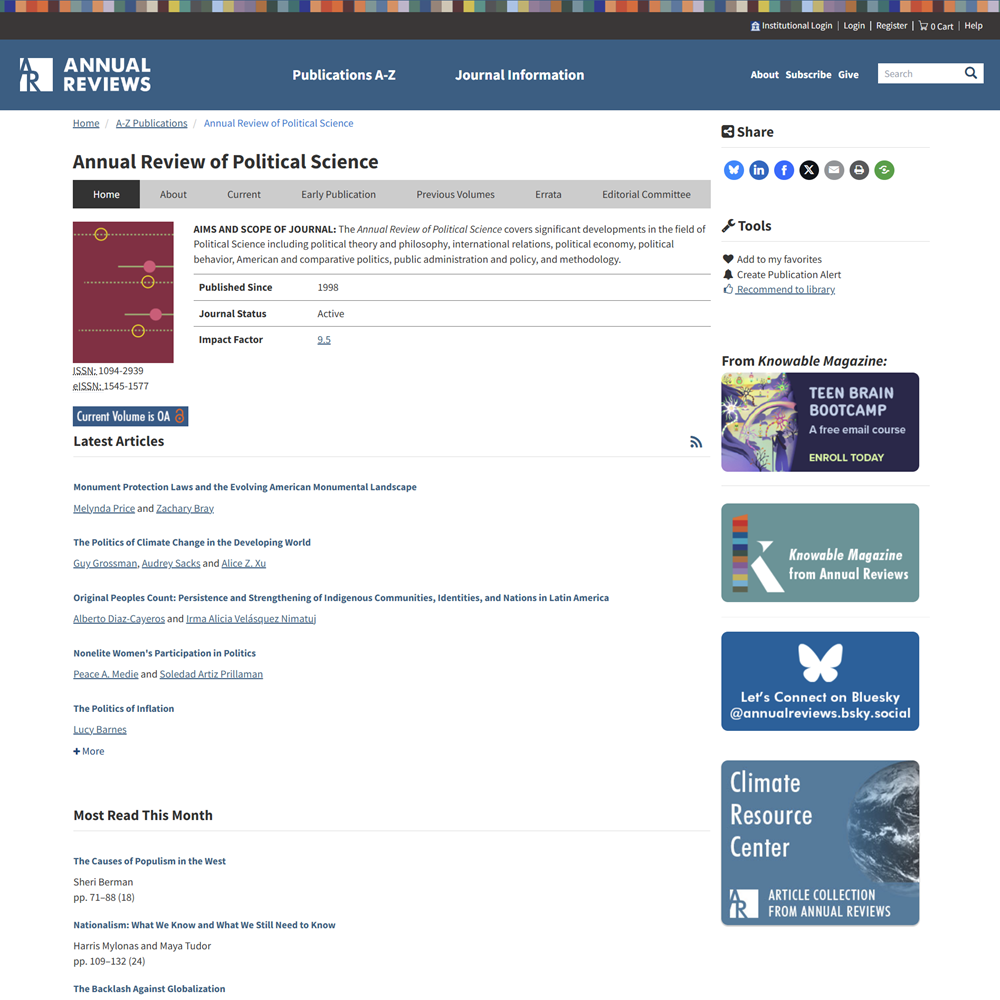
The Annual Review of Political Science is a peer-reviewed academic journal that publishes comprehensive literature review articles in political science. Each year, a new volume is released, consisting of articles written by leading experts in the field, providing overviews of the most important and influential research and scholarship in political science.
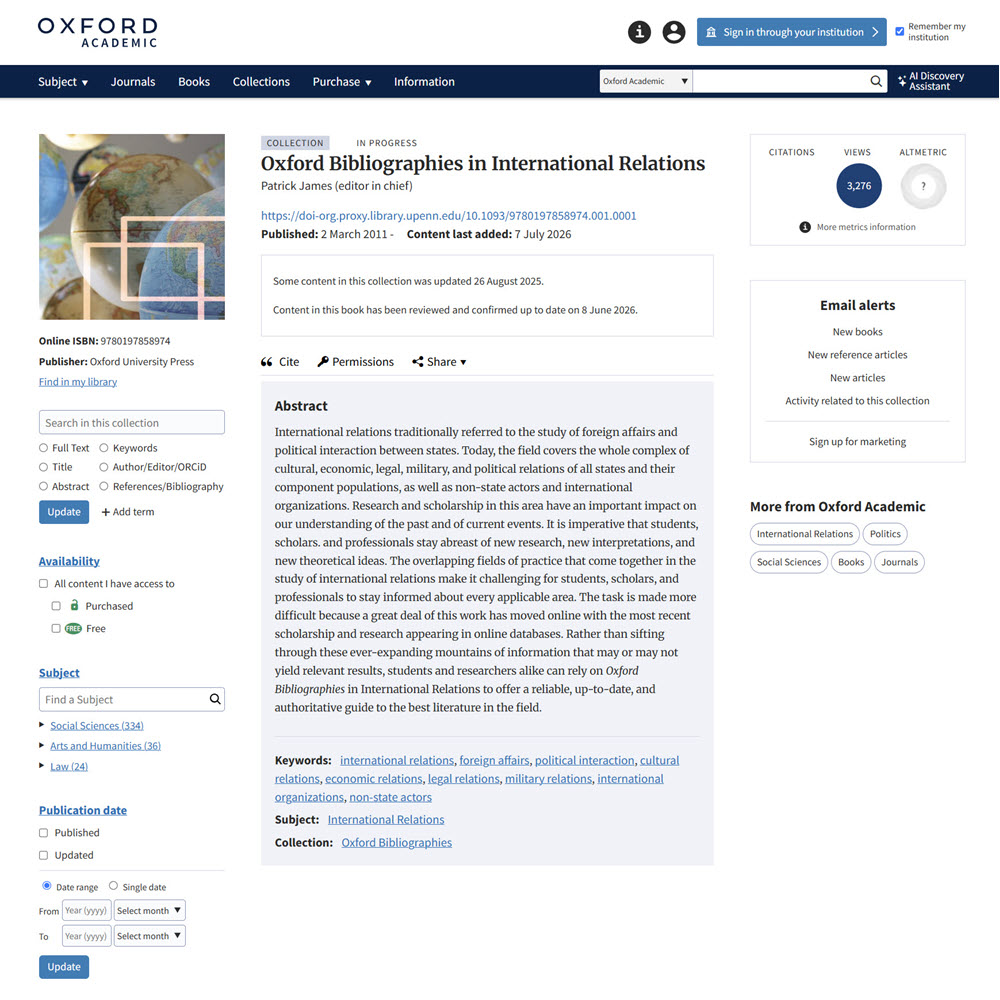
Oxford Bibliographies provides scholarly bibliographies in most social science disciplines, including international relations. materials selected and organized by academic scholars. These bibliographies can also help researchers begin building literature reviews by identifying important authors, major debates, foundational studies, and key publications on different international relations topics.
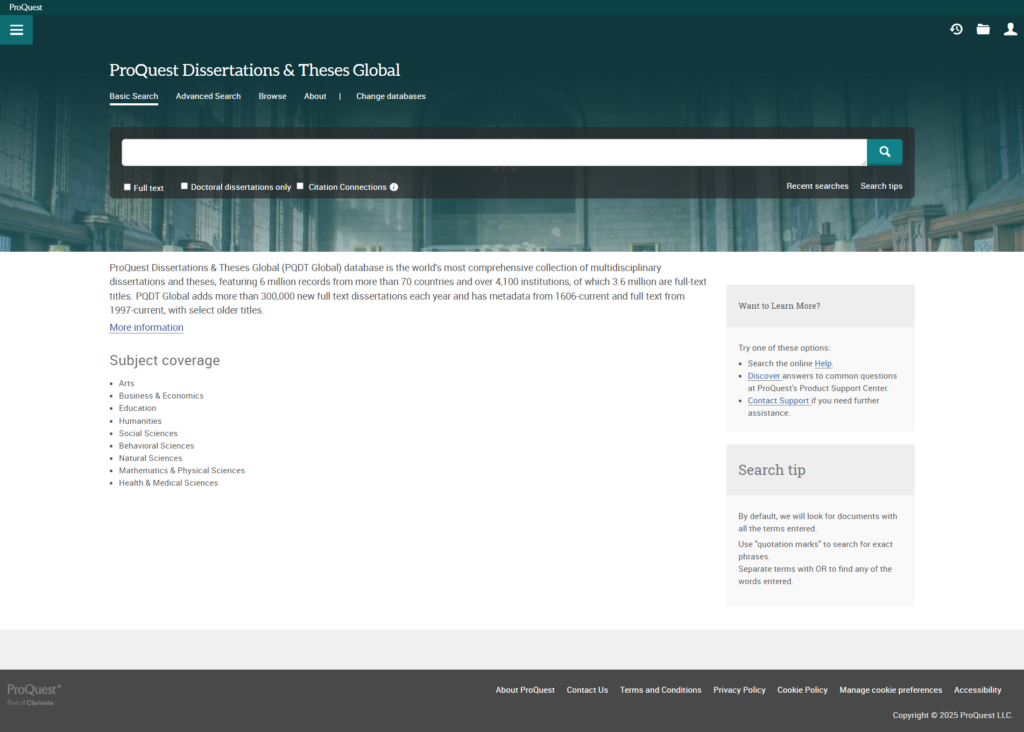
When searching for literature reviews, don’t overlook dissertations found in ProQuest Dissertations & Theses. Doctoral students are typically required to write extensive literature reviews. Each review will examine major debates, theories, methods, and key publications related to their research topic, which can help you identify important authors, major studies, useful keywords, and gaps in the existing research.
To learn more about finding resources for a literature review, see “How to Locate Resources for a Literature Review.”
International Relations Reference
Reference materials such as subject encyclopedias, dictionaries, and handbooks provide international relations researchers with reliable background information, definitions, historical context, and factual data before moving on to more specialized books, journal articles, and primary sources. Below, we provide a select list of international relations reference resources by type.
Atlases and Maps
Atlases and Maps
Atlases and maps provide valuable spatial and geographic context, helping scholars and researchers understand how geography, borders, resources, and territory influence politics, power, and international relations. Maps are especially important for revealing politically disputed areas, changing boundaries, and regions with overlapping claims.
Atlas and Map Databases
ArcGIS Living Atlas of the World is a large, curated collection of authoritative geographic datasets, interactive maps, and analytical layers designed for use within the ArcGIS platform. Maintained by Esri, it provides global information on topics such as demographics, climate, infrastructure, land use, and environmental change, allowing users to incorporate reliable spatial data directly into maps, dashboards, and GIS analyses.
The ArcGIS Living Atlas of the World is mostly free to browse, view, and use in public maps. However, accessing certain advanced layers requires a paid ArcGIS subscription.

HistoAtlas is an open-access, collaborative digital atlas that uses historical Geographic Information System (GIS) technology to map how human societies and political landscapes have changed over time. Histo Atlas reconstructs world history through interactive maps, allowing users to explore how political borders, cultural regions, and major historical events evolved across time within a shared geographic framework.

The Perry-Castañeda Library Map Collection provides digitized historical and contemporary maps covering global regions, thematic maps, and country maps. Hosted by the University of Texas, this collection includes historical world maps organized by region and theme that are useful to political and international relations researchers.

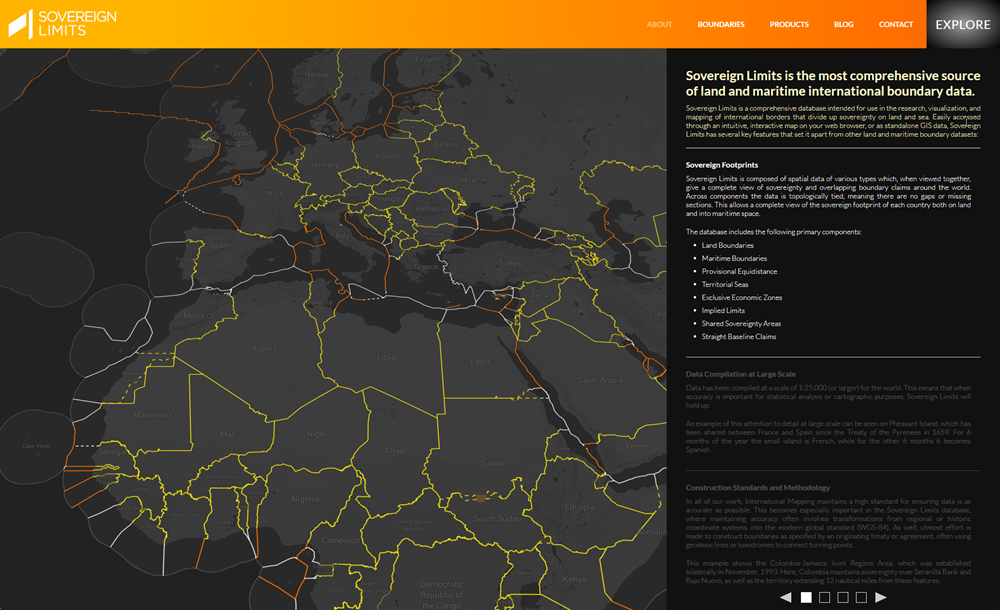
Sovereign Limits is a detailed digital repository mapping out every internationally recognized land and maritime border. It offers both an interactive web map and downloadable GIS data. Each border in the database is accompanied by a “Boundary Brief,” which outlines the boundary’s history, key legal/treaty documents, and annotated maps.
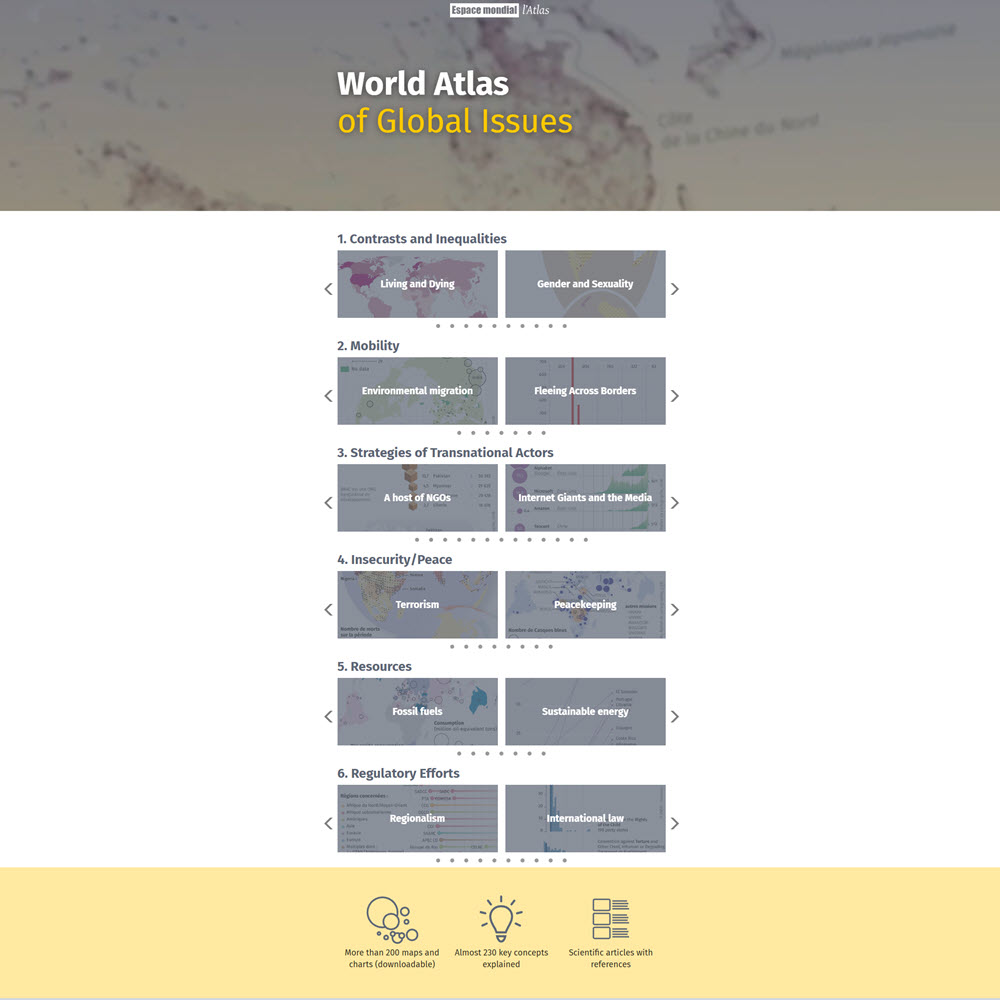
Developed by academics at SciencePo (the Institut d’Études Politiques de Paris), one of France’s most prestigious universities, located primarily in Paris, the World Atlas of Global Issues is an illustrated thematic atlas that uses maps and data visualizations to examine major global issues, including demographics, development, environmental change, health, conflict, and economic disparities, highlighting geographic patterns and regional differences.
Print Atlases and Maps

Bibliographies
Bibliographies
A bibliography lists sources cited in research papers, such as books, articles, documents, websites, and other academic materials.
Oxford Bibliographies is a leading scholarly source for expert-curated bibliographies, providing scholarly bibliographies in most social science disciplines, including anthropology, communication, criminology, economics, international relations, political science, psychology, and sociology. Each bibliography provides a list of authoritative books, journal articles, websites, and other materials, all organized by academic scholars.
Companions
Companions
Companions offer concise yet comprehensive introductions to a subject. Written by experts, introductions present key ideas, theories, and debates clearly and understandably.
Dictionaries
Dictionaries
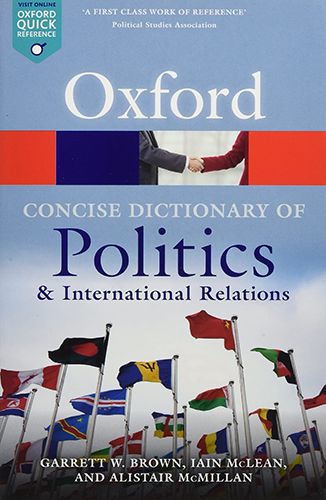
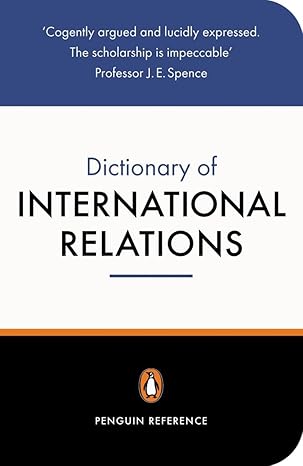
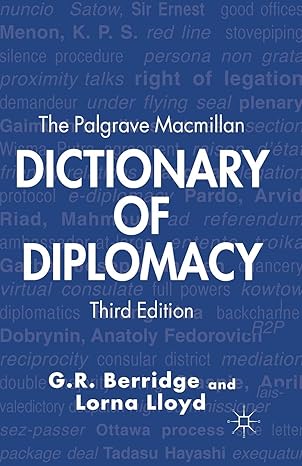
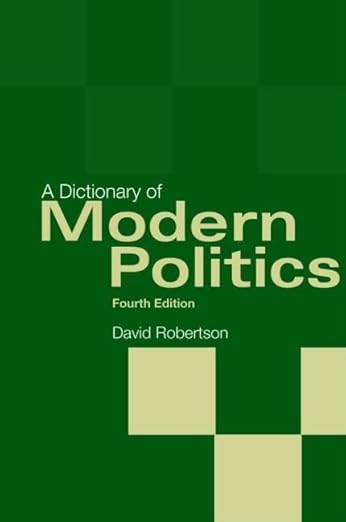
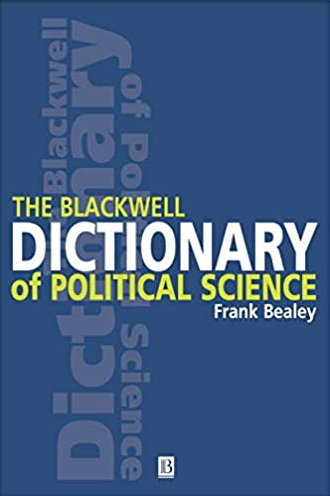
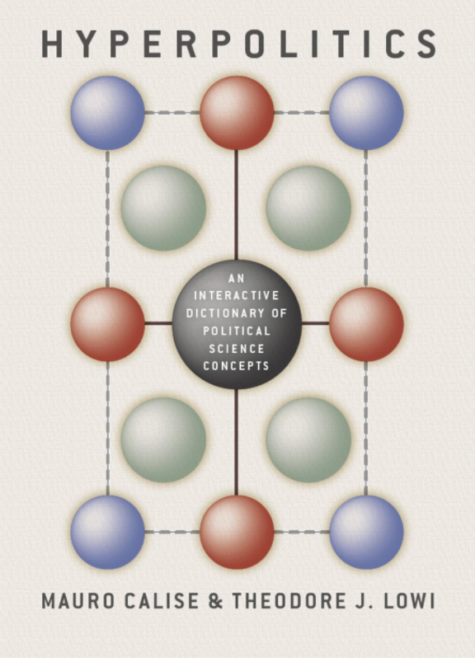
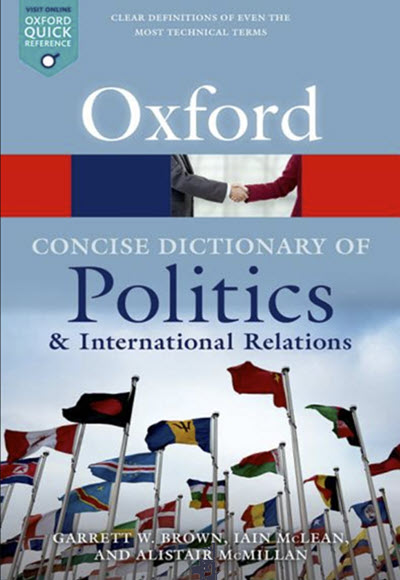
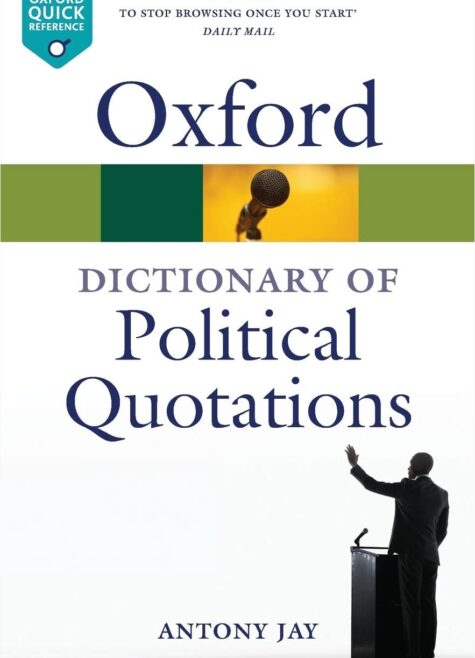
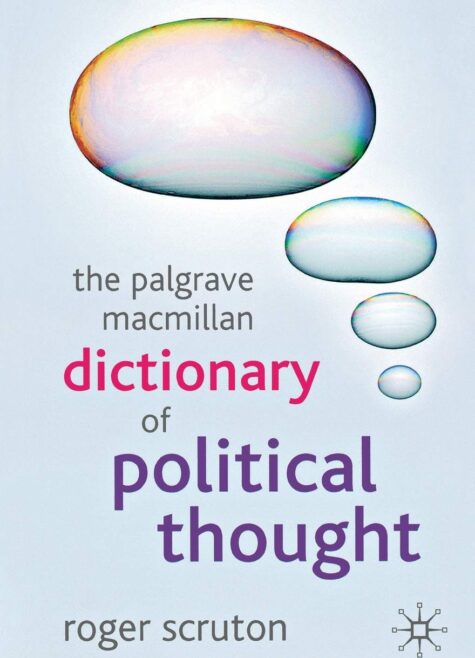
Dictionaries are important for understanding and contextualizing words, concepts, and terminology. Both IR and political science dictionaries provide clarity when exploring complex political concepts, systems, and theories, offering clear definitions of key political terms.
International Relations
Political Science
Encyclopedias
Encyclopedias
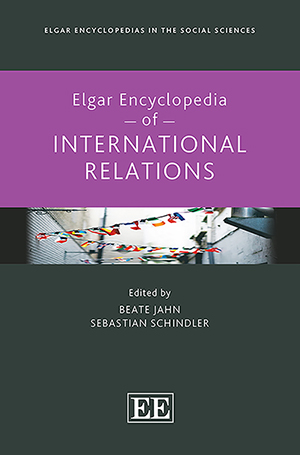
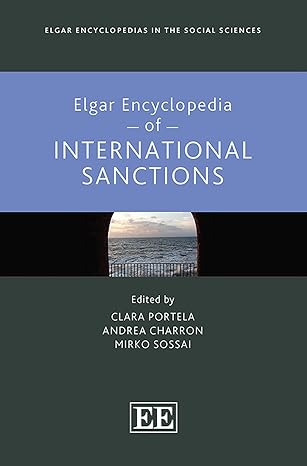
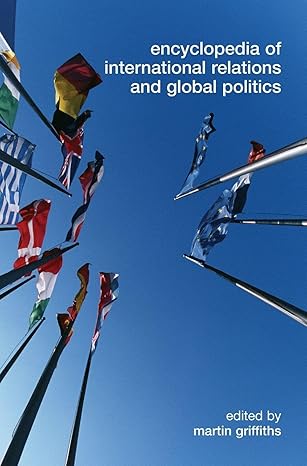
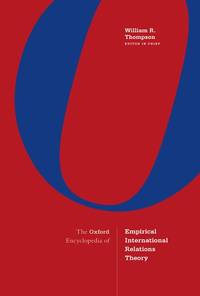
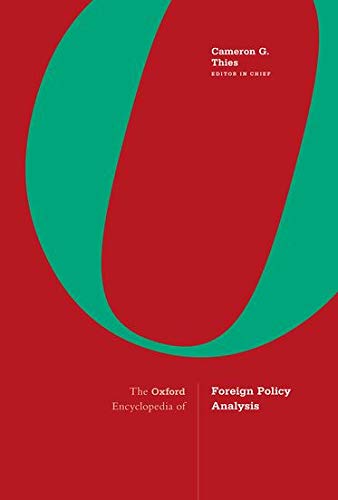
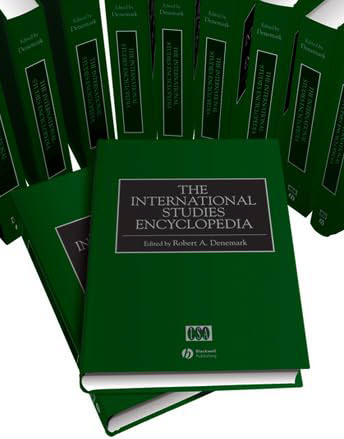
Subject encyclopedias are specialized reference works providing in-depth information on specific discipline topics. Unlike general encyclopedias that cover a wide range of topics, subject encyclopedias focus exclusively on one field, offering detailed and comprehensive entries written by experts. For a list of general and specialized encyclopedia databases, go to Getting Started – Reference Resources.

Handbooks
Handbooks
Handbooks provide authoritative overviews, in-depth analyses, and critical discussions of a particular academic field, discipline, or topic. The following are important general handbooks in political science.
Introductions
Introductions
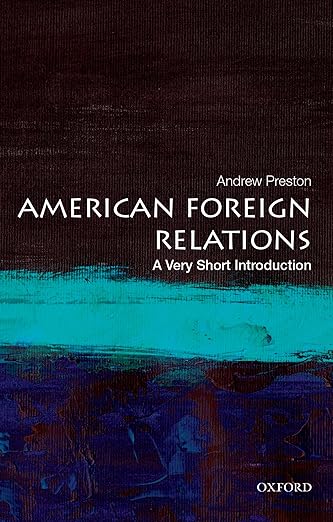
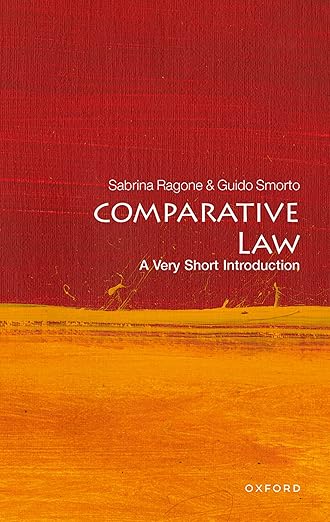
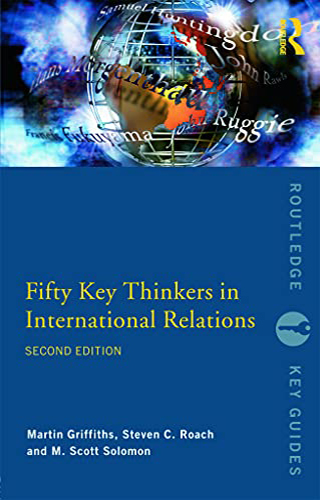
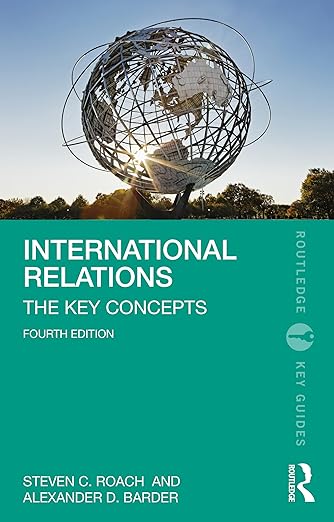
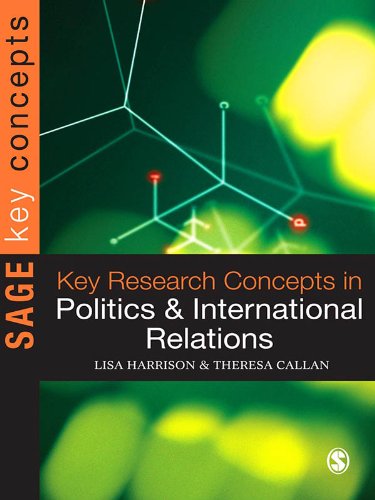
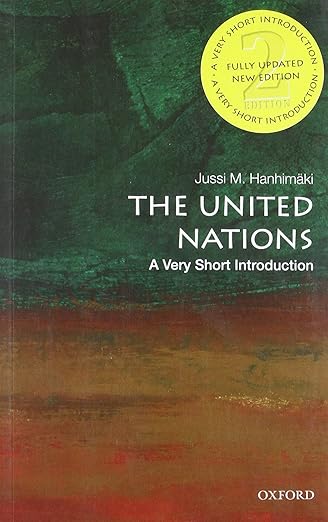
Introductions provide brief but comprehensive introductions to a subject. Written by experts, introductions present key ideas, theories, and debates understandably. The following books are ideal for readers new to political science, providing foundational knowledge without requiring prior expertise.


General Databases
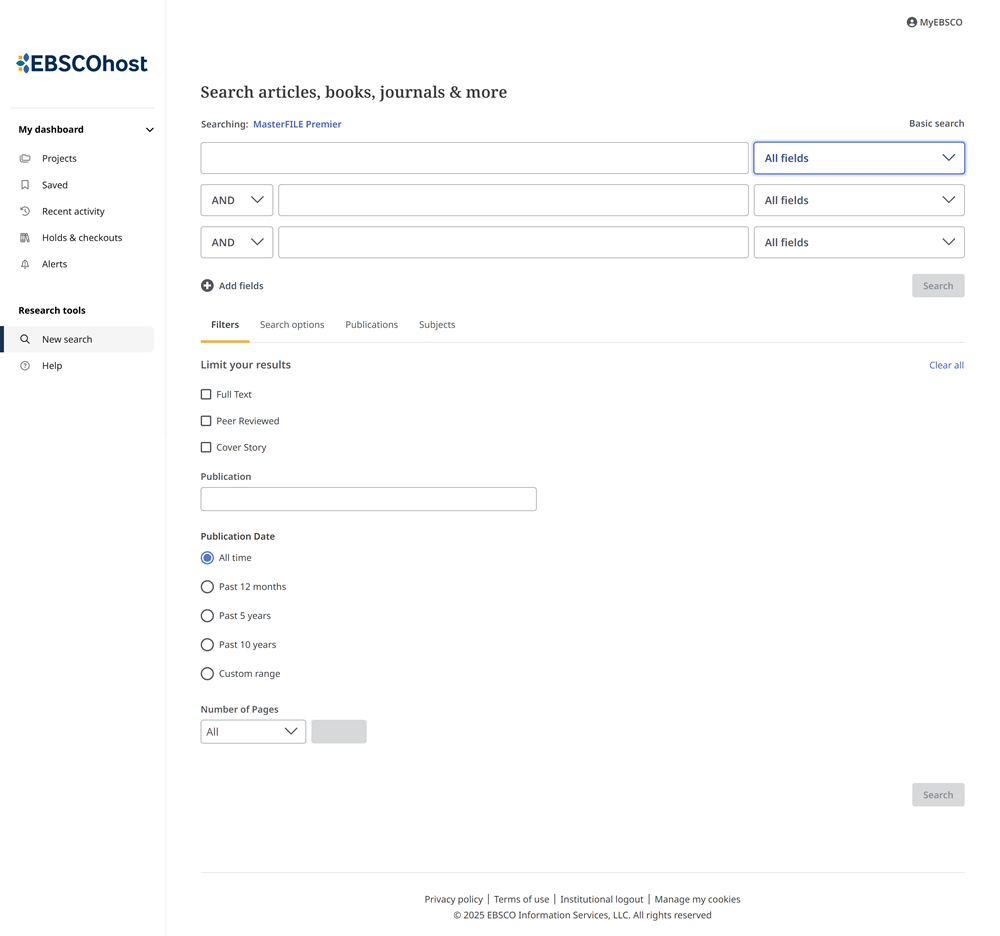
Academic libraries subscribe to a wide range of research databases. EBSCO and ProQuest are the largest and most widely used subscription-based academic research databases. Most colleges and universities offer access to one or both platforms which provide multiple subject-specific databases. Although each has unique features, they share several key characteristics:
EBSCO is a major research database platform that allows users to search multiple EBSCO databases simultaneously. The difference between EBSCOhost and Academic Search is that Academic Search can be searched as part of the EBSCOhost platform or searched separately if your institution has a subscription. To check if your institution subscribes to EBSCOhost, use EBSCO’s Find your institution page.
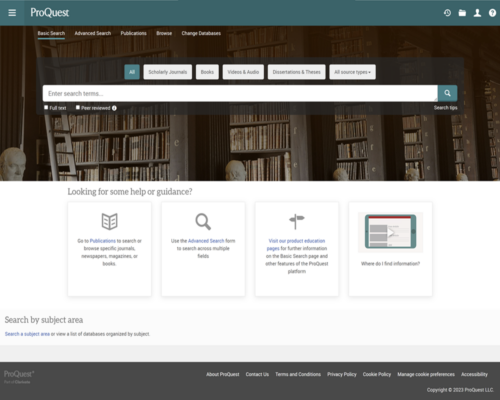
ProQuest is a major database vendor and platform that provides access to hundreds of database collections. The ProQuest platform provides a multidisciplinary search with access to scholarly ebooks, journals, video and audio, newspapers, and more, all searchable simultaneously. ProQuest is unique in providing dissertations and theses, historical newspapers, and other primary sources.
Scholarly Databases
Scholarly research databases provide peer-reviewed academic journal articles, book reviews, and other scholarly resources authored by scholars, researchers, or academics who are experts in their fields.
Unlike magazines, which focus on current events and general-interest stories, articles in scholarly journals undergo rigorous peer review before publication. The following is a list of the most important multidisciplinary scholarly research databases.
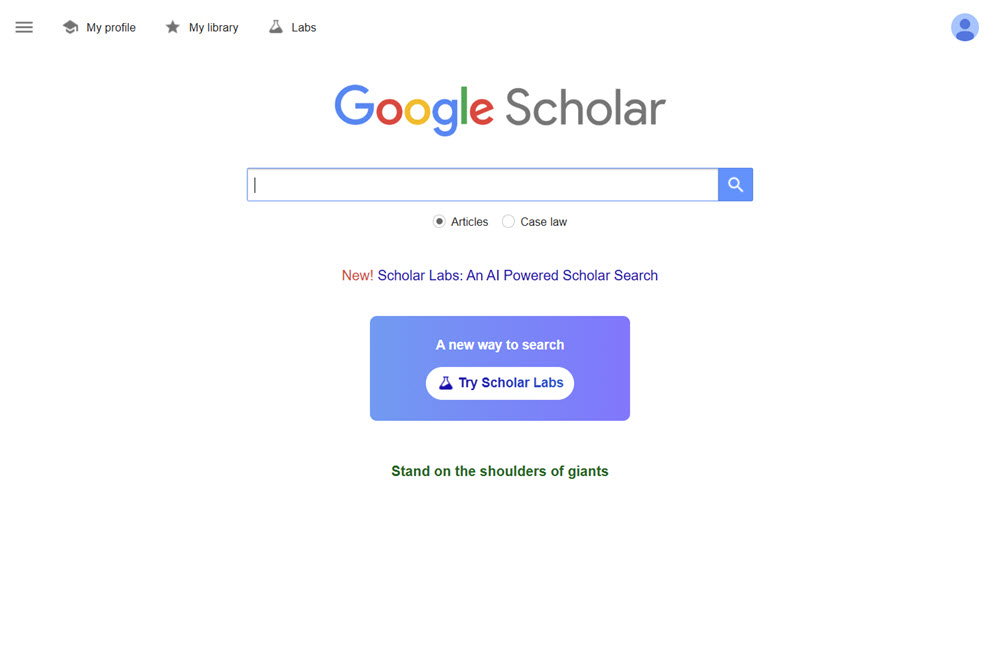
Google Scholar is a free academic search engine that helps researchers and students find scholarly literature across disciplines. It indexes journal articles, books, conference papers, theses, patents, and other resources from academic publishers, universities, and professional organizations.
- Unlike subscription databases, which publish lists of journals in their collections, Google Scholar does not provide a list of the journals, books, repositories, or conference proceedings it indexes.
- General databases such as EBSCO and ProQuest allow you to limit your results to peer-reviewed articles only. Google Scholar does not filter results for peer-reviewed articles.
- When off your school’s network, you must enable your institution’s Google Scholar library links (review process) to see full-text articles available in your institution. If Library Links are not enabled, you’ll only see paywalls, publisher links, and what’s available open-access in the public domain.
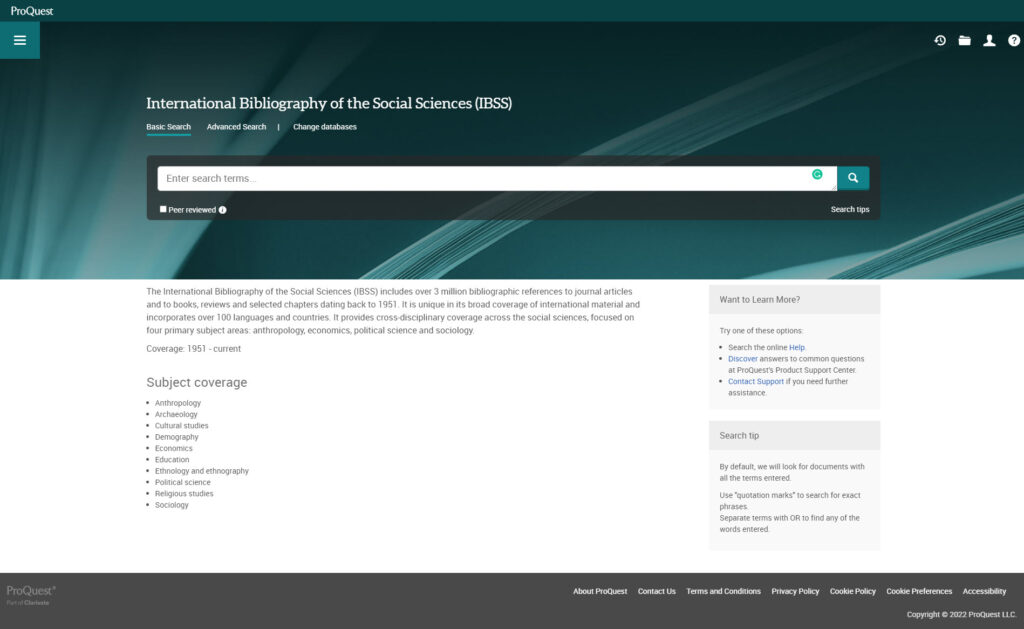
The International Bibliography of the Social Sciences (IBSS), compiled by the British Library of Political and Economic Science at the London School of Economics, provides access to a vast collection of scholarly literature in the social sciences. Covering multiple disciplines, IBSS includes references to journal articles, books, newspapers, and dissertations, with records dating back to 1951.
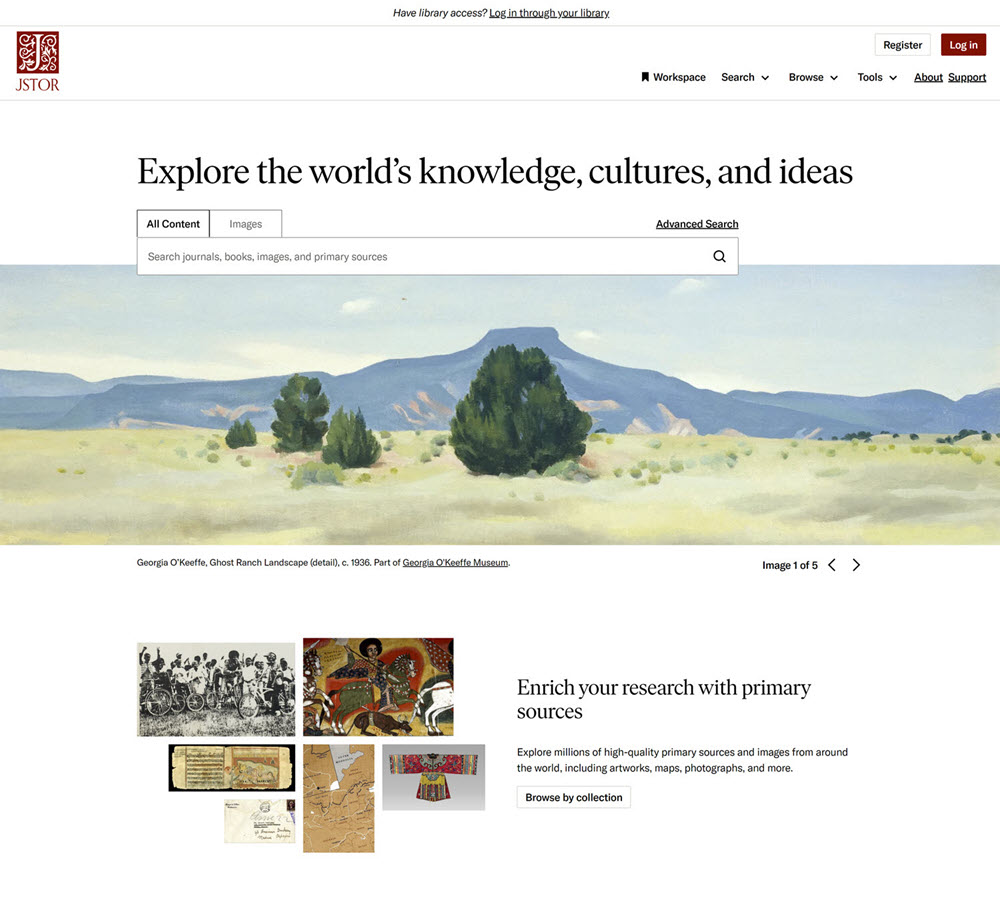
JSTOR is an important scholarly research database for the humanities, social sciences, and sciences. It provides the full text of articles from thousands of influential academic journals. In addition to journal articles, users can access eBooks, book chapters, images, and primary source documents. JSTOR also provides an AI research tool that provides key points and arguments of articles.
JSTOR contains the full text of more than 2,000 journals from 1,000 publishers, with publication dates ranging from 1665 to 2015 (for certain titles). JSTOR also provides:
- Free access to Early Journal Content published before the last 95 years in the United States or before the last 143 years if initially published internationally.
- A collection of nearly 150 open-access journals covering the humanities, social sciences, and sciences.
- JSTOR allows anyone to register for a free personal JSTOR account and provides access to 100 free monthly articles.
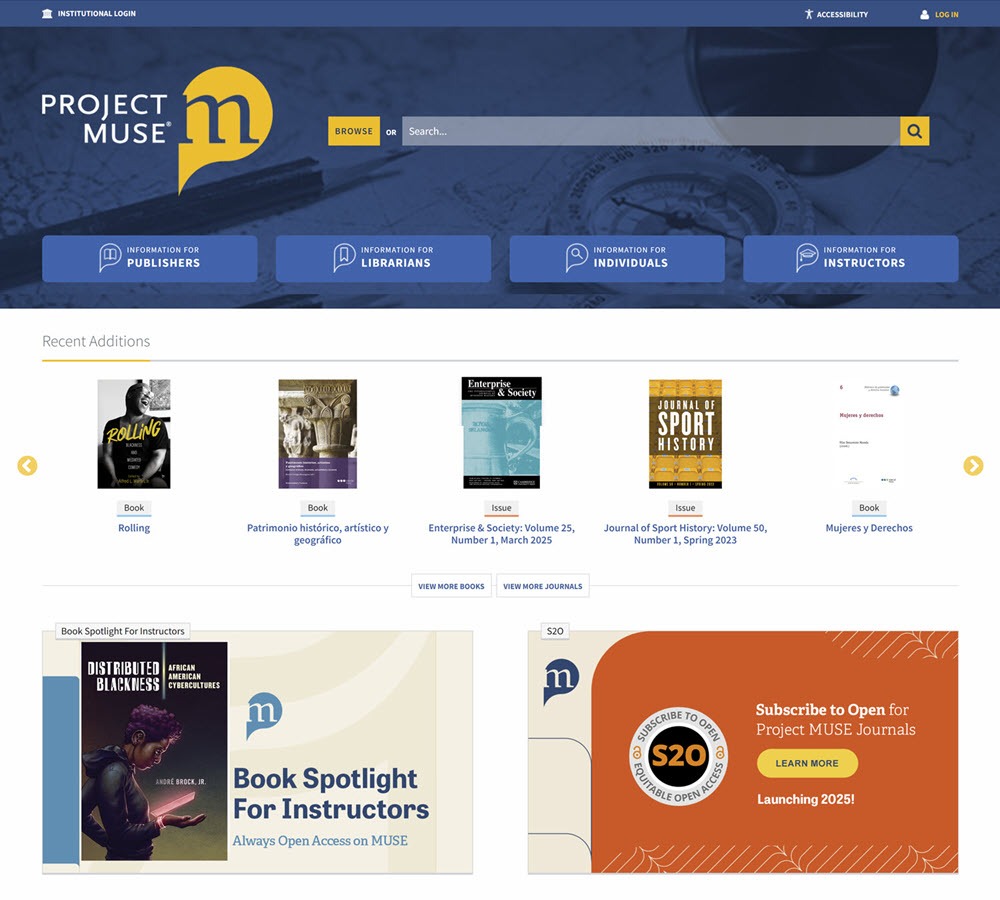
Project MUSE offers online access to a vast collection of scholarly journals, books, and academic resources in the humanities, social sciences, and arts. As a leading provider of digital humanities content, it features high-quality, peer-reviewed publications from prestigious university presses, scholarly societies, and academic publishers.
ProQuest Dissertations & Theses is a database of dissertations and theses from universities worldwide. It provides access to millions of full-text works across many disciplines, including the social sciences, humanities, sciences, and business. Each dissertation includes an abstract or summary that provides a concise overview of the research, its methodology, and key findings.
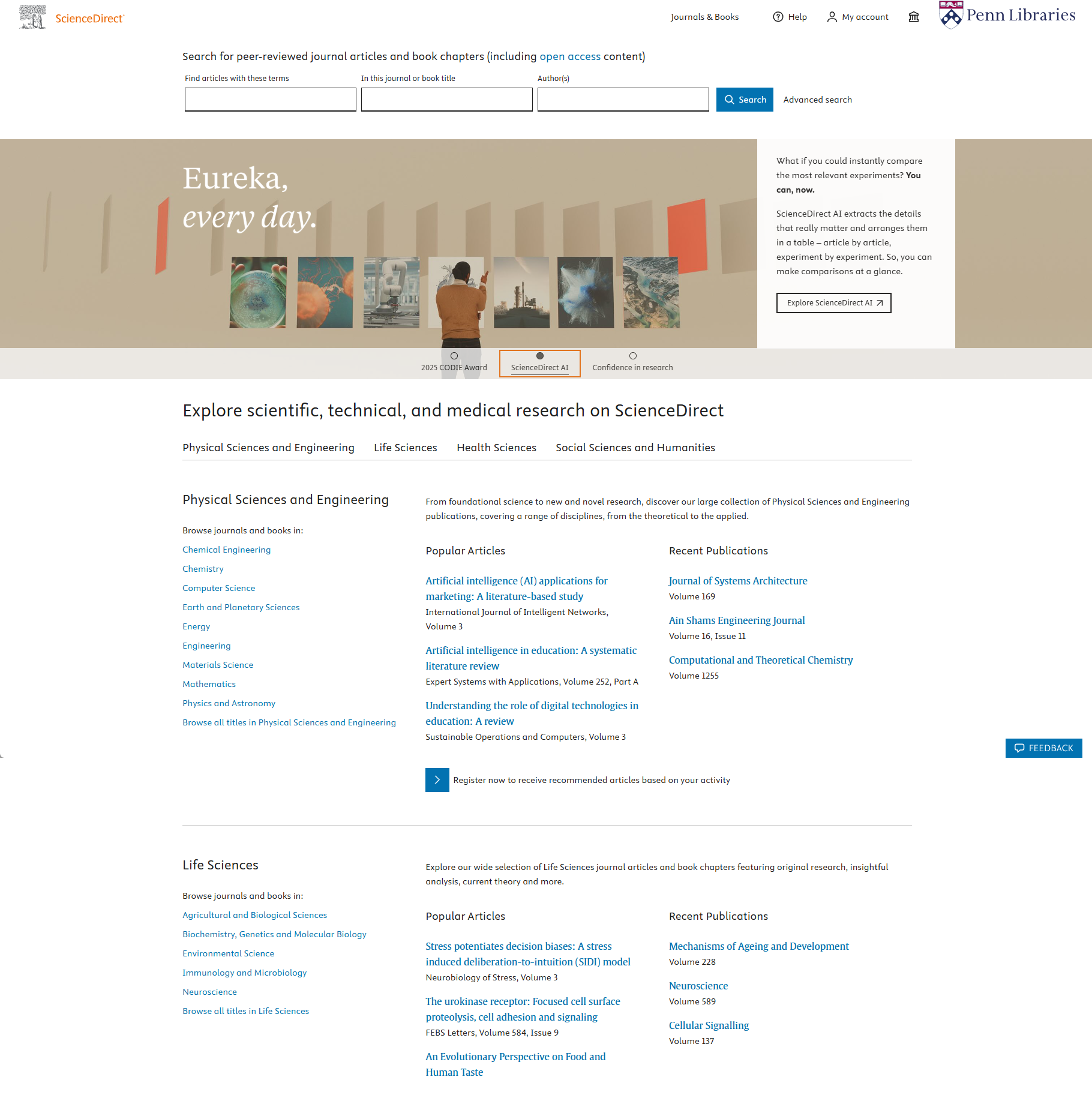
ScienceDirect is a leading full-text scholarly scientific database that provides journal articles and book chapters from more than 2,500 peer-reviewed journals and more than 11,000 books. It covers over 24 major subjects in the physical sciences and engineering, life sciences, health sciences, social sciences, and the humanities.
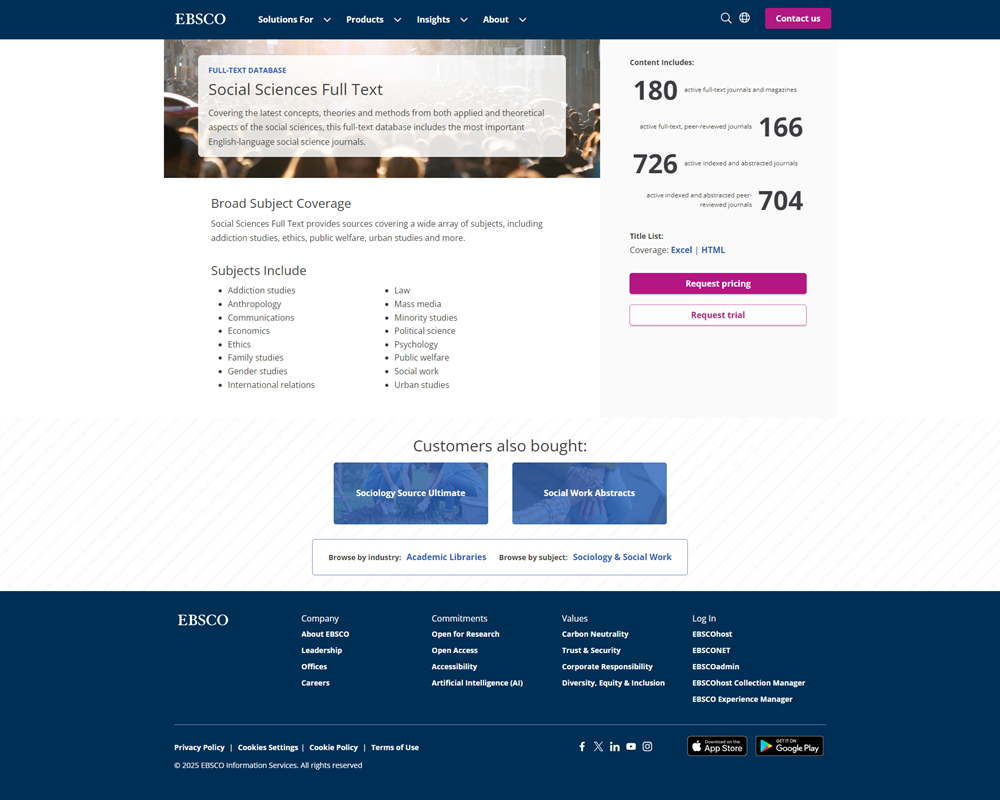
Social Sciences Full Text provides access to a wide range of scholarly literature in the social sciences. It covers many disciplines, including sociology, psychology, international relations, political science, anthropology, economics, and education.
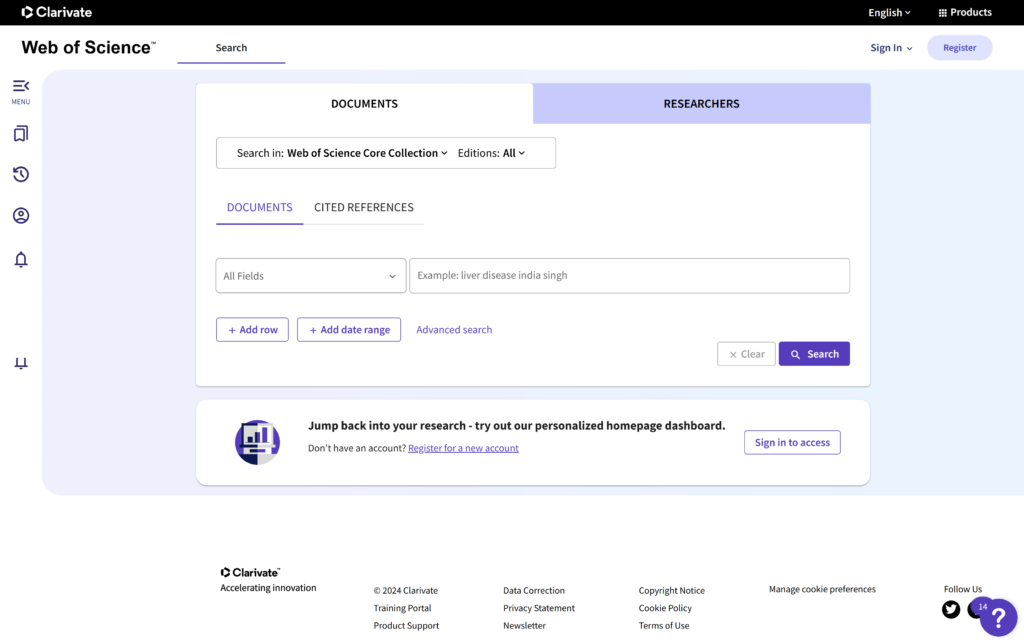
Web of Science is a comprehensive, multidisciplinary research and citation index that provides access to a wide range of scientific, technical, social science, and humanities research. It maintains rigorous criteria for the journals and publications it indexes, ensuring that only high-quality, peer-reviewed content is included. Web of Science includes 98 million papers dating back to 1900.
Subject Databases
Specialized IR databases include more comprehensive coverage of core international relations journals, including specialized publications that might not appear in general databases.
The Annual Review of Political Science is a peer-reviewed academic journal that publishes comprehensive literature review articles in political science. Each year, a new volume is released, consisting of articles written by leading experts in the field, providing overviews of the most important and influential research and scholarship in political science.
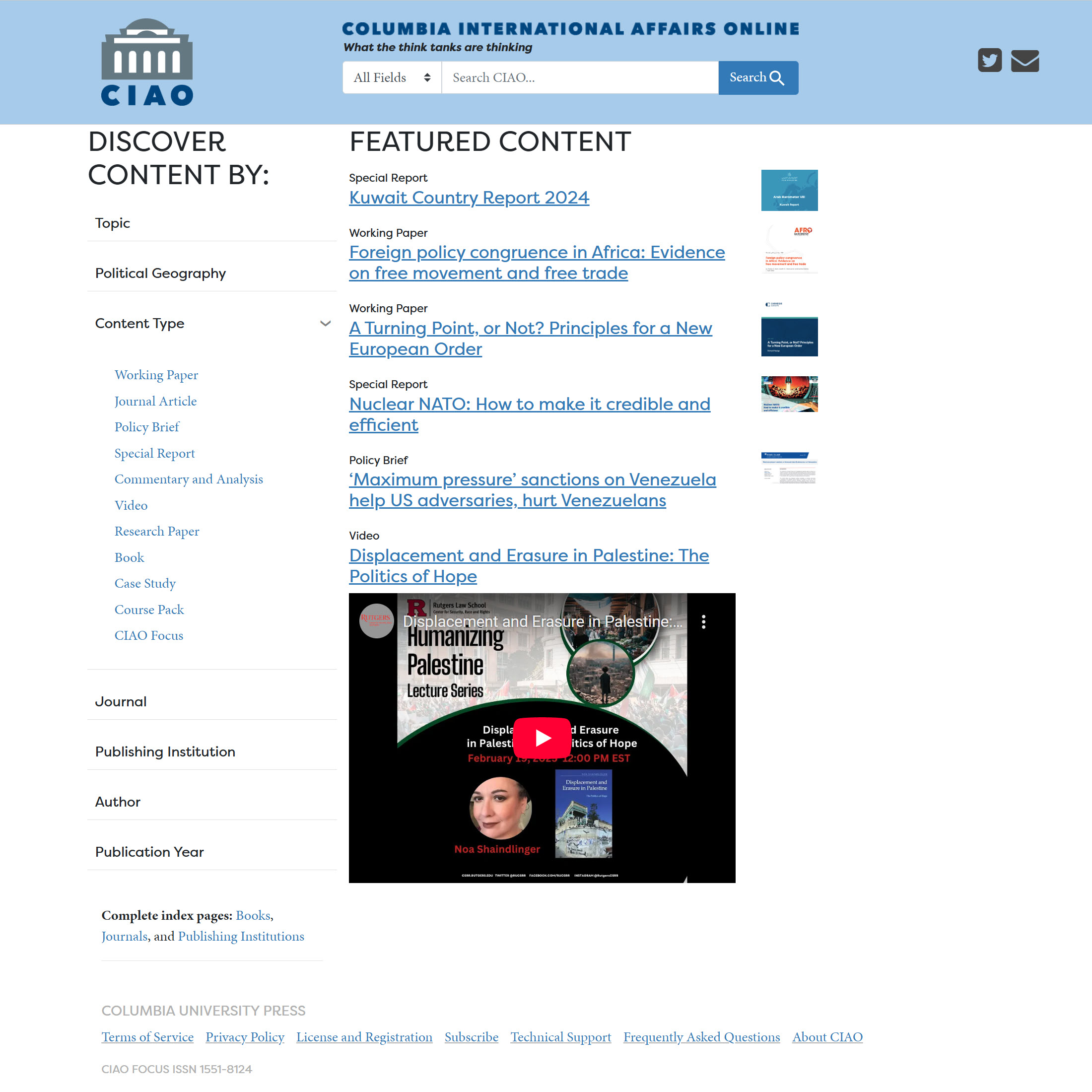
Columbia International Affairs Online (CIAO) is a comprehensive public policy resource for the study and practice of international relations, global policy, and diplomacy. Developed by Columbia University Press, CIAO provides scholarly journals, policy briefs, conference proceedings, working papers, and e-books produced by leading think tanks, research institutes, and publishers worldwide. CIAO also provides case studies, country profiles, and interactive datasets.
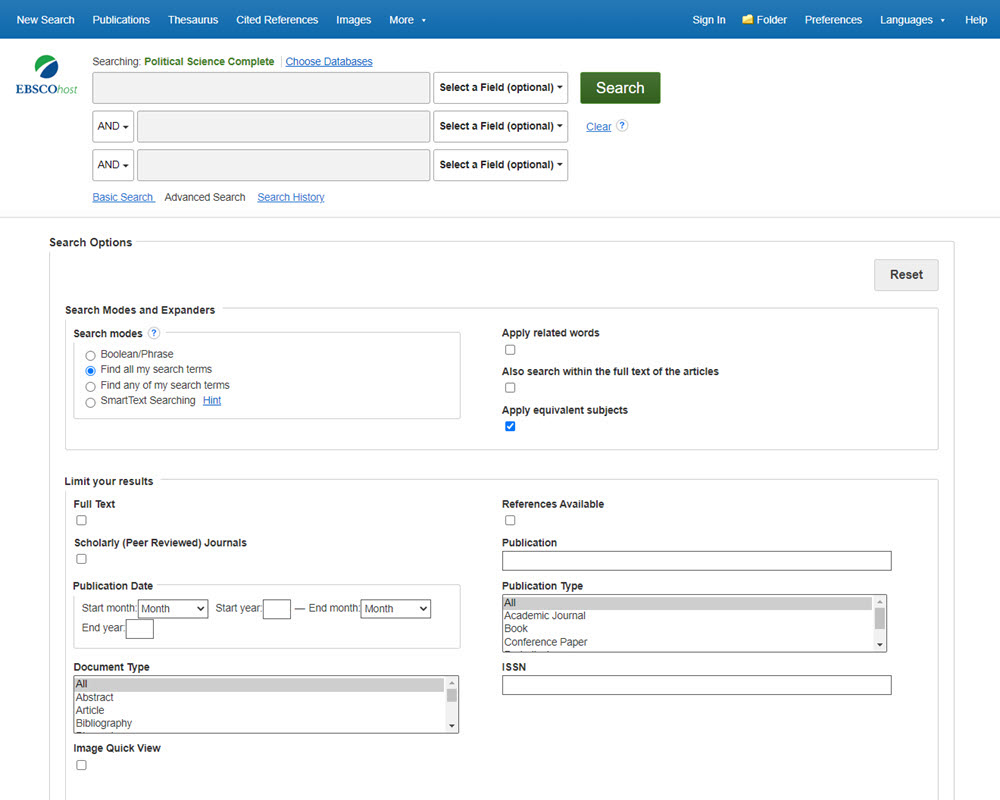
EBSCO Political Science Complete is a full-text research database providing comprehensive coverage of political science literature, including journals, books, conference papers, and other publications. It encompasses various sub-disciplines within political science, such as political theory, comparative politics, international relations, public administration, and more.
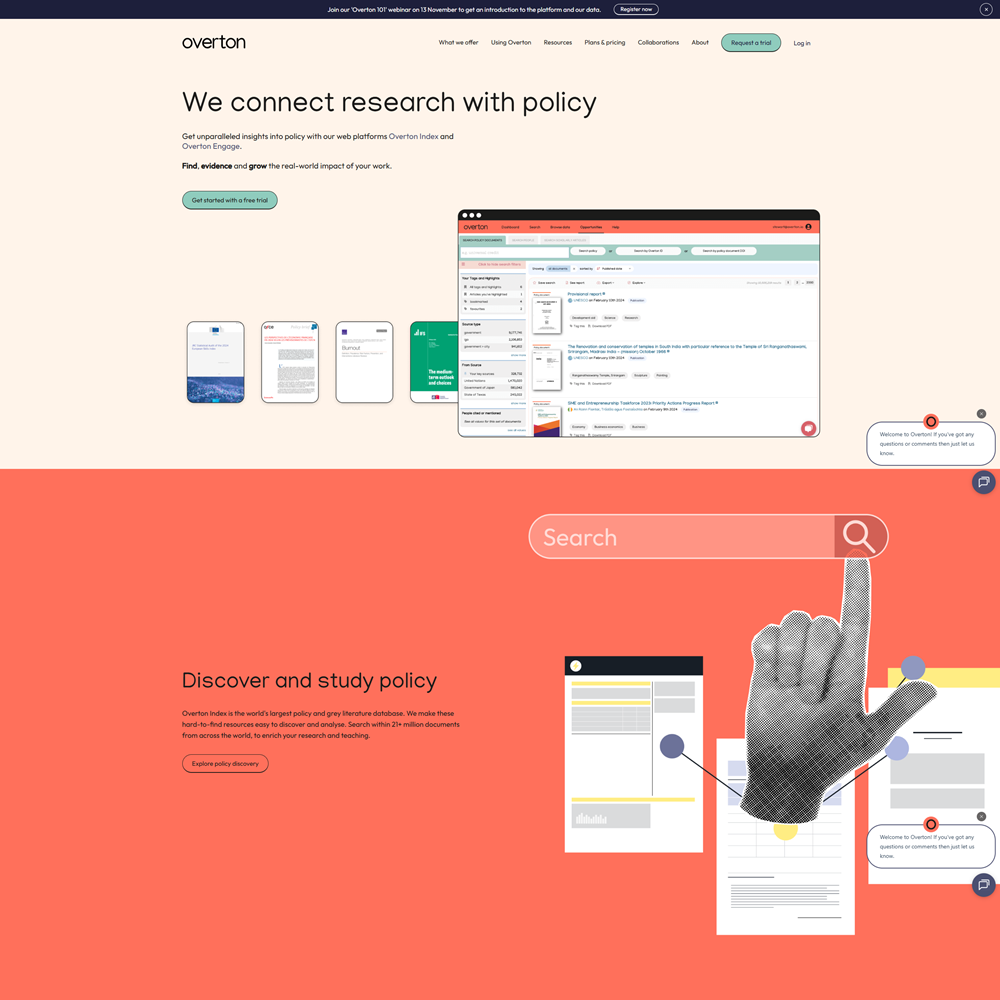
Overton is the world’s largest database for tracking the influence of research on public policy. Overton provides policy documents, official reports, guidelines, and parliamentary records from governments, think tanks, and international organizations worldwide. It has the largest collection of policy-related material, hard-to-find resources, and gray literature linked to academic research.
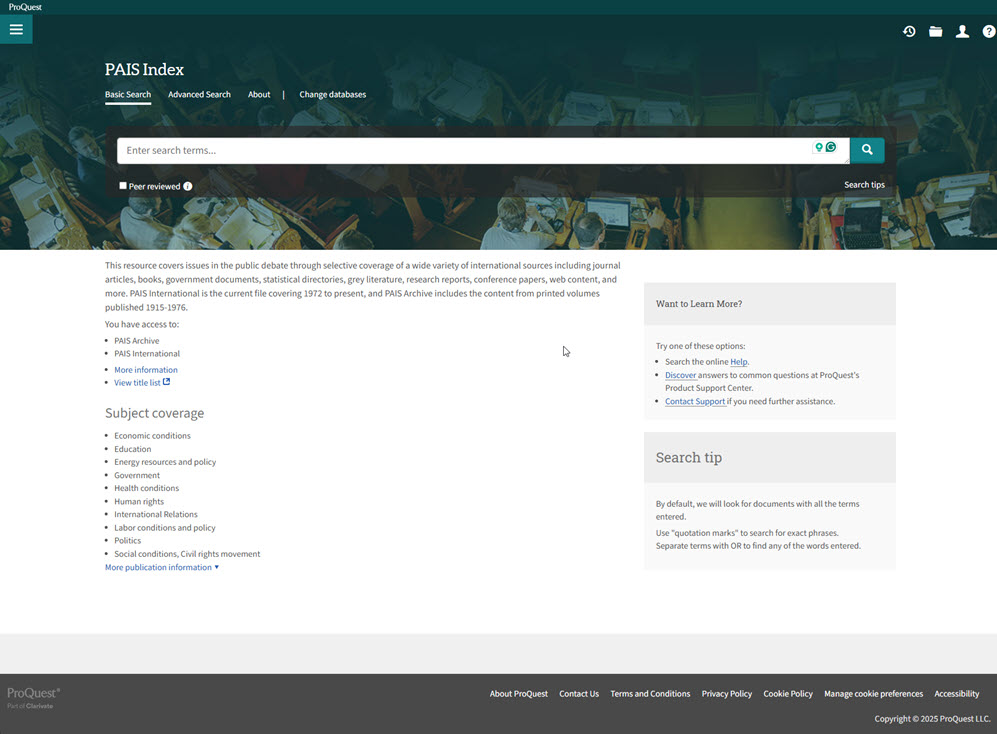
The PAIS® Index is a public policy database that tracks scholarship and policy research in public affairs, social sciences, and international relations. First developed in 1914 to organize literature on important public issues, PAIS provides a comprehensive index of journal articles, books, government documents, statistical reports, conference proceedings, and gray literature from around the world.
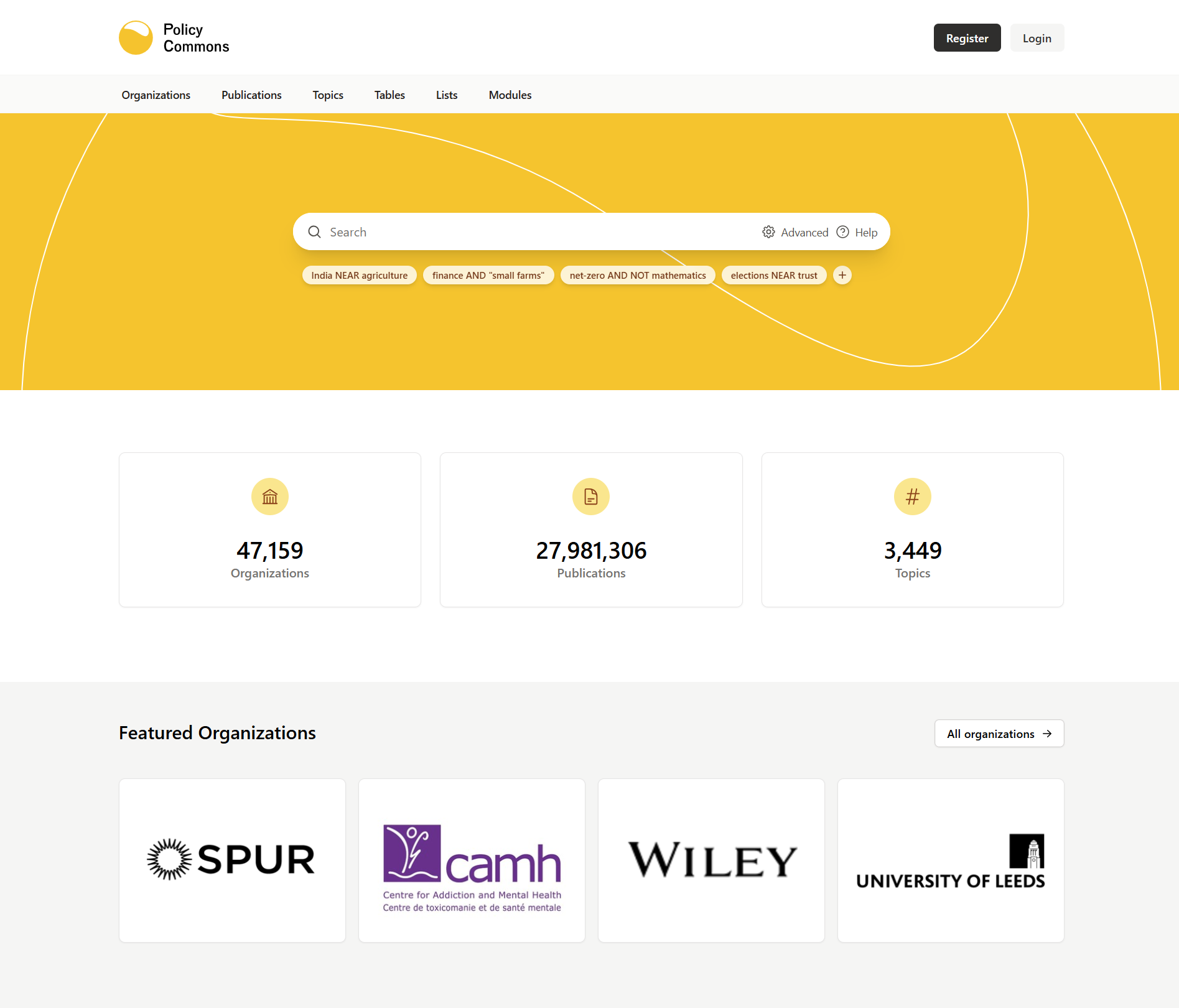
Policy Commons is a public policy database that provides access to policy reports, working papers, briefs, and other publications from think tanks, NGOs, research institutes, and international organizations. It contains millions of documents covering topics such as economics, governance, environment, health, and international affairs. It also includes archived content from organizations that no longer maintain their own websites.
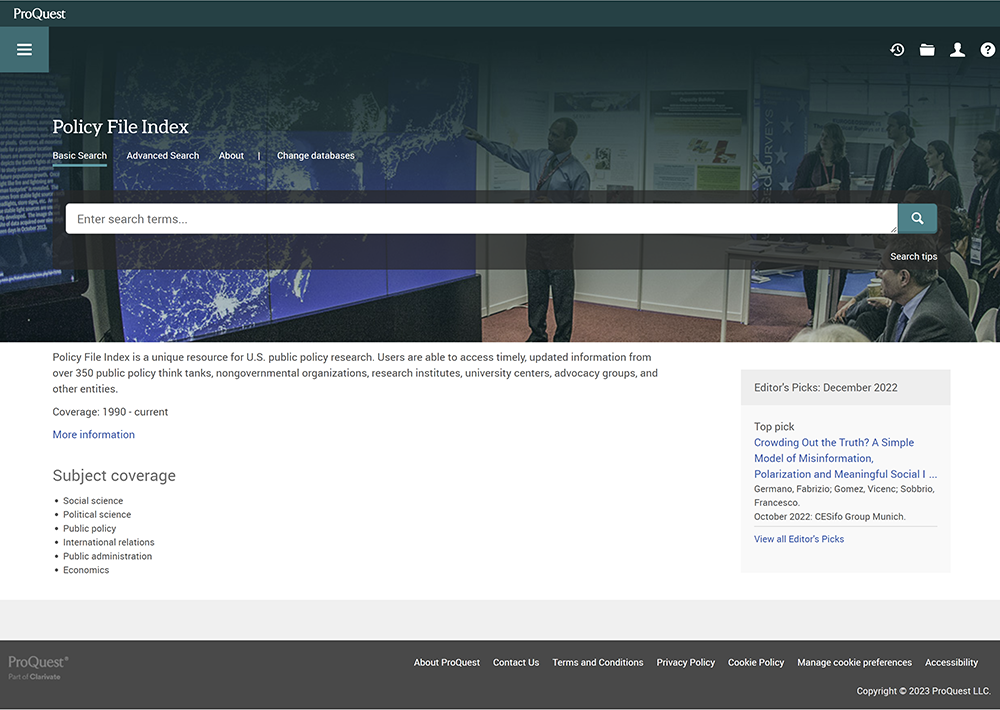
Policy File Index is a ProQuest database that provides public policy research and analysis produced by think tanks, nongovernmental organizations, research institutes, and university centers. It covers topics such as economics, foreign policy, security, environment, education, and social issues. It also includes materials such as policy briefs, reports, and working papers, which are primarily published in the United States.
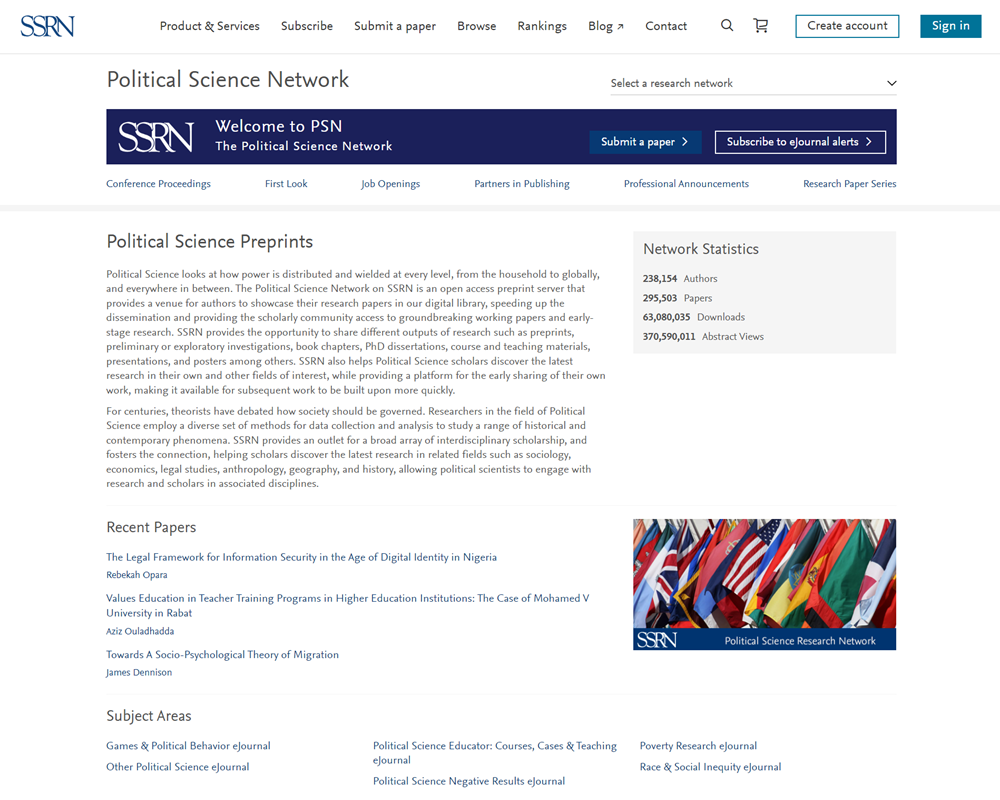
The Political Science Network sits on SSRN an online repository and preprint server where researchers can upload working papers. It is an open-access service that provides “early print” research and working papers before they are published in journals. SSRN includes exploratory investigations, book chapters, PhD dissertations, course and teaching materials, presentations, and research posters.
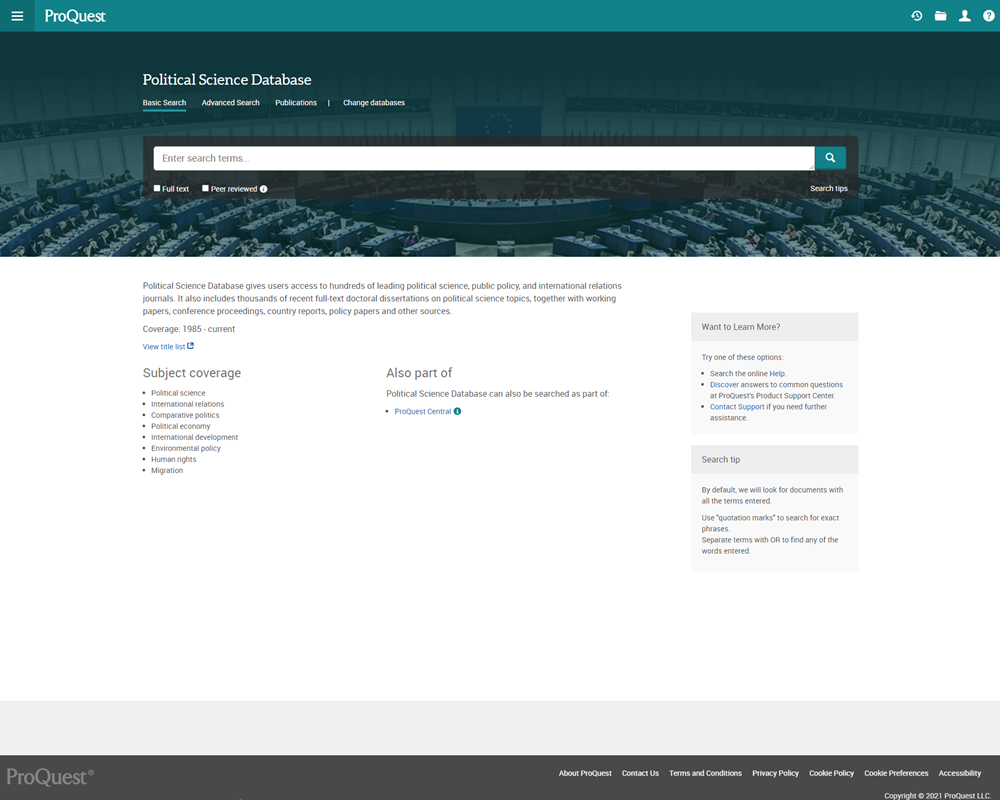
ProQuest’s Political Science is a major political science database providing access to high-quality, full-text articles from over 500 leading scholarly, peer-reviewed political science and international relations journals. ProQuest Political Science also provides access to recent, full-text political science dissertations from U.S. and Canadian universities and current working papers from the Political Science Research Network.
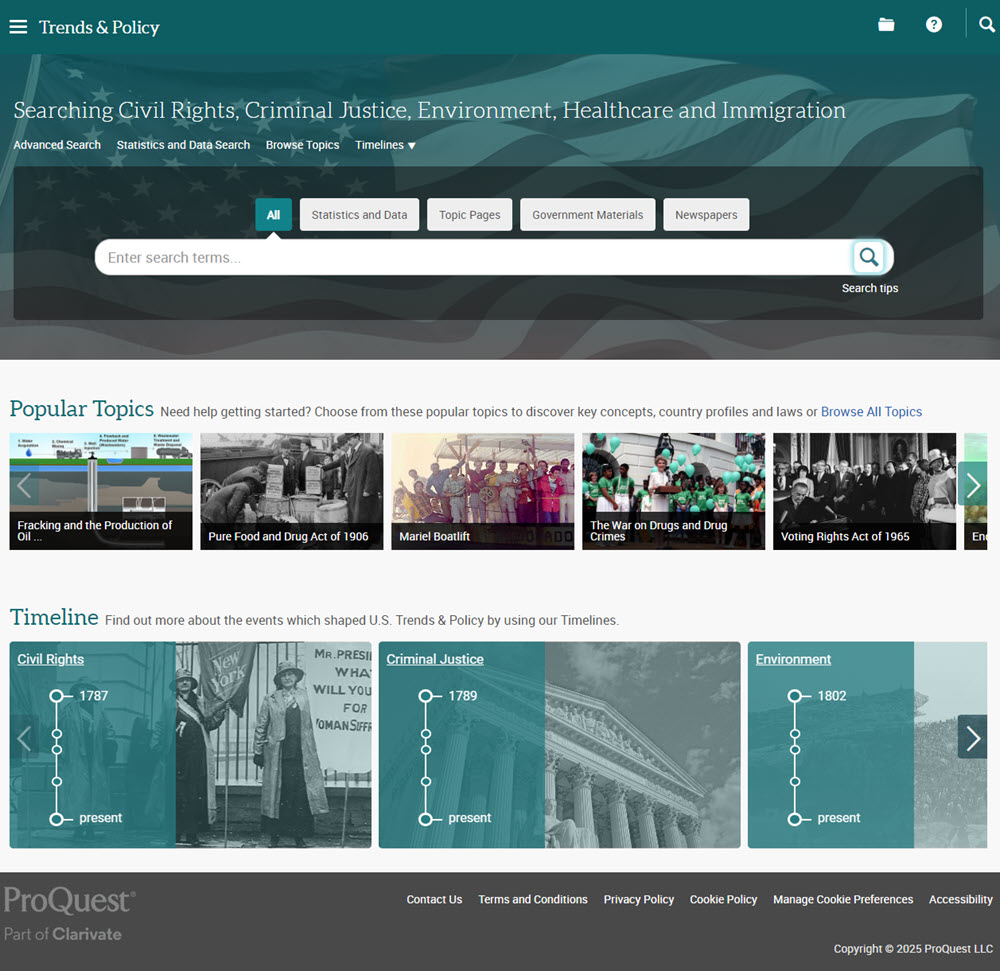
ProQuest Trends and Policy compiles primary source documents related to U.S. government policy. It includes congressional hearings, committee prints, reports, legislative research studies, and other materials that document the development of public policy over time. The resource is organized around the following key topics: Civil Rights, Civil Criminal Justice, Environment, Healthcare, Immigration, Taxes, and the IRS.
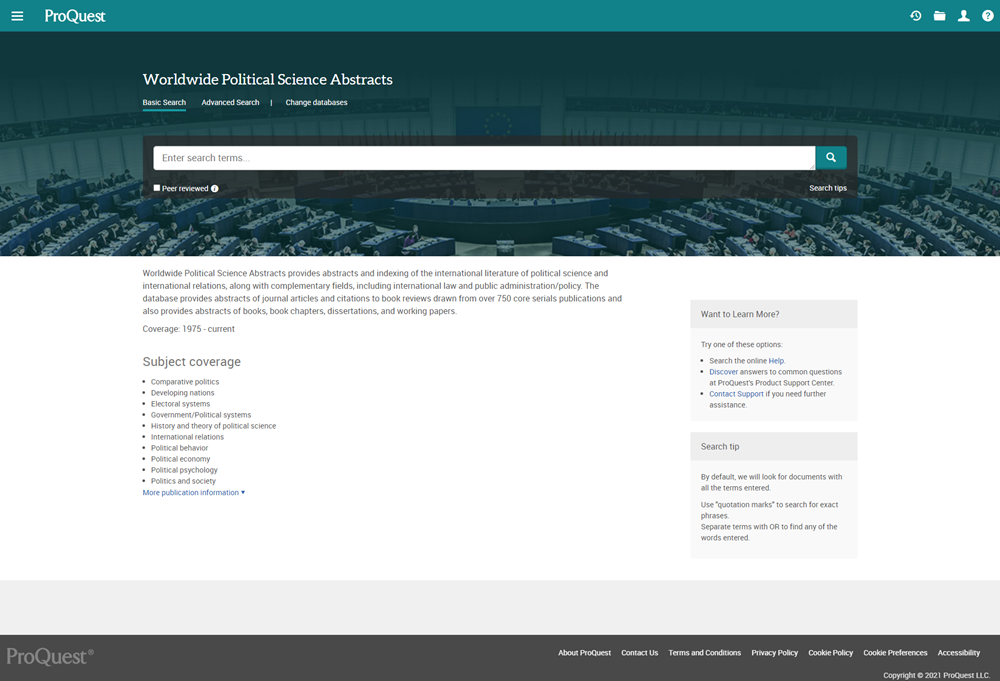
Worldwide Political Science Abstracts provides citations, abstracts, and indexing of the international serials literature in political science and its complementary fields, including international relations, law, and public administration. 67% of the monitored journals are published outside the United States, and nearly 500,000 records beginning in 1975. Coverage includes general political science, international relations, and comparative politics.
Public Policy Databases
Public policy research provides a wide range of resources, including government reports, policy analyses, think tank publications, and scholarly literature. These resources help you understand how public policies are developed, debated, implemented, and evaluated at the local, national, and global levels.
Columbia International Affairs Online (CIAO) is a comprehensive public policy resource for the study and practice of international relations, global policy, and diplomacy. Developed by Columbia University Press, CIAO provides scholarly journals, policy briefs, conference proceedings, working papers, and e-books produced by leading think tanks, research institutes, and publishers worldwide. CIAO also provides case studies, country profiles, and interactive datasets.
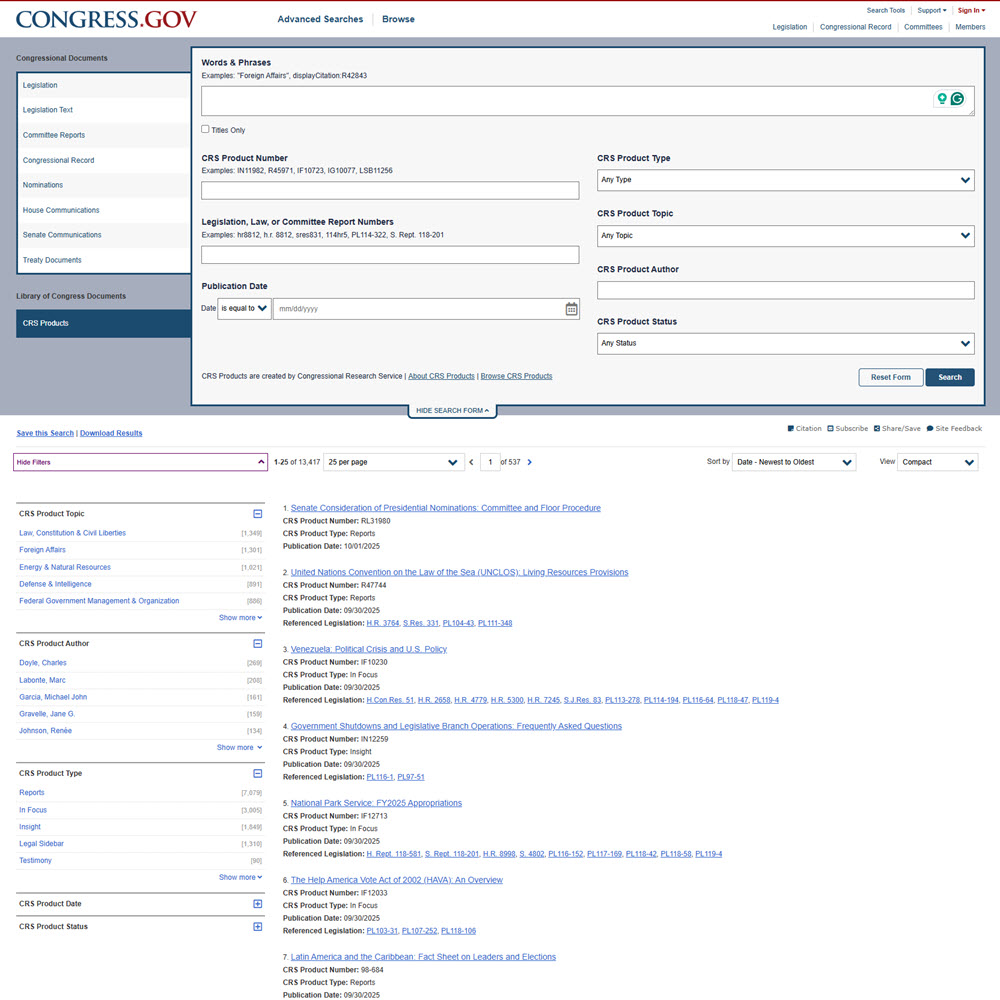
Congressional Research Service (CRS) is a nonpartisan research agency within the Library of Congress that provides in-depth policy analysis to members of the U.S. Congress. These reports cover a wide range of topics considered important to U.S. interests and affairs, including foreign affairs, international relations, economics, healthcare, defense, energy, and the environment, providing members of Congress with the necessary background information on policies.
Overton is the world’s largest database for tracking the influence of research on public policy. Overton provides policy documents, official reports, guidelines, and parliamentary records from governments, think tanks, and international organizations worldwide. It has the largest collection of policy-related material, hard-to-find resources, and gray literature linked to academic research.
The PAIS® Index is a public policy database that tracks scholarship and policy research in public affairs, social sciences, and international relations. First developed in 1914 to organize literature on important public issues, PAIS provides a comprehensive index of journal articles, books, government documents, statistical reports, conference proceedings, and gray literature from around the world.
Policy Commons is a public policy database that provides access to policy reports, working papers, briefs, and other publications from think tanks, NGOs, research institutes, and international organizations. It contains millions of documents covering topics such as economics, governance, environment, health, and international affairs. It also includes archived content from organizations that no longer maintain their own websites.
Policy File Index is a ProQuest database that provides public policy research and analysis produced by think tanks, nongovernmental organizations, research institutes, and university centers. It covers topics such as economics, foreign policy, security, environment, education, and social issues. It also includes materials such as policy briefs, reports, and working papers, which are primarily published in the United States.
Government Documents
Government documents are essential for international relations research, providing access to the raw materials of international affairs, including declassified intelligence files, diplomatic cables, congressional records, treaty texts, and legal documents.
- U.S. Government Documents
- United Nations
- International Organizations
U.S. Government Documents
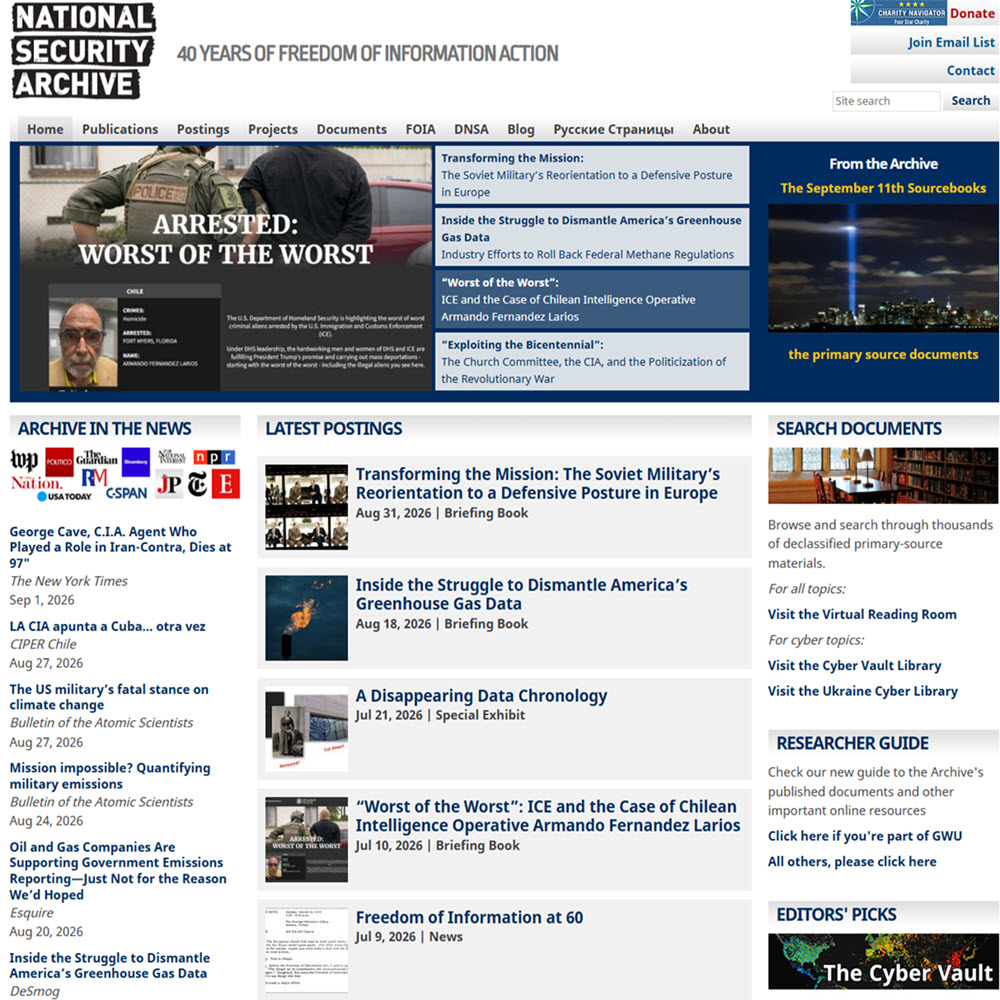
The National Security Archive, based at George Washington University, provides a free digital repository of selected declassified U.S. government documents related to national security, foreign policy, intelligence, diplomacy, and international affairs. Its collections cover subjects such as the Cold War, nuclear weapons, U.S. relations with individual countries, intelligence activities, military conflicts, human rights, terrorism, presidential decision-making, and major international crises.
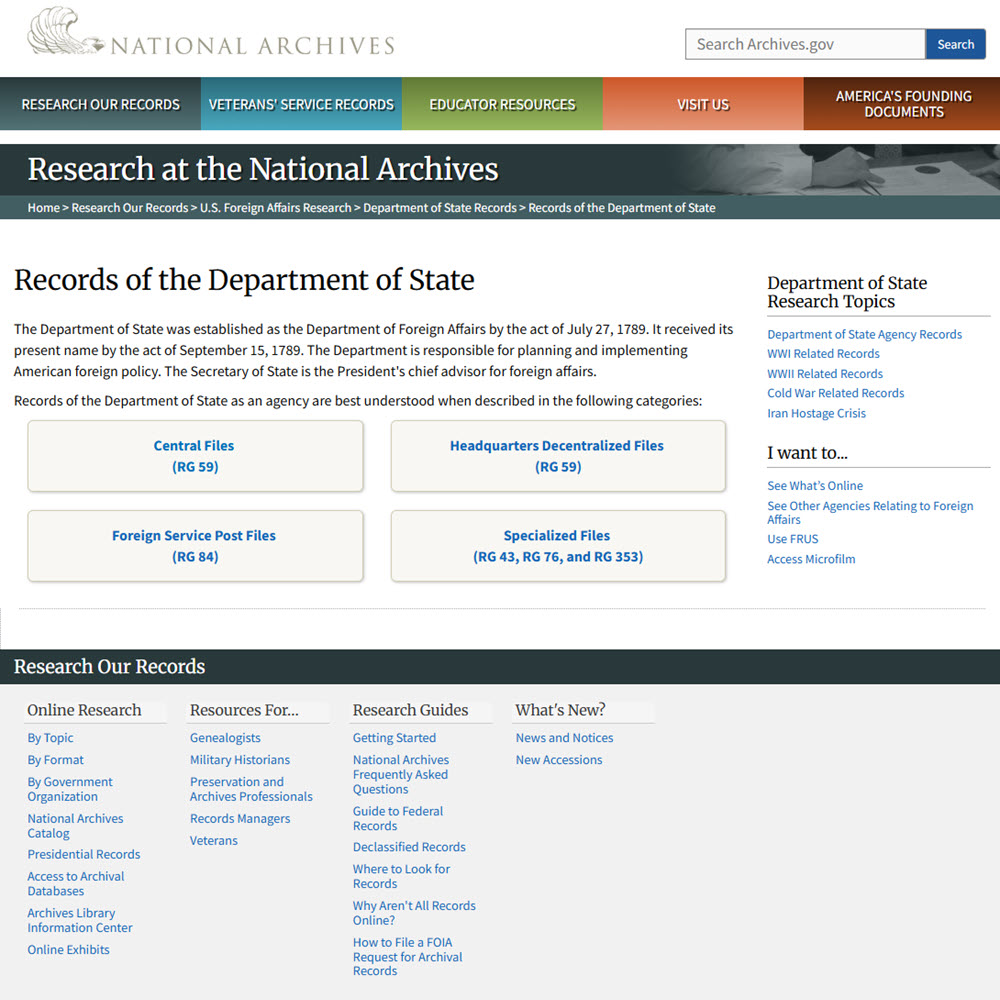
The Records of the Department of State at the National Archives provide the official historical records of U.S. foreign relations. The collection includes diplomatic correspondence, policy memoranda, reports, telegrams, instructions to U.S. diplomatic posts, records of negotiations, and other materials created by the State Department and U.S. embassies and consulates.
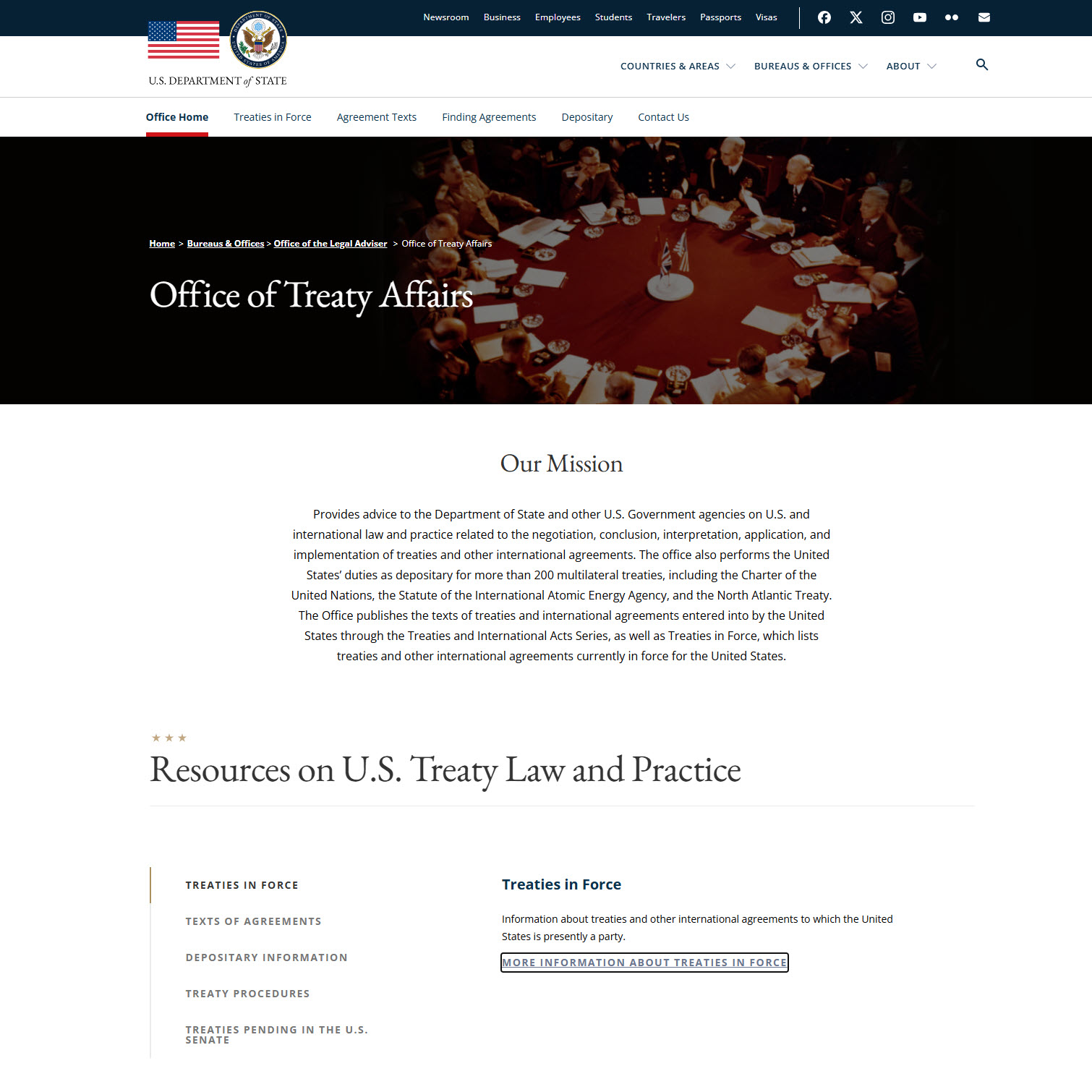
The U.S. Department of State – Treaties and International Agreements website provides official treaties and other international agreements to which the United States is a party. It also includes Treaties in Force, which identifies treaties and other international agreements currently in force for the United States, as well as the Treaties and Other International Acts Series (TIAS), the Department of State’s official publication series for U.S. treaties and international agreements.
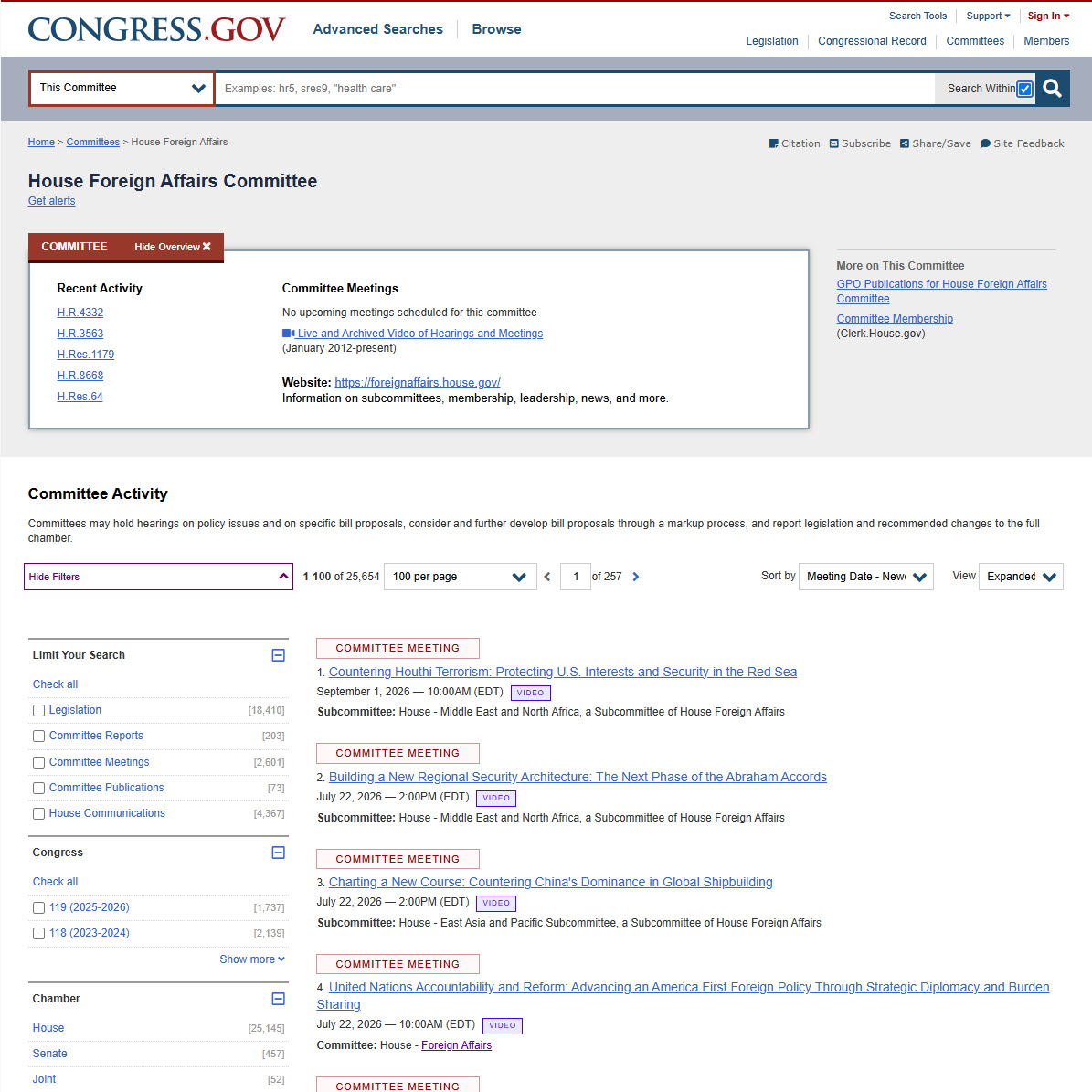
The U.S. House Foreign Affairs Committee is a standing committee of the U.S. House of Representatives responsible for legislation and oversight concerning U.S. foreign policy, international relations, foreign assistance, diplomacy, and related national security issues. Documents are also available through GovInfo.gov.
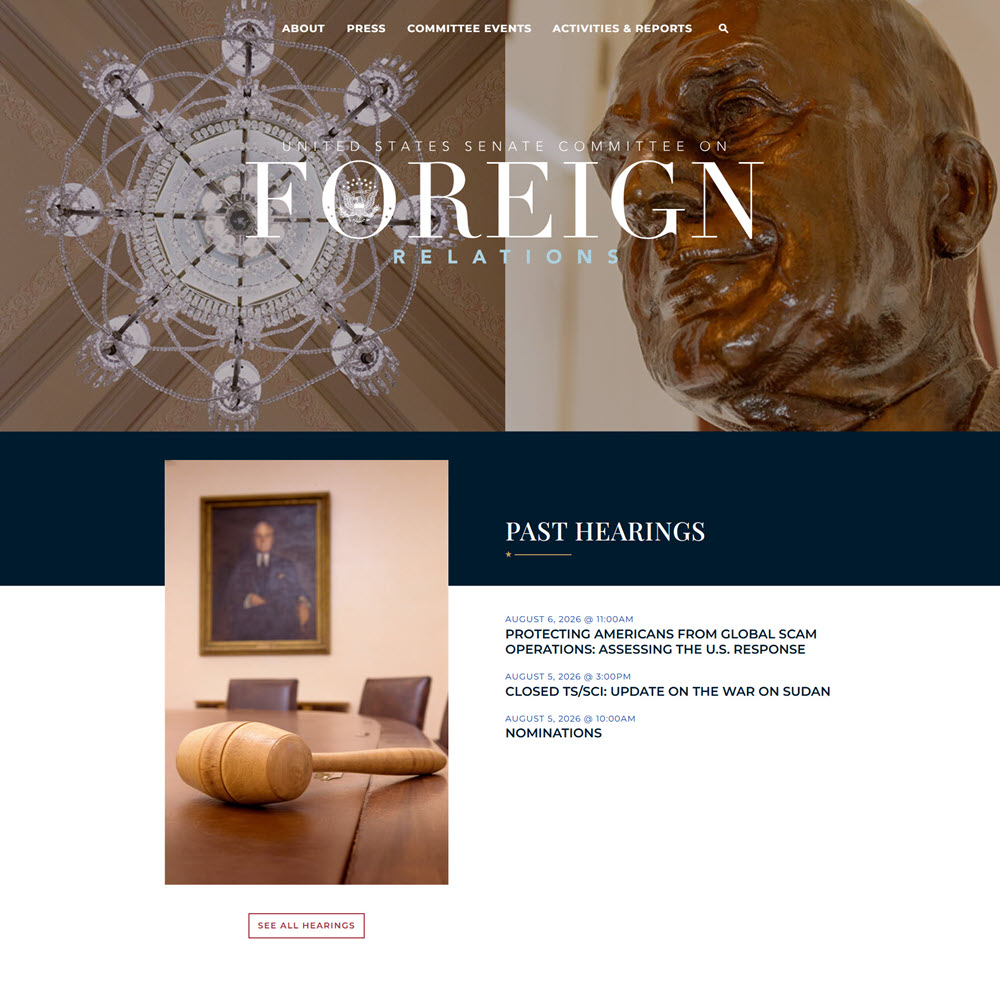
The Senate Foreign Relations Committee is a standing committee of the U.S. Senate responsible for legislation and oversight concerning U.S. foreign policy and international relations. The committee considers treaties, reviews nominations of ambassadors and other senior diplomatic officials, and addresses legislation involving diplomacy, foreign assistance, international organizations, human rights, arms control, and U.S. relations with other countries.
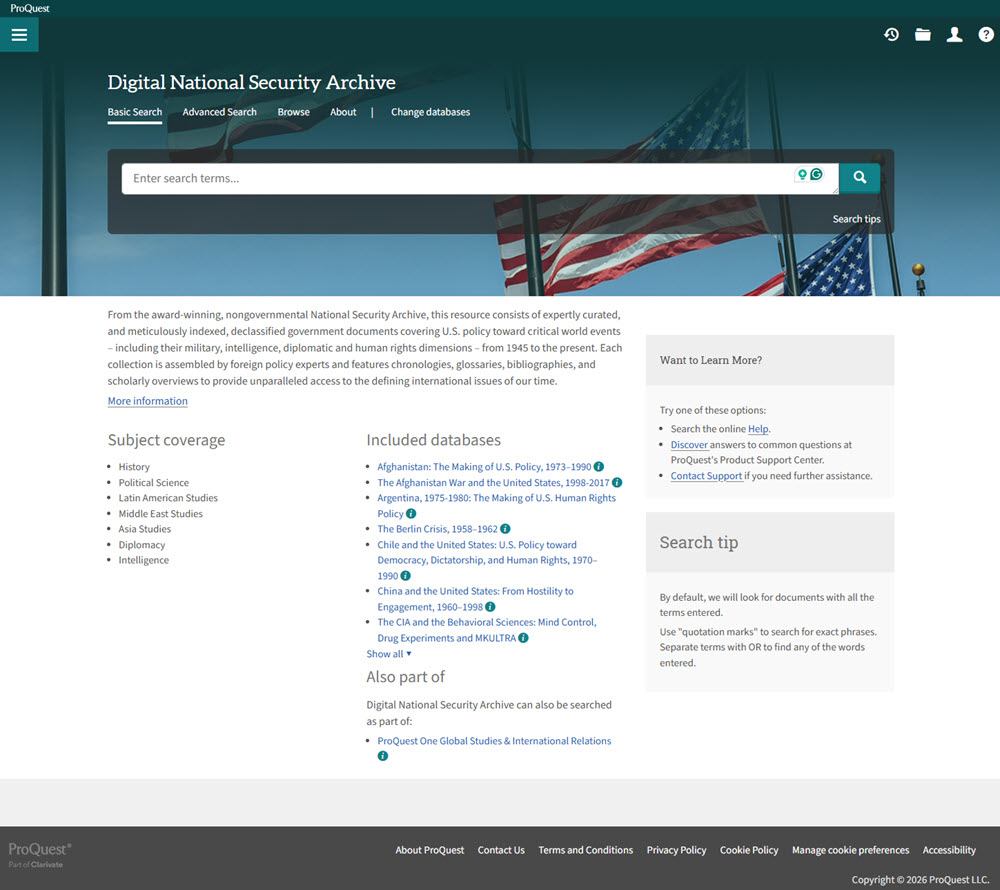
Digital National Security Archive (ProQuest) is a subscription database produced in partnership with George Washington University’s National Security Archive. It provides a large collection of declassified U.S. government documents on foreign, military, intelligence, and national security policy, supplemented by abstracts, chronologies, glossaries, bibliographies, and other research aids.
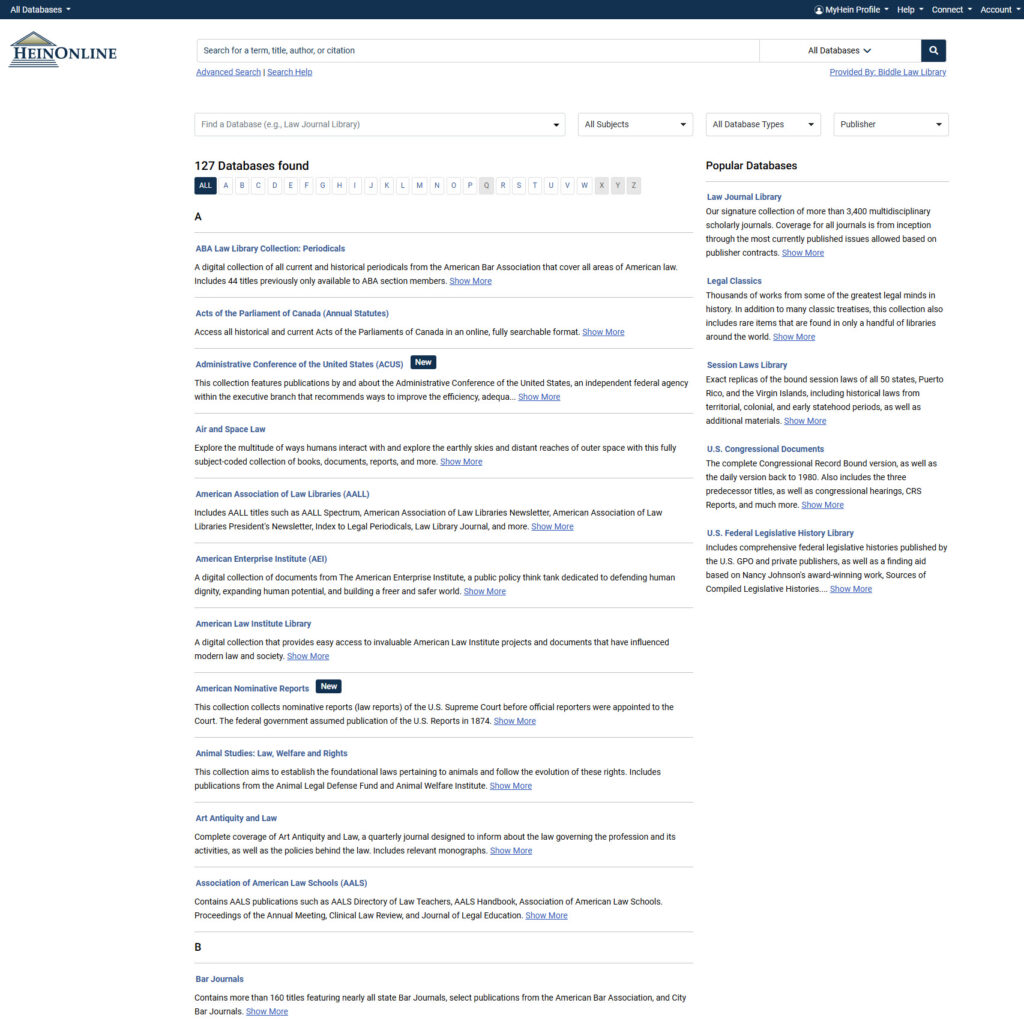
HeinOnline is a large online collection of law and government publications. It provides access to legal journals, court documents, treaties, government records, constitutions, and historical legal materials from the United States and around the world.
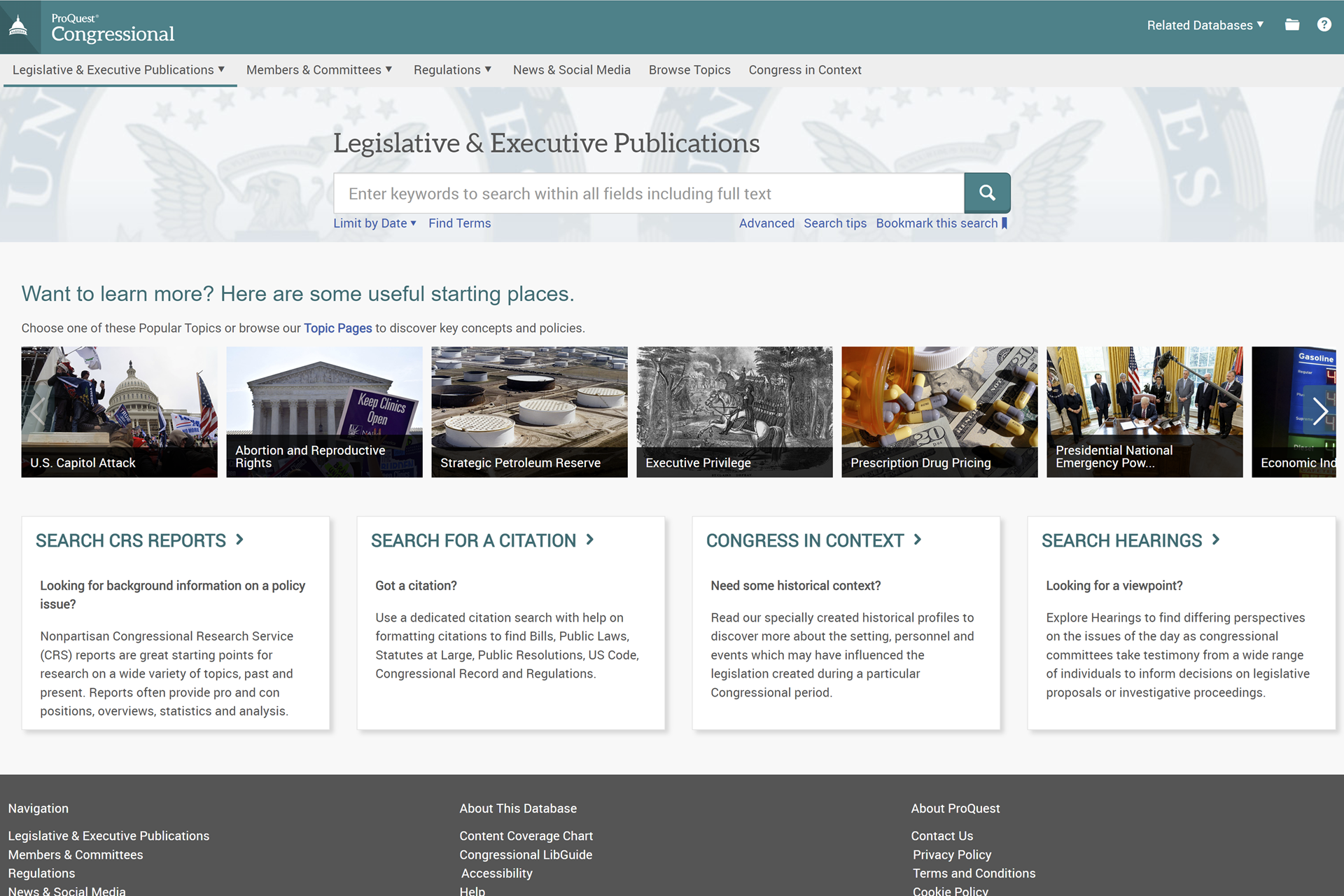
ProQuest Congressional is a database of U.S. government and congressional publications, both historic and current. It includes bills, hearings, laws, committee reports, the Congressional Record, and other official documents that show how government policies and decisions are made. The database also provides tools for tracking legislation and exploring debates, public issues, and the political history of the United States.
HeinOnline is a large online collection of law and government publications. It provides access to legal journals, court documents, treaties, government records, constitutions, and historical legal materials from the United States and around the world.
United Nations
The United Nations Digital Library is the UN’s primary database for searching United Nations documents and publications, as well as selected voting and speech records. It provides access to current and historical UN materials, resolutions, reports, meeting records, official documents, publications, voting data, and speeches from major UN bodies.
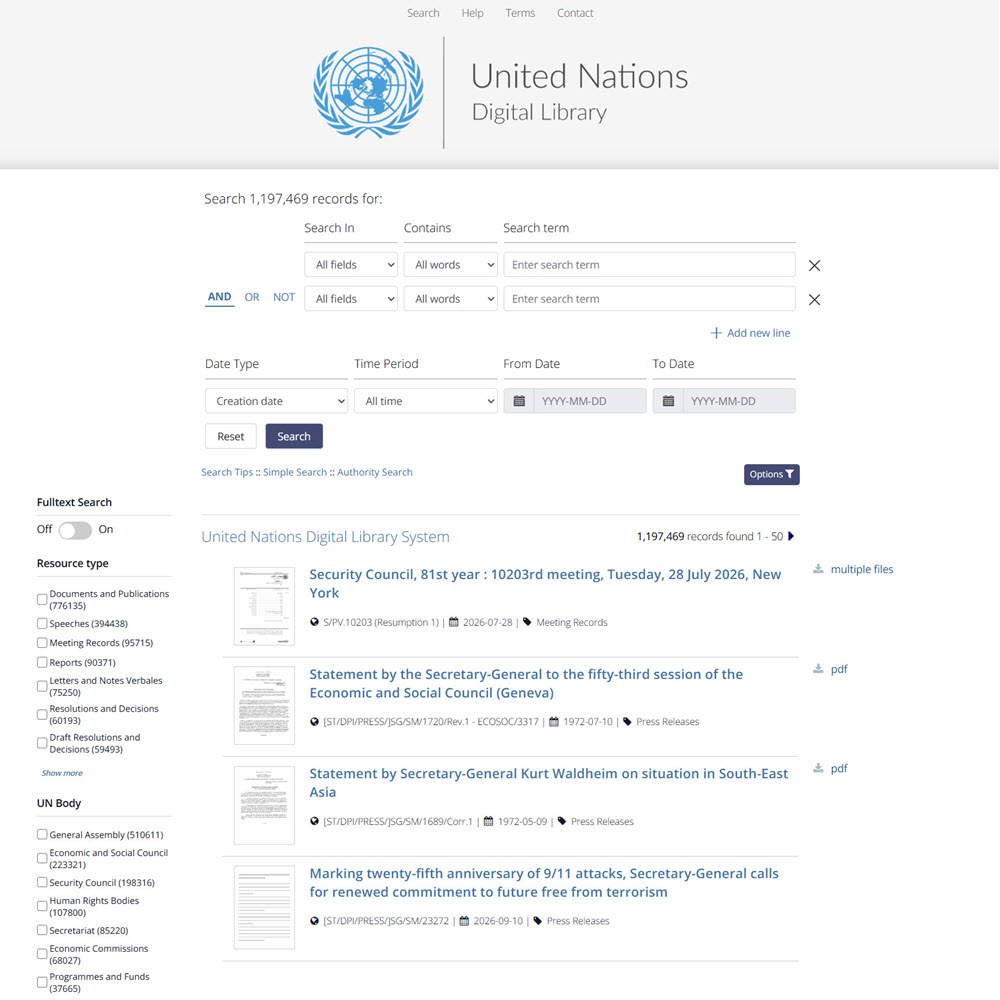
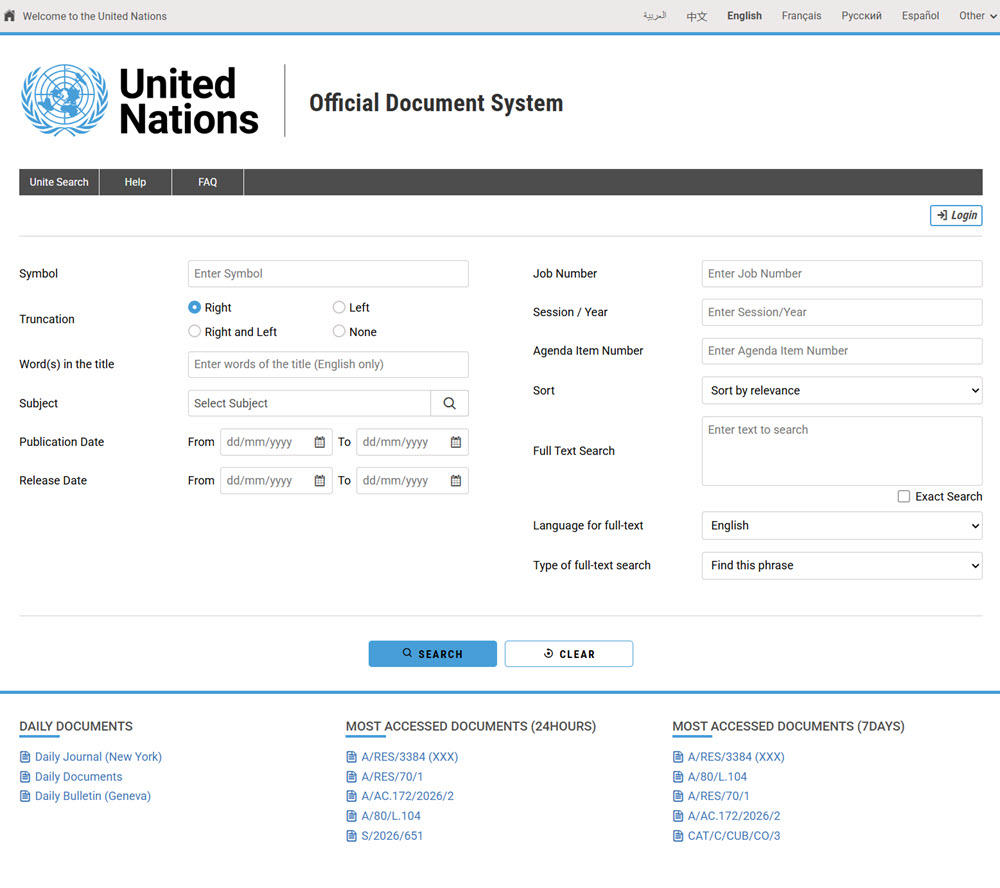
The UN Official Document System (ODS) is the United Nations’ online repository for official UN documents. It provides access to the full text of documents issued by major UN bodies, including the General Assembly, Security Council, Economic and Social Council (ECOSOC), and their committees and subsidiary bodies. The ODS provides resolutions, meeting records, reports, agendas, decisions, letters, and other official documents, often by UN document symbol, date, title, subject, or issuing body.
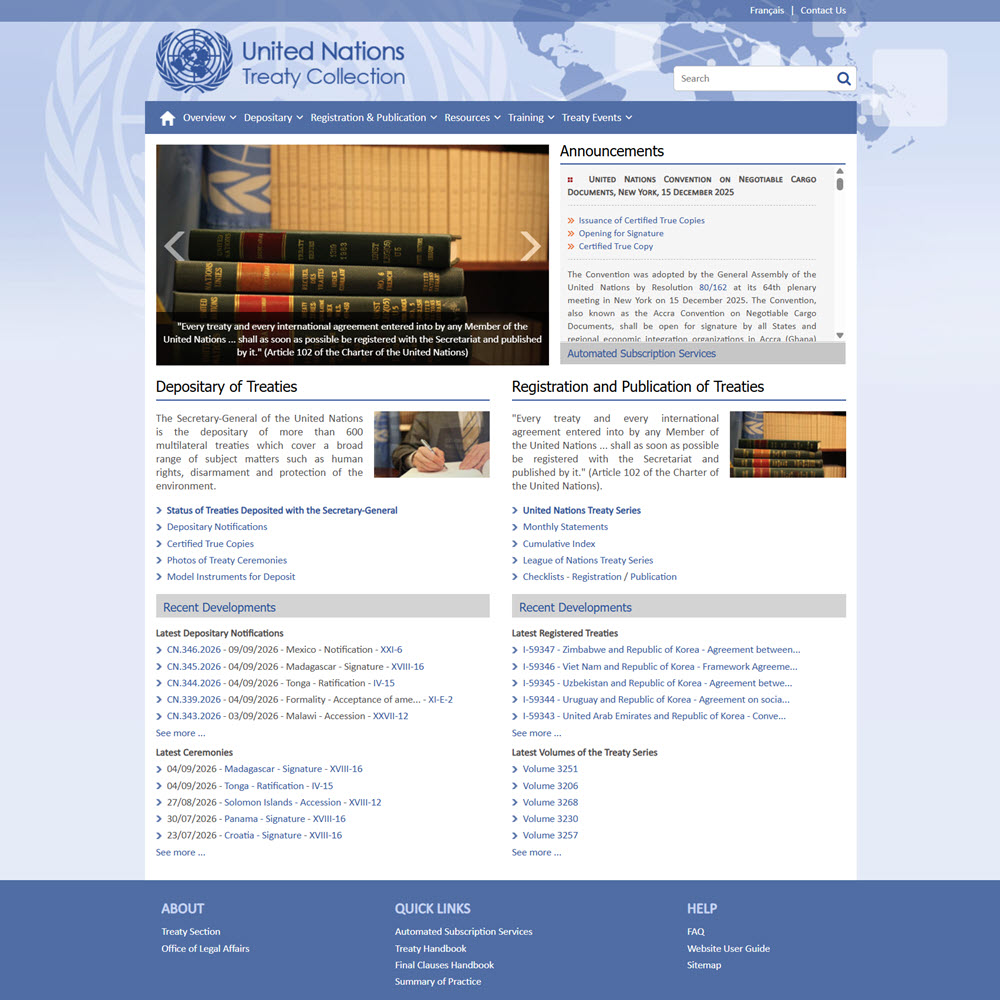
The United Nations Treaty Collection (UNTC) is the UN’s main online database for international treaties and agreements. It provides access to treaties registered with the United Nations, along with information on their signatories, ratifications, accessions, reservations, declarations, entry into force, and current status. It also includes the United Nations Treaty Series (UNTS), which contains the full texts of treaties and international agreements registered or filed with the UN under Article 102 of the UN Charter.
International Organizations
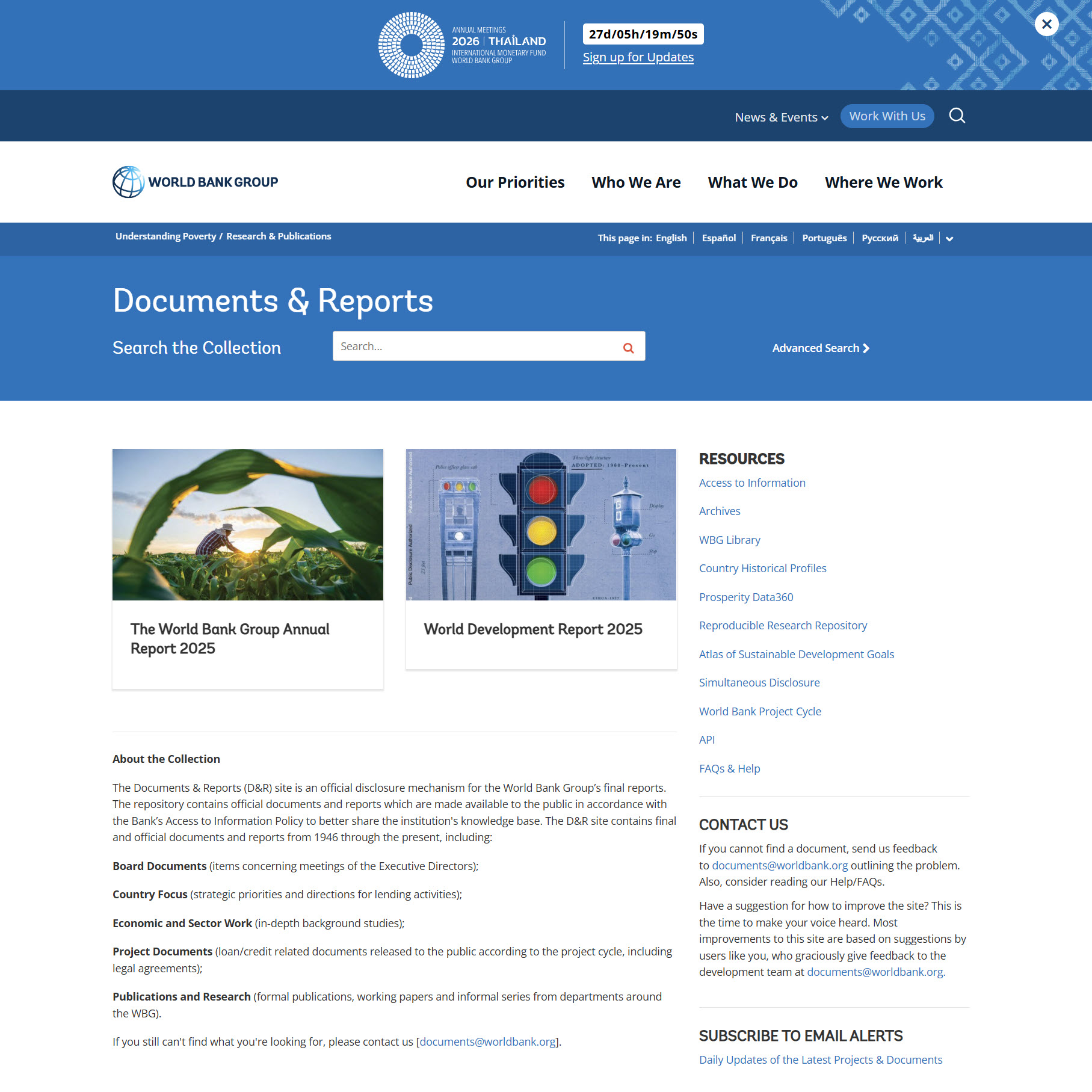
World Bank Documents & Reports is the World Bank’s official repository for its publicly available research, reports, and institutional documents. It provides access to publications covering economic development, poverty, trade, governance, education, health, infrastructure, climate change, public finance, and other development issues.
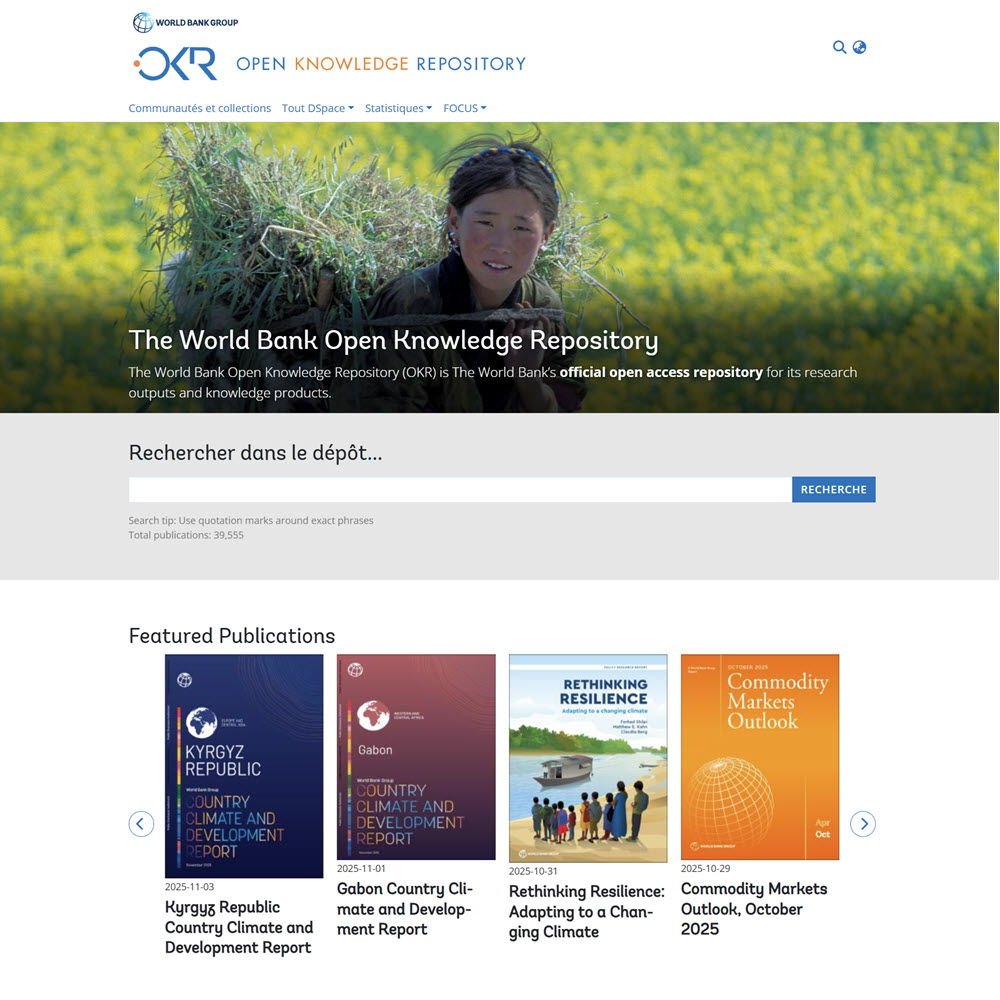
The Open Knowledge Repository is the World Bank’s official open-access digital library, offering free downloads of thousands of its research materials, including books, reports, working papers, and more. Authored by World Bank economists, researchers, external experts, and academics, the Open Knowledge Repository covers topics such as international development, economics, finance, poverty reduction, infrastructure, education, healthcare, and more.
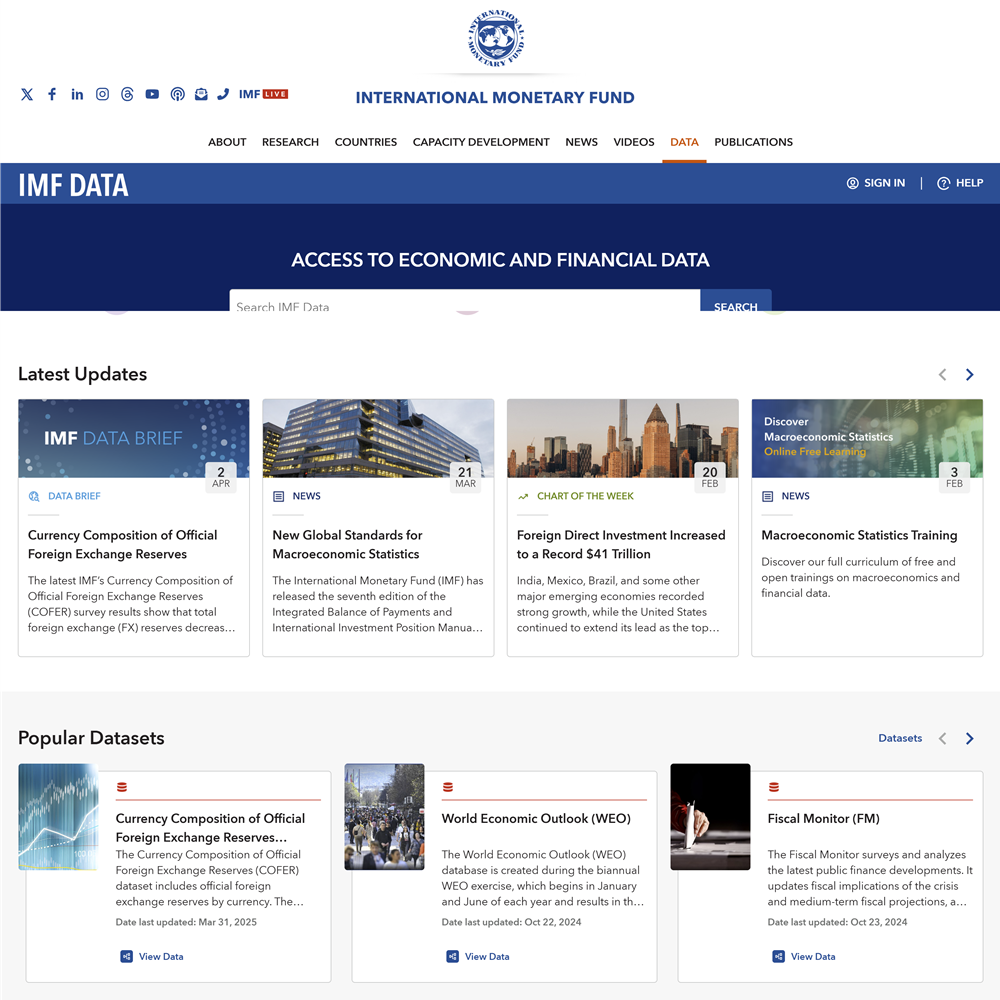
The International Monetary Fund (IMF) Data platform provides access to a wide range of global economic and financial datasets collected and maintained by the International Monetary Fund, including:
-
-
- International Trade in Goods (ITG) – Provides detailed information about the exports and imports of physical goods between countries, typically based on customs data. It focuses only on tangible merchandise, excluding services.
-
-
-
- International Trade in Goods (by partner country) (IMTS) – IMTS shows the value of exports and imports between countries by partner country and region (monthly and annual).
-
International Relations Journals
Scholarly journals are essential for academic research. However, not all scholarly journals are of the same quality. While peer review is a good starting point, researchers should also consider a journal's reputation and impact within its discipline. Journal Citation Reports (JCR) is considered one of the best tools to help researchers identify leading journals within a discipline.
Journal Citation Reports (JCR) is widely regarded as the leading subscription-based resource for identifying high-quality, peer-reviewed journals and assessing the impact, influence, and quality of scholarly journals across all academic disciplines. To learn more about JCR and journal impact, go to Journal Databases.
To review the entire list, go to Journal Citation Reports and choose Categories > Social Sciences, General > International Relations. Listed below are the 10 most cited international relations journals.
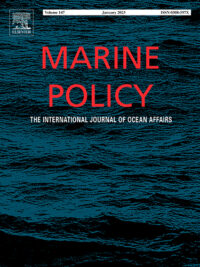
Marine Policy is a peer-reviewed academic journal that publishes research on marine and ocean governance, resource management, environmental issues, and the laws and institutions that shape how nations and other actors use the seas. Issues such as maritime boundary governance, international fishing agreements, enforcement of the United Nations Convention on the Law of the Sea (UNCLOS), marine environmental protection, and shared resource management are of particular importance to international relations scholars.
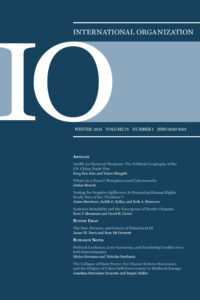
International Organization is a peer-reviewed academic journal that examines how states, international institutions, and political systems interact across national borders. It publishes research, theoretical, and empirical articles on cooperation and conflict, global governance, international political economy, and security.
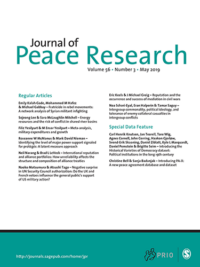
The Journal of Peace Research is a peer-reviewed academic journal that publishes research on the causes of violence, the dynamics of conflict, and strategies for resolving conflicts peacefully.
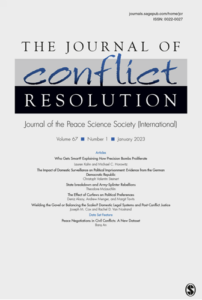
Journal of Conflict Resolution is an interdisciplinary peer-reviewed academic journal that publishes research on the causes, dynamics, and resolution of human conflict. It covers a range of conflict types, including international conflict between states as well as intergroup and interpersonal conflict. It draws on political science, sociology, economics, psychology, and related fields to understand why conflicts occur and how they can be managed or resolved.
International Studies Quarterly is a peer-reviewed academic journal published quarterly on behalf of the International Studies Association. It features original research on international studies — including topics like foreign policy, global politics, international political economy, security, conflict, and cross-border social and political processes.
Emerging Markets Finance and Trade is a peer-reviewed academic journal that publishes research about the economic and financial issues facing emerging markets (economies that are in the process of industrializing and integrating into the global system). It features empirical studies on topics like financial markets, investment, exchange rates, economic growth, and trade in countries across Asia, Latin America, Africa, and beyond.
Political Studies is a quarterly, peer-reviewed academic journal that publishes research across all areas of political science and international relations. Topics covered include how politics operates across countries and at the global level. Its articles examine government, political ideas, public policy, power, and political behavior.
World Politics is a peer-reviewed academic journal editorially sponsored by the Princeton Institute for International and Regional Studies at Princeton University. It publishes analytical/theoretical articles and book reviews on international relations and comparative politics.
International Affairs is a peer-reviewed academic journal focused on global affairs and international relations. First published in 1922 by the policy institute Chatham House, it provides research on geopolitical and international issues and important events occurring in international relations today.
The World Economy is a well-established, peer-reviewed scholarly journal that focuses on how the global economy actually works in practice. The journal publishes research that explains how countries trade with one another, how money and investment move across borders, and how economic policies affect growth and development around the world.
Country Profiles
Country profiles are essential to the study of international relations. By summarizing a country's political system, economy, society, geography, and foreign policy, they help researchers place international events, diplomatic decisions, conflicts, and alliances into context.
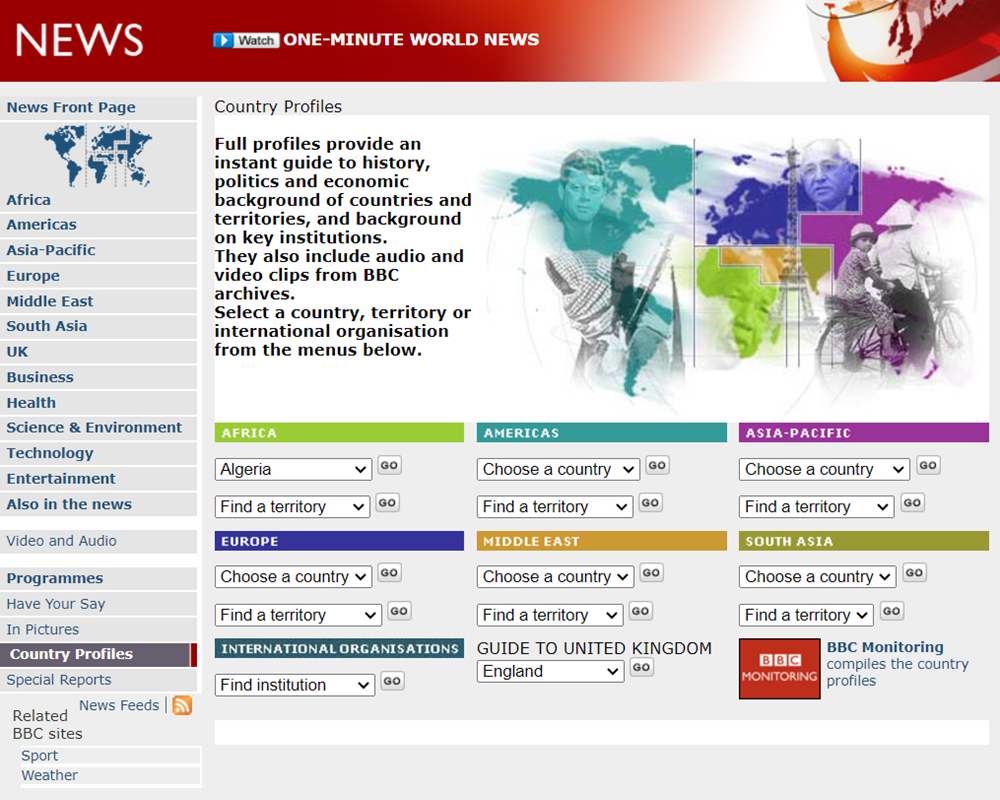
BBC News Country Profiles provides historical overviews, economic conditions, institutional backgrounds, and a summary of current political events. Information provided includes current heads of state, major political figures, population, capitals, monetary units, and major religions.
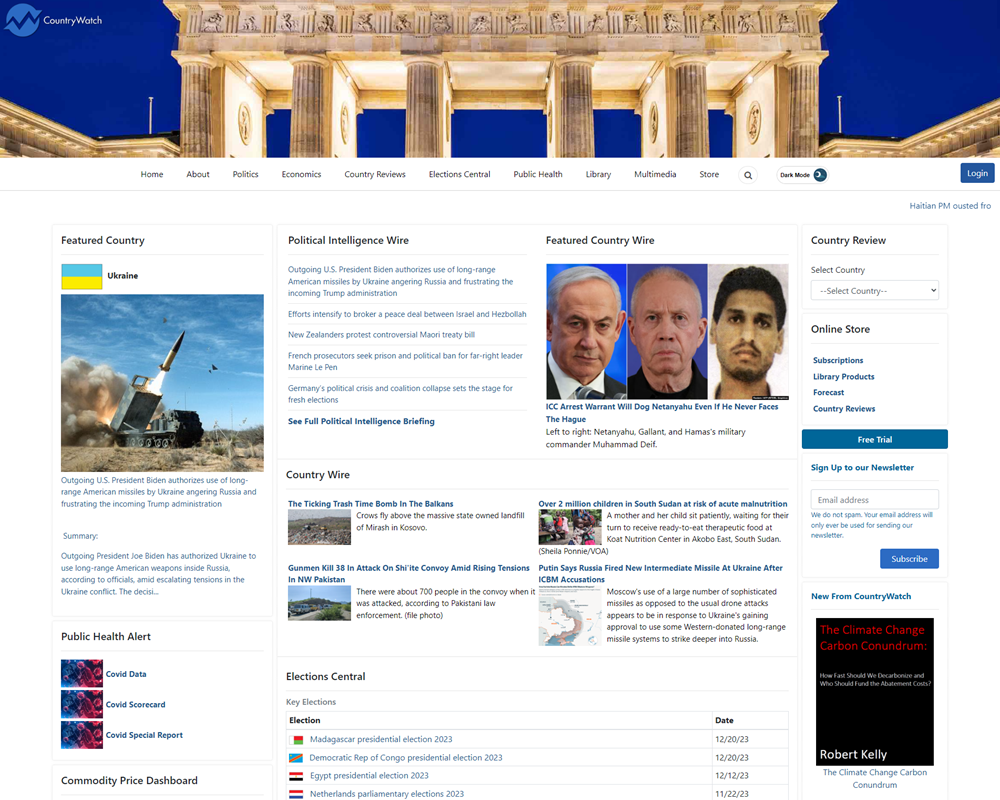
CountryWatch is a geopolitical and global subscription news resource providing country reports for nearly 200 countries. It provides regularly updated publications for each country, including demographic, political, economic, business, cultural, and environmental information. Topics covered include political and economic conditions, current events, business, and history.
If your school or organization subscribes to one of the Lexis Nexis databases, (such as Nexis Uni) you can access individual CountryWatch profiles there.
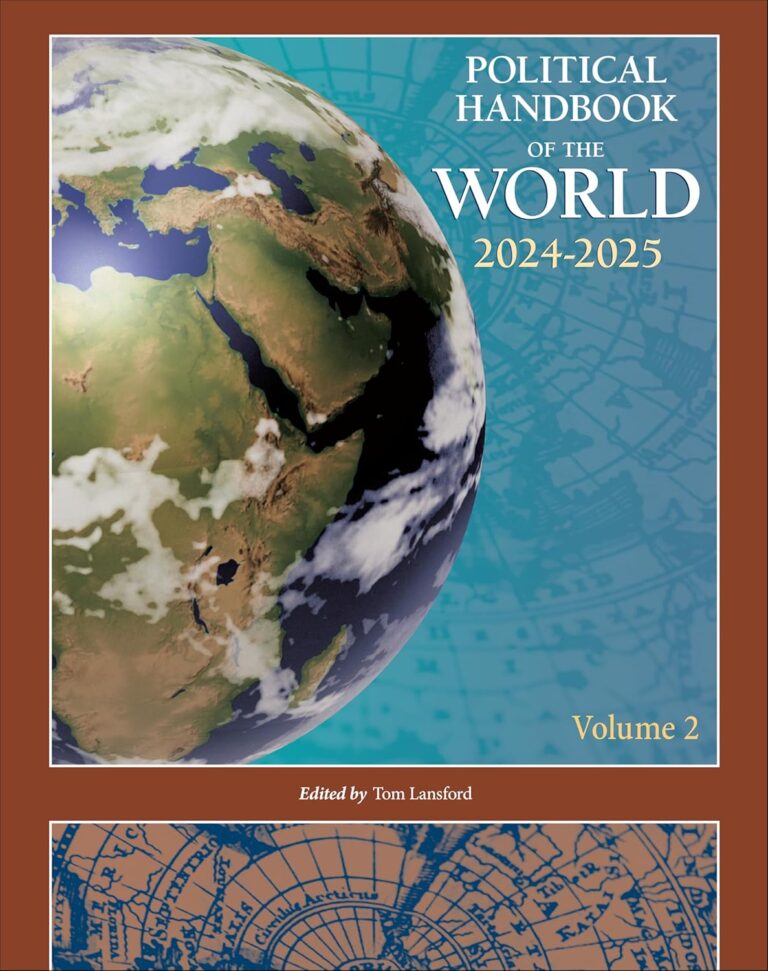
The CQ Political Handbook of the World, published by SAGE Congressional Quarterly, provides country-level data for more than 200 nations. It offers detailed information about political history, social movements, economics, and current issues. Users can browse by political and electoral systems across seven categories, including regime type, democracy, type, Freedom House Rating, election rules, party, system, and system of government.
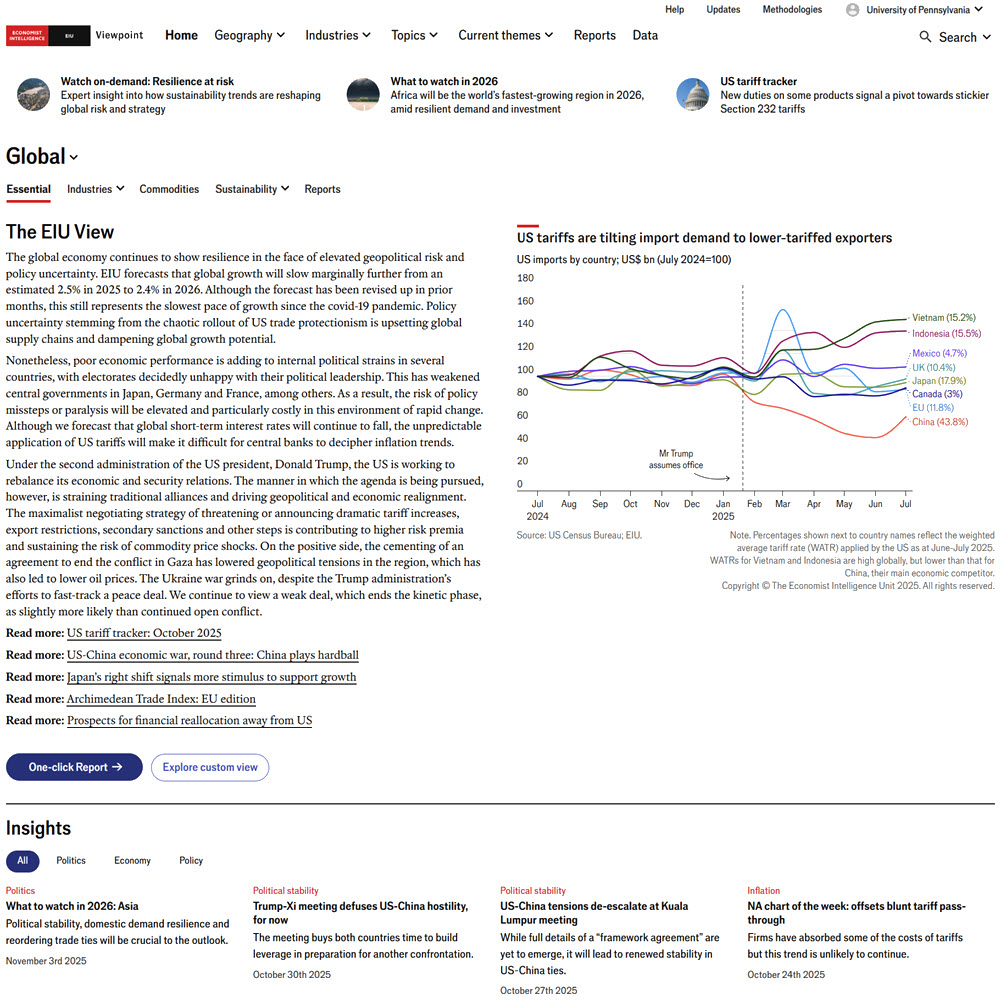
EIU Viewpoint (formerly Viewswire) is the new EIU platform that combines three products: Country Analysis, Financial Risk, and Operational Risk. Access to individual products depends on an institution’s subscription. EIU Viewpoint provides political, policy, and economic analysis and data. It includes in-depth country reports, forecasts, analysis, and expert opinions on matters of economic and geopolitical significance.
EIU Viewpoint includes a Data Tool providing access to key economic historical, current, and forecasted country data.
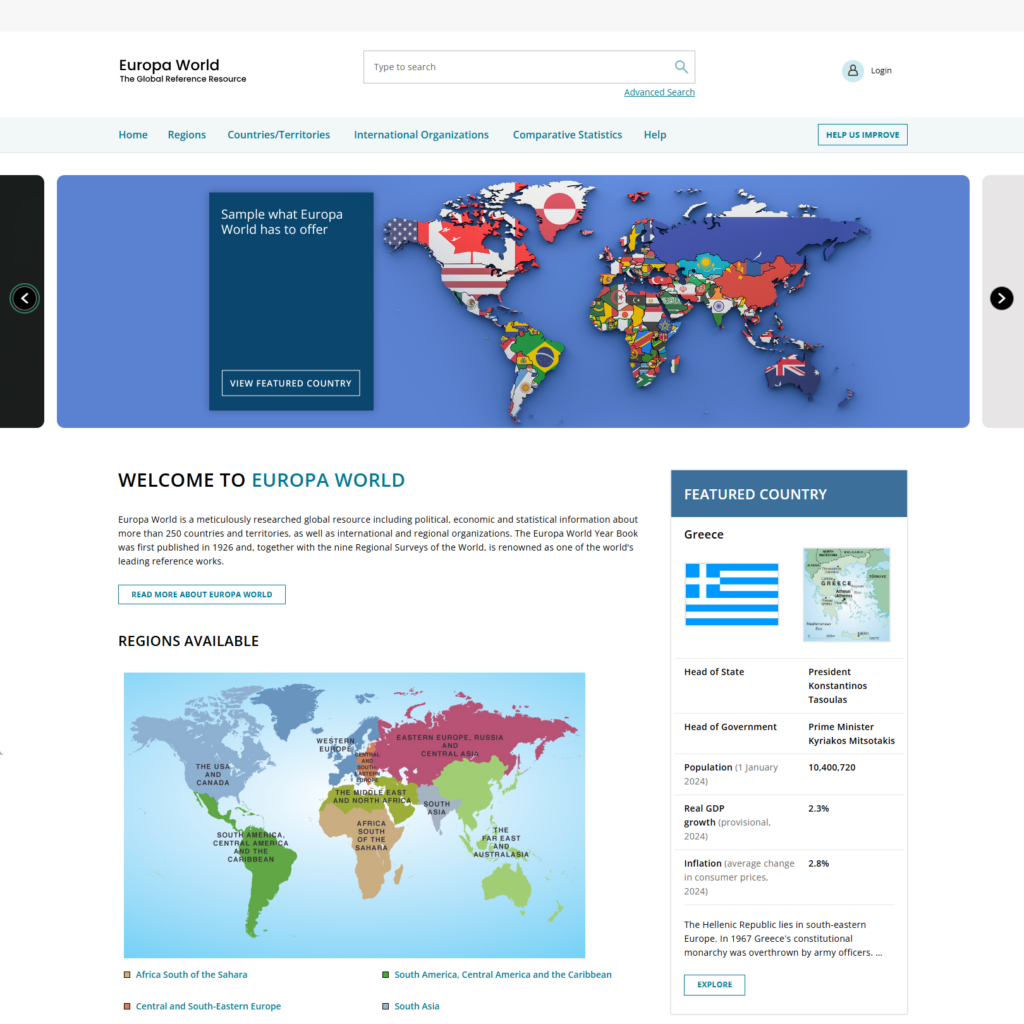
Europa World Plus is the online version of the famous reference source, Europa World Year Book. It provides political, economic, and historical information for over 250 countries and territories, including statistics. Europa World Plus also contains the nine-volume Europa Regional Surveys of the World series. Europa provides up-to-date government lists and recent election results for every country in the world, as well as a who’s who of major political figures.
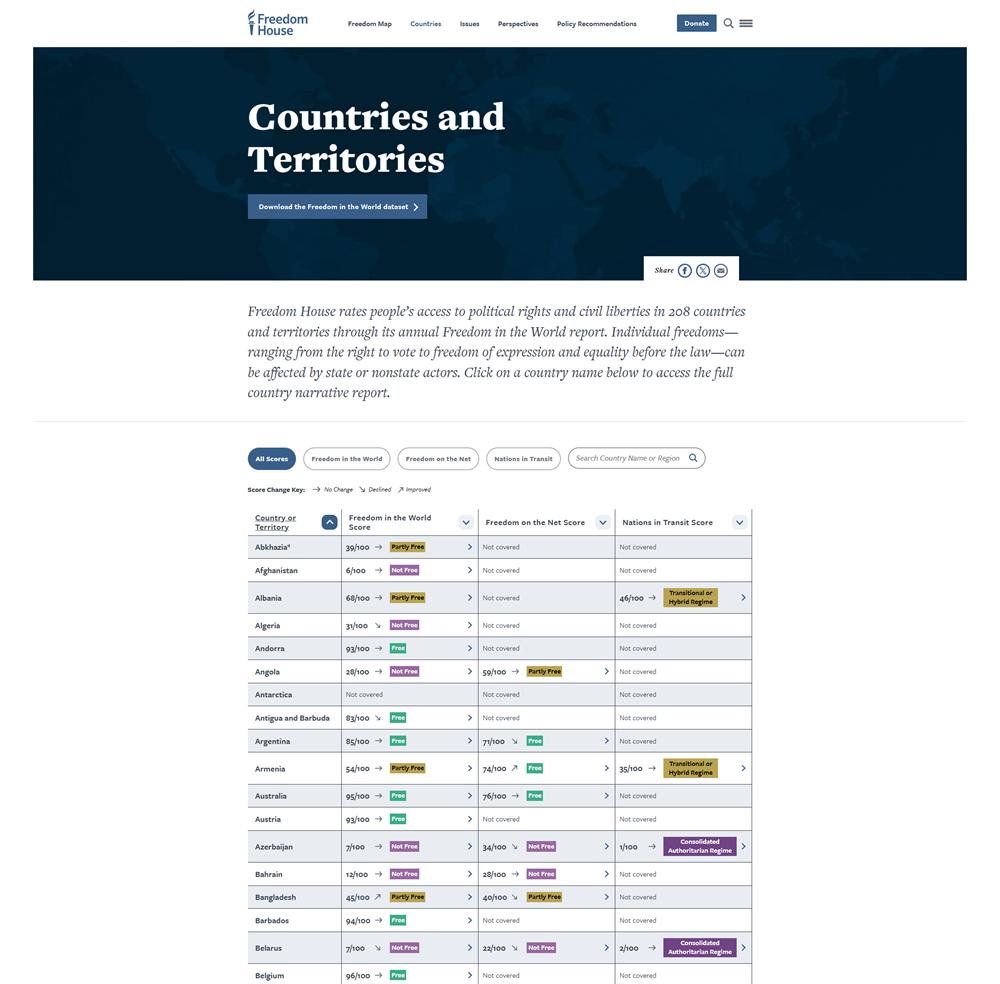
Freedom House is a non-governmental organization (NGO) based in the United States that conducts research and advocacy on democracy, political rights, and civil liberties worldwide. Freedom House – Countries and Territories provides ratings of citizens’ access to political rights and civil liberties in 210 countries and 15 territories, ranging from 1 (most free) to 7 (least free).
The Statesman’s Yearbook provides country profiles, with information on key historical events, demographics, city profiles, social statistics, climate, recent elections, current leaders, defense, international relations, economy, energy and natural resources, industry, international trade, religion, culture, and diplomatic representatives, and more.
World Bank Country Profiles are comprehensive reports and data summaries that provide an overview of the economic and social conditions of individual countries. These profiles are published by the World Bank, an international financial institution that provides loans and technical assistance to developing countries for over 150 nations.
Research Methods
Research methods are the specific strategies, tools, and techniques researchers use to collect and analyze information to answer questions or solve problems. Research methods can be qualitative (interviews or observations), quantitative (numerical and statistical), or mixed methods (a mixture of both).
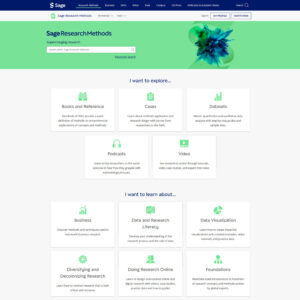
Sage Research Methods is an important resource for learning about research methods and can help you choose the methods best suited to your research question or project.
Sage Research Methods is an important resource for learning about research methods and can help you choose the methods best suited to your research question or project.
Sage Research Methods is a major subscription database that guides users in understanding research methodologies across different academic disciplines. It provides electronic access to reference books, journal articles, instructional videos, and other research methods resources.
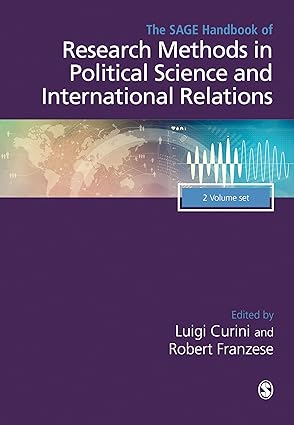
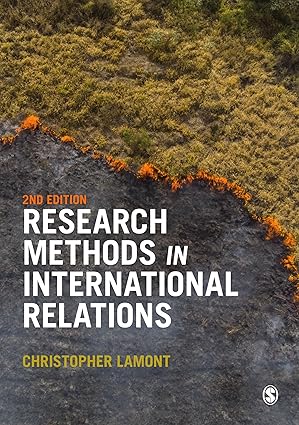
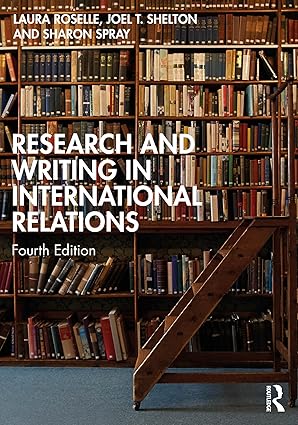
Most social science students are required to take at least one research methods course as part of a department’s core curriculum, which introduces the basics of how research is done in a specific discipline. The following subject-specific books provide in depth explanations of research design concepts, methodologies, and techniques used in international relations.
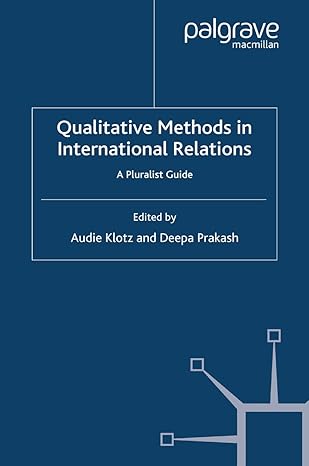
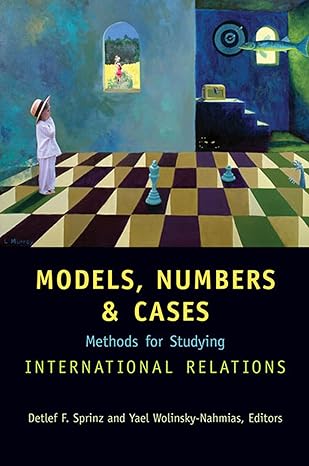
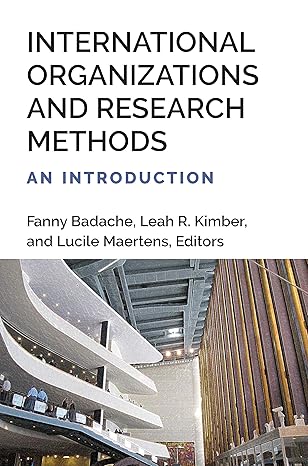
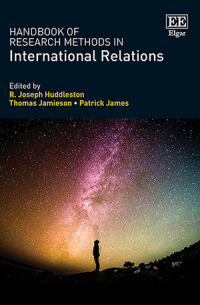
The icons next to each resource indicate its access requirements.
Open source/ Free
Subscription required

More than 300 years before international relations was recognized as a formal academic discipline, Dutch diplomat Hugo Grotius (1583–1645) was its intellectual founder by arguing in his 1625 work De Jure Belli ac Pacis, that war must follow rules. Learn More

Source: Portrait of Hugo Grotius by Michiel Jansz. van Mierevelt, 1631.